5 Questions US Parents Must Ask About Youth Sports Data Privacy
Published 15 September 2026
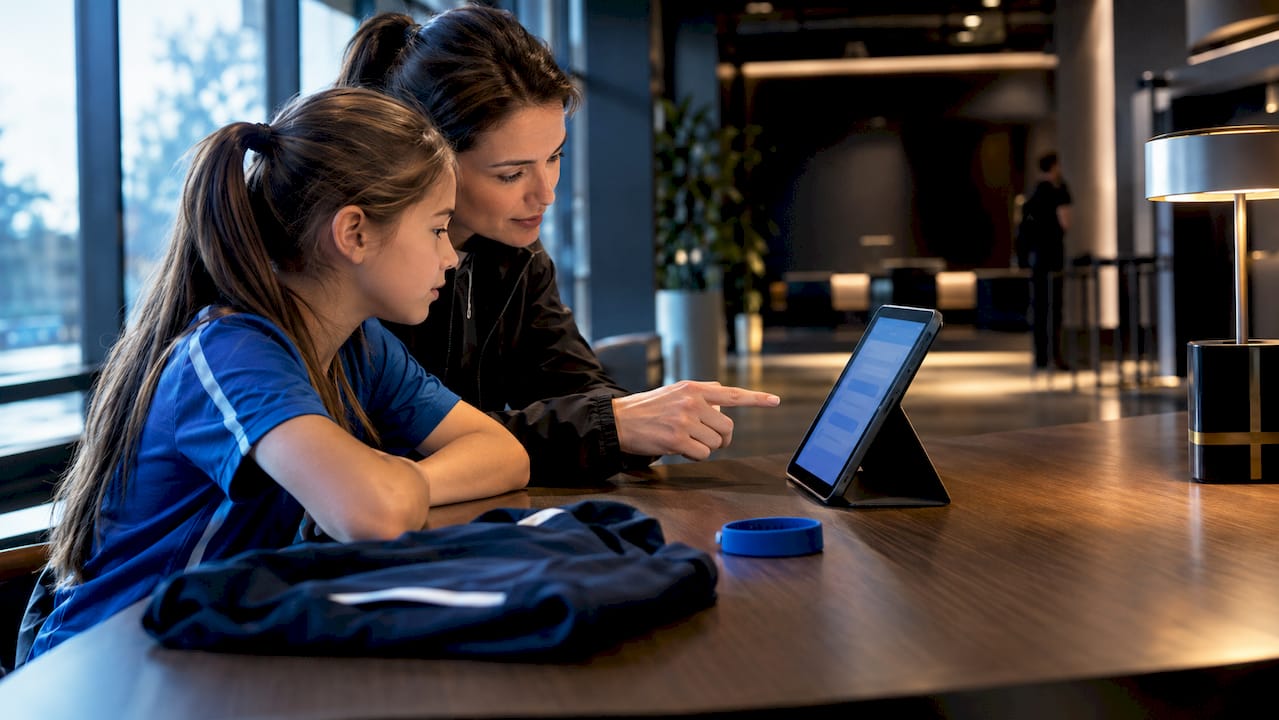
Your child’s data is genuinely at risk in youth sports, but the exposure is manageable if you act now. The single most useful thing you can do this week is ask your club or the app it uses for their child-specific privacy policy, their consent process, and how long they keep your child’s records. Regulators including the California Privacy Protection Agency and standards from US Youth Soccer give you a benchmark to hold that answer against.
TL;DR:
- Most youth sports data includes sensitive details like location, photos, and performance metrics, which are often stored with third-party cloud vendors, increasing exposure risks.
- The updated COPPA rules for 2025-26 require platforms to obtain verifiable parental consent, limit data retention, and include biometric identifiers, with enforcement backing from regulators like California.
- Parents should ask clubs about data recipients, storage duration, consent procedures, profiling practices, and breach notification processes, preferably in written form for accountability.
- Protect your child’s data by removing geotags from social media posts, insisting on guardian-mediated accounts, and requesting clear policies on data retention and media use from the club.
- Platforms like Levelup360hq demonstrate best practices through guardian controls, coach approval workflows, and specific retention settings, serving as benchmarks for proper youth data privacy management.
Table of Contents
- What youth sports data privacy actually covers
- What US laws protect young athletes right now?
- What should you ask your club or league?
- How can you protect your child’s data as a parent?
- How do you check a platform’s privacy and security?
- What should you do after a suspected data breach?
- What role do schools play in protecting this data?
- How are wearables and AI changing youth sports privacy?
- Why staying involved protects your child and helps clubs too
- How Levelup360hq helps clubs meet these standards
- Sources
- FAQ
What youth sports data privacy actually covers
Youth sports data privacy is about who collects your child’s information, where it travels once collected, and what happens to it after the season ends. Most clubs and apps gather far more than a roster.
A typical registration flow pulls in your child’s name, date of birth, home address, and emergency contacts. Add photos and match video, injury notes or medical flags, GPS location during games, and increasingly, performance metrics generated by wearables or automated player ratings.
None of that data stays put. Clubs rarely run their own servers. Instead, rosters and video sit with cloud storage vendors, analytics tools, and error-tracking software that quietly receive identifying details as part of normal operation. That chain of sub-processors matters because a club’s promise to “keep data safe” only covers the club, not everyone downstream.
The realistic harms are less dramatic than a headline breach but more persistent:
- A digital footprint that follows your child into adulthood, searchable by a future employer or college admissions officer
- Profiling based on performance data, used commercially without your knowledge
- Identity misuse from exposed birthdates and addresses
- Deepfake risk from publicly posted match footage and photos
What US laws protect young athletes right now?
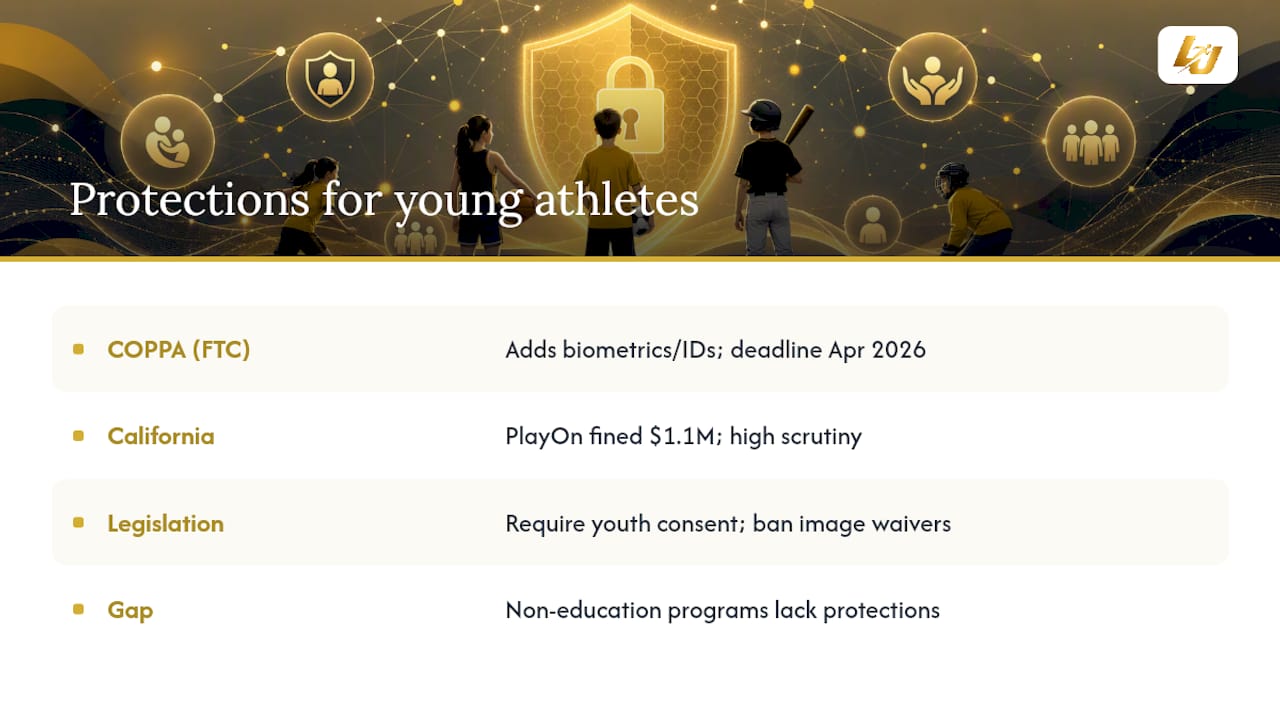
The Federal Trade Commission’s updated COPPA rule is the backbone of children’s data protection in youth sports, and it changed meaningfully for the 2025-26 cycle. The update expanded what counts as covered personal information to include biometric identifiers and government-issued IDs, tightened the standard for verifiable parental consent, and set stricter limits on how long a platform can retain a child’s data. Clubs and apps serving under-13s have a compliance deadline in April 2026.
California has already shown what enforcement looks like. The California Privacy Protection Agency fined PlayOn Sports $1.1 million for design and disclosure failures that effectively forced families to accept tracking just to buy a game ticket. That decision is the clearest signal yet that regulators treat youth and student-adjacent services as high scrutiny, not an afterthought.
More is coming. California legislative proposals would require standalone consent notices for youth programmes, separate from the general terms and conditions families click through without reading. The same proposals would ban clubs from making participation conditional on a family waiving privacy rights over a child’s image. Policy researchers at EPIC point out a persistent gap: youth sports programmes that aren’t classified as “education” often fall outside school-specific privacy protections entirely, leaving families with fewer guarantees than they’d assume.
What should you ask your club or league?
Most clubs will answer these questions if you ask directly, and a good answer takes thirty seconds to give. A vague or defensive answer is itself useful information.
- Who receives my child’s data, and are those vendors COPPA compliant?
- Where is the data stored, and how long is it retained after my child leaves the programme?
- Do you require parental consent for photos and video, and can I revoke that consent without my child losing their place on the team?
- Does your platform use profiling or AI-driven ratings, and is that feature opt-in rather than automatic?
- What is your breach notification process, and how quickly will I be told if something goes wrong?
Pro Tip: Email these questions rather than asking verbally at practice. A written answer creates a record you can refer back to, and clubs tend to give more careful answers when they know the response is on file.
How can you protect your child’s data as a parent?
Small habits do more here than any single piece of software. Start with what you control directly, then push the club for written commitments on the rest.
- Strip geotags and avoid posting your child’s full name alongside their team or school in public social posts
- Insist on guardian-mediated accounts and verifiable consent for any under-13 athlete, rather than letting a coach set up a profile on a child’s behalf
- Ask for the club’s written data-retention policy and confirm whether records are automatically deleted once your child leaves
- Keep your own copies of every consent form you sign, along with any documentation the club provides about specific media uses
- Confirm you have a genuine opt-out for non-essential features, not just a box that’s pre-ticked
Industry demand for youth performance data has grown sharply, with the market for youth and grassroots sports data expanding well beyond its roughly $1 billion valuation in 2020. More commercial interest in your child’s data means more reason to get retention and consent terms in writing before the season starts, not after.
How do you check a platform’s privacy and security?
Whether you’re vetting the club’s registration app or a coach’s favourite training tool, the check is the same. Look past the marketing page and ask for specifics.
- A published, child-specific privacy policy that references COPPA directly, not a generic adult privacy statement
- Evidence of a Data Protection Impact Assessment, or an equivalent internal risk review, for any feature touching minors’ data
- Third-party audit or security attestation, such as SOC 2 or ISO 27001, rather than a self-declared “secure” badge
- A published or available inventory of sub-processors, since analytics and error-tracking integrations routinely transmit identifying data even on platforms marketed as private
- Modular, opt-in consent for profiling, marketing, or commercial features, separate from consent for core participation
- Coach or admin approval workflows before photos or video reach a public feed, and a retention schedule with secure deletion on request
Levelup360hq builds several of these controls directly into its club dashboard, including guardian-level profile permissions, coach approval steps before media goes live, and admin-side retention settings, which gives parents a concrete example of what “good practice” looks like when they’re comparing it against another platform’s claims.
Pro Tip: If a vendor can’t produce a sub-processors list within a few days of you asking, treat that as a red flag rather than an oversight. A platform that takes privacy seriously usually has this documented already.
What should you do after a suspected data breach?
Move quickly, but methodically. Panic leads to skipped steps that make remediation harder later.
- Collect evidence immediately — screenshots, dates, and copies of any communication about the incident.
- Contact the club or platform’s data protection contact and ask directly for a breach report and a remediation timeline in writing.
- Exercise your deletion and opt-out rights and request written confirmation once the data has actually been removed.
- Report the incident to the FTC or, in California, the CPPA or your state’s privacy regulator, and consider identity monitoring for your child if the exposure included sensitive identifiers like a Social Security number or date of birth.
What role do schools play in protecting this data?
Schools sit in an odd middle ground. When a sports programme runs directly through the school district, student data typically falls under FERPA protections, which govern how education records can be shared and with whom. That’s a real safeguard, but it only applies when the activity is legally tied to the school.
Club teams, travel leagues, and third-party academies that merely use school facilities usually fall outside that protection entirely. A team that practises on school grounds after hours isn’t automatically covered by the same rules that protect a student’s grade records. Parents often assume otherwise, and that assumption is where gaps open up.
Schools can still play a constructive role even outside strict FERPA coverage. Athletic directors who vet third-party vendors before allowing them to collect student-athlete data, or who require outside clubs using school branding to sign data-handling agreements, add a layer of oversight that wouldn’t otherwise exist. Some districts now require any app collecting student data, sports-related or not, to go through a formal privacy review before it’s approved for use.
If your child’s sports activity runs through the school, ask directly whether it’s classified as a FERPA-covered educational activity or treated as an independent, school-hosted programme. The answer changes which protections actually apply, and it’s rarely obvious from the outside.
How are wearables and AI changing youth sports privacy?
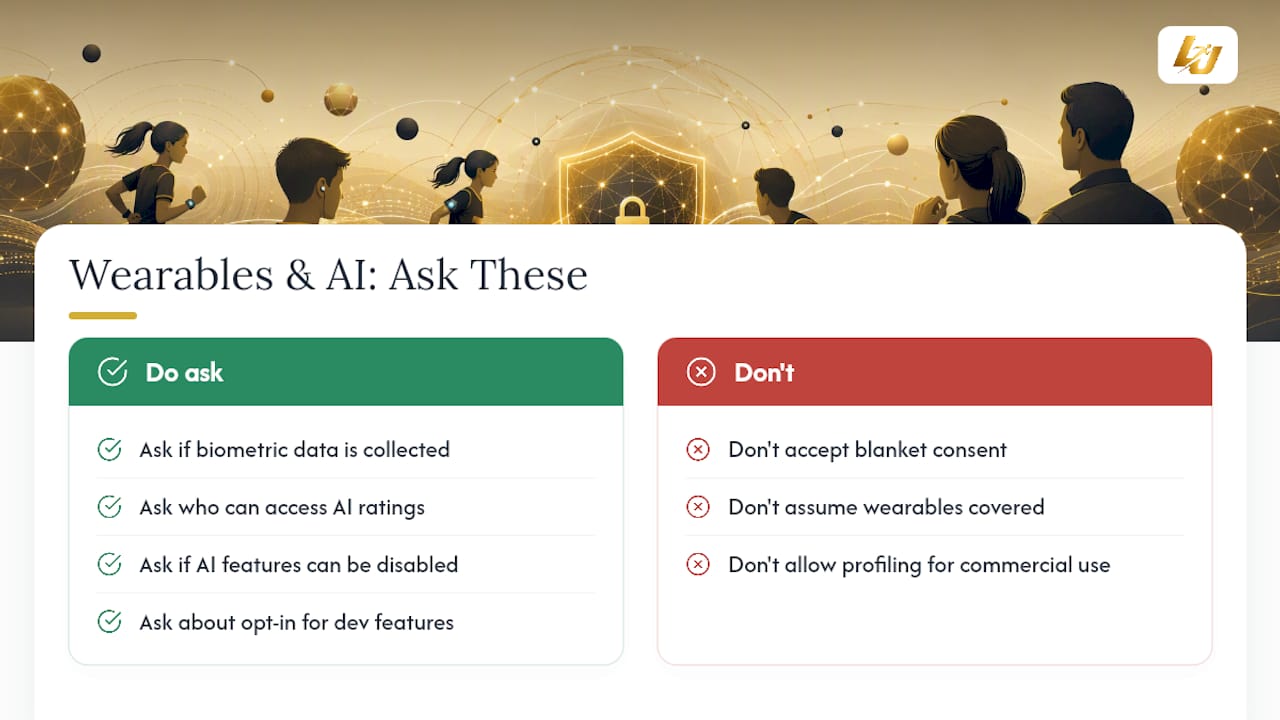
Wearable trackers and AI-driven performance analytics have moved from professional locker rooms into youth club football, basketball, and track programmes over the past few seasons. That shift changes the privacy calculus considerably, because the data collected is no longer just a name and a schedule. It’s heart rate, sprint speed, sleep patterns in some cases, and biometric identifiers that the updated COPPA rule now explicitly covers.
AI analytics add a second layer of concern. Automated player ratings, growth projections, and scouting profiles built from a child’s performance data can follow that child for years, shaping how coaches, recruiters, or even college scouts perceive them long before the athlete has any say in how that profile was built. Researchers studying consent and profiling in youth contexts note that privacy protection increasingly means giving families genuine control, letting them opt into developmental features while opting out of commercial or profiling uses, rather than a blanket accept-all-or-leave choice.
The practical takeaway for parents is that wearables and AI features are rarely covered by a club’s general privacy policy. Ask specifically whether biometric data is collected, who has access to the AI-generated ratings, and whether that feature can be switched off without affecting your child’s place on the roster.
Why staying involved protects your child and helps clubs too
Better privacy practice isn’t just a parent’s problem to manage. It’s genuinely in a club’s interest too. A club with a written retention policy, verifiable consent flows, and a documented sub-processor list faces far less legal and reputational risk than one improvising with a group chat and a spreadsheet.
Ask your club for a written privacy commitment, and share the good examples you find. Clubs that get this right deserve to be pointed to, and the ones that don’t need the pressure.
— Chris
How Levelup360hq helps clubs meet these standards
Some platforms give clubs a way to put the checklist above into practice rather than promise it on paper. Such platforms may include admin dashboards with guardian-mediated athlete profiles, coach approval workflows that sit between raw footage and a public feed, and retention controls that let administrators set how long a departed athlete’s records stay on file before secure deletion.

For clubs and academies weighing up a new registration or performance platform against the checklist in this article, that combination of guardian controls, coach approvals, and admin-level retention settings is worth comparing directly against whatever your club currently uses. Levelup360hq also supports white-label branding and CRM tools, so the privacy layer sits inside a system your club is already running day to day, not bolted on separately. If you’re a club administrator who wants to see how the controls work in practice, you can try the platform demo or visit the Levelup360hq product page to review what’s documented before you bring it to your board or parent group for discussion.
Sources
- GovTech — Ticketing platform fined $1.1M over student data violations
- US Youth Soccer – Data retention and privacy policy
- EPIC — Children’s privacy
This article is general information, not a substitute for advice from a qualified lawyer. Consult a qualified legal professional about your own circumstances before acting on anything here.
FAQ
Is COPPA the only law protecting my child’s sports data?
No. COPPA sets the federal floor, but states including California are moving faster with their own rules, and the CPPA’s action against PlayOn Sports shows state regulators actively enforcing beyond COPPA’s baseline.
Can a club require me to consent to photo or video use to let my child play?
Emerging state proposals aim to ban that practice outright, but it isn’t universally illegal yet. Ask your club directly whether consent to media use is separate from consent to participate, and get the answer in writing.
How long can a youth sports app legally keep my child’s data?
There’s no single universal number. The updated COPPA rule pushes platforms toward stricter retention limits, so ask your specific club or app for their written retention period rather than assuming a default.
Does Levelup360hq collect biometric or performance data on minors?
Levelup360hq’s platform includes performance analytics and player rating features that clubs can configure, with guardian-mediated profiles and admin-level controls governing how that data is stored and retained. Ask your club administrator for the specific settings applied to your child’s account.
What should I do if a club refuses to answer my privacy questions?
Treat that refusal as a warning sign rather than a formality. Escalate the request in writing, and if you get no response, consider reporting the concern to your state’s privacy regulator or the FTC.
Turn potential into a player card.
LevelUp360 tracks every match, builds your child's player card, and shows their development over time.
Get started free