Why self-tracking improves sports performance
Published 4 June 2026

Self-tracking in sports is defined as the systematic monitoring of training load, physiological data, and subjective wellness to enable athletes to make informed adjustments that improve performance outcomes. The practice shifts decision-making from guesswork to evidence, giving athletes and coaches a precise picture of readiness, recovery, and adaptation. Tools such as heart rate variability (HRV) monitors, wrist wearables, and smartphone photoplethysmography (PPG) apps have made this kind of self-assessment accessible at every level of sport. The benefits of self-tracking in sports are no longer theoretical. Research published in 2026 confirms measurable gains in running economy, movement quality, and injury reduction when athletes commit to structured monitoring programmes.
Why self-tracking improves sports performance: the science
The scientific case for athlete self-monitoring rests on a clear distinction between two activities: periodic assessment and repeated monitoring. A 2026 sports medicine framework establishes that repeated monitoring enables coaches and athletes to make workload and recovery adjustments that periodic testing simply cannot support. Assessment tells you where you are; monitoring tells you how you are responding, day by day.
The controlled trial evidence is striking. In a 12-week randomised controlled trial with 50 university track-and-field athletes, those using integrated wearable systems improved running economy by 6.5%, enhanced movement quality by 10.3%, and reduced time-loss injuries by 45% compared to the control group. Those numbers represent the difference between a season-ending setback and a personal best.
HRV-guided training adds another layer of evidence. A systematic review covering 2020 to 2026 found that HRV-guided periodisation improves VO₂max and peak power output significantly more than fixed training plans, while also reducing the proportion of athletes who fail to respond positively to training. The mechanism is straightforward: HRV reflects the autonomic nervous system’s recovery state, so training intensity adjusted to daily HRV readings avoids the accumulated fatigue that stalls adaptation.
“Repeated monitoring enables actionable decisions. A single readiness score means little; a pattern of scores across weeks reveals whether an athlete is adapting, stagnating, or heading toward overtraining.”
| Metric | Benefit demonstrated |
|---|---|
| HRV-guided training | Greater VO₂max and peak power gains vs fixed plans |
| Integrated wearable use | 6.5% improvement in running economy over 12 weeks |
| Movement quality tracking | 10.3% improvement in movement scores |
| Injury monitoring | 45% reduction in time-loss injuries |
Which metrics and tools are most effective for athlete self-tracking?
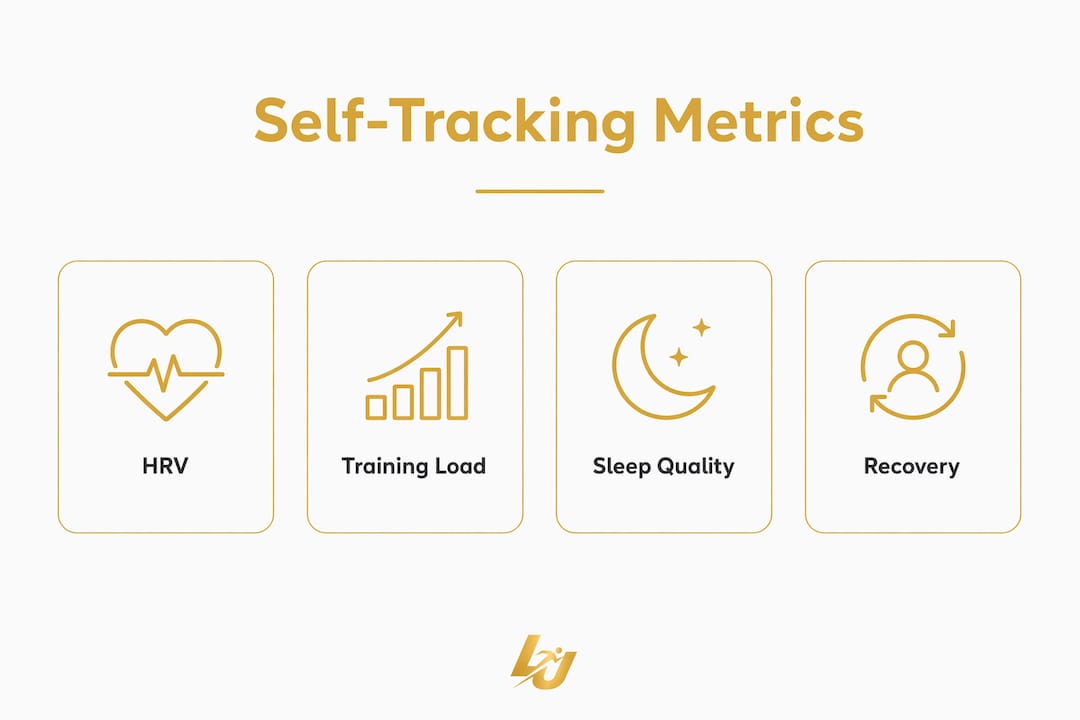
The most commonly tracked metrics in self-tracking for athletic performance fall into two categories: objective physiological measures and subjective wellness indicators. Objective metrics include HRV, training load (measured by session RPE or GPS-derived data), sleep duration and quality, and movement quality scores. Subjective metrics include perceived fatigue, mood, motivation, and muscle soreness. Both matter. Relying solely on objective data ignores the athlete’s lived experience; relying solely on subjective reports misses early physiological warning signs.
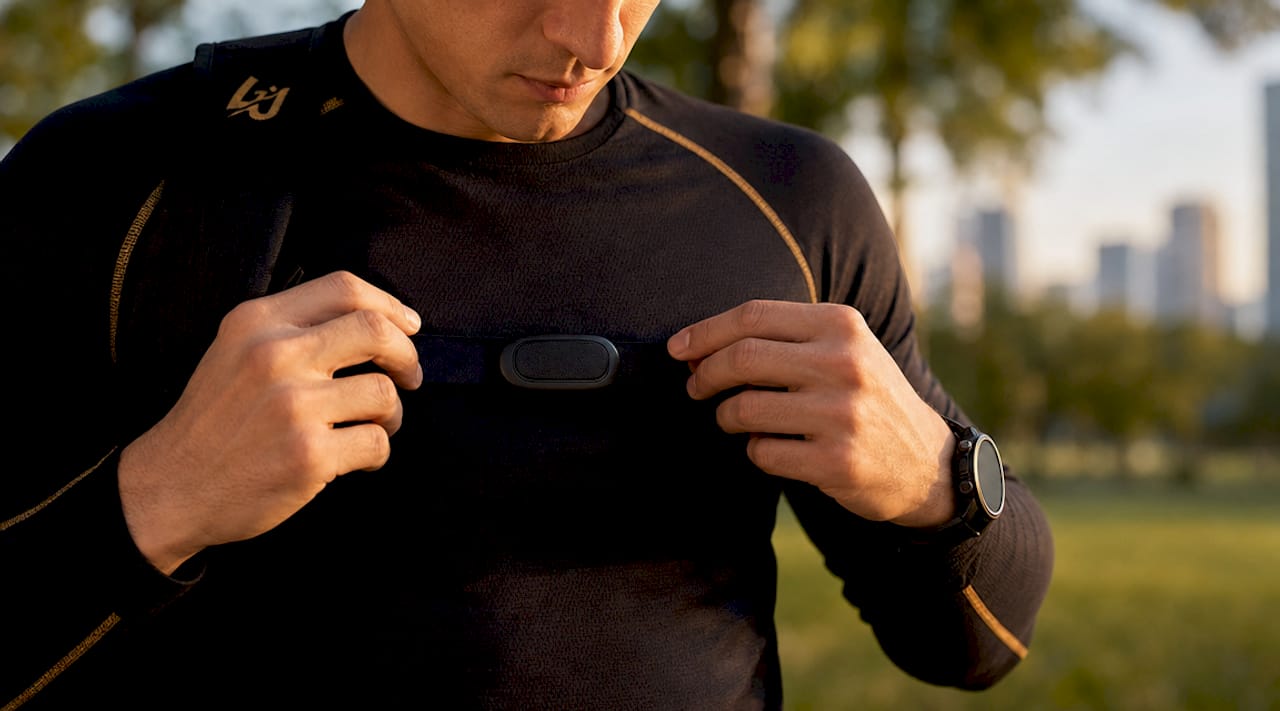
Device choice directly affects data quality. Chest straps outperform wrist PPG devices for HRV accuracy, with observational validation studies showing higher bias and greater variability in wrist-based readings compared to ECG reference standards. This matters because a miscalibrated HRV reading can lead to a training decision that is the opposite of what the physiology demands.
That said, smartphone PPG apps offer a practical and affordable entry point for athletes who cannot justify the cost of a Polar H10 chest strap or a Garmin HRV-capable device. The correlation with gold-standard ECG measurements is strong enough for trend monitoring, even if single-session precision is lower. For most recreational athletes, tracking the direction of change matters more than absolute accuracy.
Pro Tip: Before interpreting any HRV or readiness score, establish a personal baseline over at least two weeks of consistent measurement under the same conditions, ideally first thing in the morning before eating or training. Without a baseline, a score of 68 tells you nothing. Compared to your personal average of 74, it tells you to ease off.
How does self-tracking change athlete behaviour and decision-making?
Self-monitoring does more than generate data. It changes how athletes think about their training. Qualitative research on regular exercisers using wearable devices shows that users actively experiment with lifestyle and training changes based on their data, creating motivating feedback loops that reinforce positive behaviour. When an athlete notices that their HRV is consistently higher after eight hours of sleep than after six, they do not need a coach to tell them to prioritise rest.
The psychological mechanism here is self-efficacy. Seeing objective evidence of your own adaptation builds confidence in your training process. This is particularly relevant for athletes who struggle with adherence, because the data provides external validation that effort is producing results. The feedback loop works in both directions: poor scores prompt reflection and adjustment, while strong scores reinforce the behaviours that produced them.
Several specific behaviour changes emerge consistently from the research on self-tracking for athletic performance:
- Athletes adjust sleep timing and duration in response to low readiness scores, often adding 30 to 60 minutes of sleep per night during high-load training blocks.
- Hydration habits improve when athletes connect dehydration to elevated resting heart rate and suppressed HRV readings.
- Recovery activities such as cold exposure, stretching, and nutrition timing become deliberate rather than incidental when athletes can see their effect on next-day readiness.
- Training intensity decisions shift from fixed weekly plans to responsive adjustments based on current physiological state.
Effective self-tracking is therefore an active, iterative process. It is not passive data collection. Athletes who engage reflectively with their data develop what sports scientists call control competencies: the ability to modify behaviour based on feedback and sustain those modifications over time. This is the foundation of long-term athletic development, and it is one of the most underappreciated benefits of self-tracking in sports.
How to integrate self-tracking into your training programme
Knowing which metrics to track is only half the challenge. The other half is interpreting them correctly and acting on them without overreacting to daily noise. Here is a practical framework for integrating self-monitoring into your training.
- Choose two or three core metrics and track them consistently. HRV, subjective wellness (a simple 1 to 10 score), and training load are sufficient for most athletes. Adding more metrics without a clear purpose creates noise rather than insight.
- Establish individualised baselines and use rolling averages. A 7-day rolling average for HRV is more reliable for overtraining risk prediction than any single reading. Set your thresholds relative to your own history, not population norms.
- Treat readiness scores as one input, not a verdict. The multidimensional framework for training decisions integrates readiness indicators with training load, contextual factors such as life stress and travel, and longer-term performance trends. A low HRV on the morning of a competition does not automatically mean you should withdraw.
- Measure under consistent conditions. HRV readings taken at different times of day, after varying amounts of caffeine, or with different devices are not comparable. Standardise your protocol and stick to it.
- Review trends weekly, not daily. Daily fluctuations in HRV and wellness scores are normal and expected. Weekly patterns reveal genuine adaptation or accumulated fatigue. Daily obsession with scores is a fast route to anxiety rather than performance.
- Share your data with your coach. The benefits of sports performance coaching multiply when coaches have access to objective athlete data. A coach who can see your HRV trend alongside your training load can make session modifications that a subjective check-in alone would never reveal.
Pro Tip: If you play football, cricket, netball, or rugby, consider how a tennis performance tracking workflow structures data collection across a full training week. The principles transfer directly: consistent measurement windows, load-to-recovery ratios, and weekly trend reviews apply across all team and individual sports.
Key takeaways
Self-tracking improves sports performance because it converts physiological signals into specific, timely decisions that fixed training plans cannot replicate.
| Point | Details |
|---|---|
| Monitoring beats assessment | Repeated daily tracking enables workload adjustments that periodic testing cannot support. |
| HRV is the anchor metric | HRV-guided training produces greater VO₂max and power gains than fixed periodisation plans. |
| Device choice affects accuracy | Chest straps outperform wrist PPG for HRV precision; use the most accurate tool your budget allows. |
| Baselines before interpretation | Establish a two-week personal baseline before acting on any readiness or HRV score. |
| Data changes behaviour | Athletes who track consistently adjust sleep, hydration, and recovery in response to their data. |
What I have learned from watching athletes track themselves
I have seen self-tracking transform athletes, and I have seen it paralyse them. The difference almost always comes down to one thing: whether the athlete treats the data as a conversation or as a verdict.
The athletes who benefit most are the ones who use their numbers to ask better questions. A low HRV reading prompts them to ask what changed yesterday, not to cancel their session automatically. They hold the data lightly, cross-reference it with how they actually feel, and make a judgement call. That is not ignoring the data. That is using it intelligently.
The athletes who struggle are the ones who become slaves to their scores. I have worked with runners who would not start a session unless their readiness score crossed an arbitrary threshold. They were not training to their physiology. They were training to an algorithm. The result was inconsistency, anxiety, and, ironically, worse performance.
The uncomfortable truth about self-tracking is that it requires you to develop your own interpretive intelligence, not outsource your decisions to a device. Wearables and apps are tools. They do not know that you slept badly because of a stressful work week, or that your HRV is suppressed because you had a heavy meal late at night. You do. The data is most powerful when it confirms or challenges your own perception, not when it replaces it.
My advice: track two or three metrics, review them weekly, and use them to have better conversations with your coach. That is where the real performance gains live.
— Chris
Take your tracking further with Levelup360hq
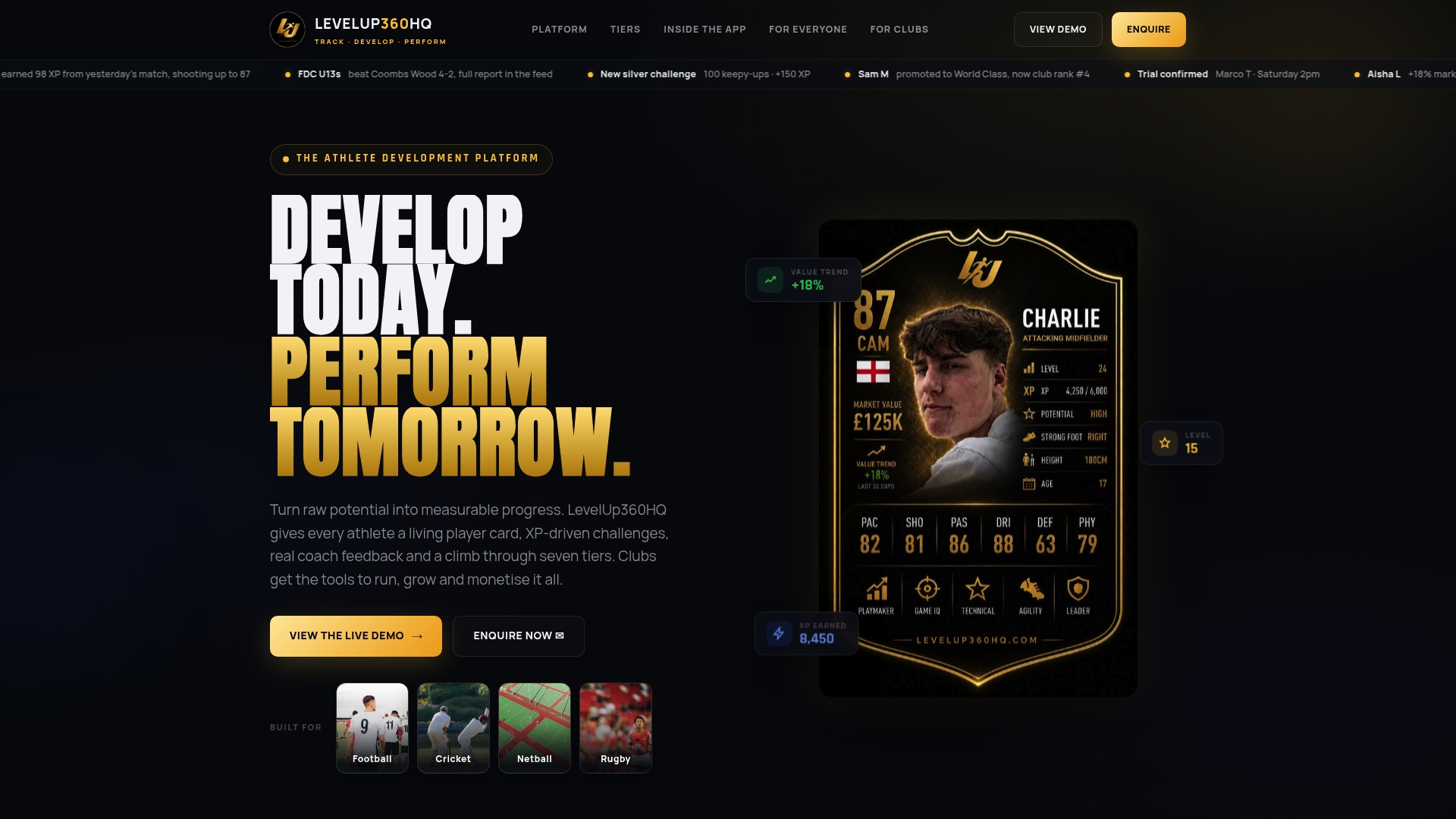
Levelup360hq is built for athletes who want to do more than collect data. The platform combines performance analytics with FIFA-style player cards, XP-driven challenges, and real-time ratings so that your tracking data feeds directly into your development story. Coaches get video assessment tools and session management workflows that turn athlete data into specific training decisions. Whether you play football, cricket, netball, or rugby, Levelup360hq gives you the infrastructure to track, develop, and perform at a higher level. Explore the platform or try the interactive demo to see how your self-tracking data can drive measurable progress.
FAQ
What is self-tracking in sports performance?
Self-tracking in sports is the systematic monitoring of physiological and training data, including HRV, training load, sleep, and subjective wellness, to inform daily and weekly training decisions. It differs from periodic assessment in that it captures ongoing adaptation rather than snapshot fitness levels.
Which HRV device is most accurate for athletes?
Chest straps such as the Polar H10 outperform wrist PPG devices for HRV accuracy, showing lower bias and variability against ECG reference standards. Smartphone PPG apps are a practical alternative for trend monitoring when precision is less critical.
How often should athletes review their self-tracking data?
Weekly trend reviews are more reliable than daily score monitoring, as day-to-day fluctuations in HRV and wellness are normal. Daily obsession with individual scores increases anxiety without improving decision quality.
Can self-tracking reduce injury risk?
A 12-week randomised controlled trial found that athletes using integrated wearable monitoring systems reduced time-loss injuries by 45% compared to a control group. The mechanism is early detection of accumulated fatigue before it becomes structural damage.
How does self-monitoring improve motivation?
Qualitative research shows that athletes who track their data actively experiment with sleep, hydration, and recovery behaviours in response to their scores, creating positive feedback loops that reinforce adherence and build self-efficacy over time.
Recommended
Turn potential into a player card.
LevelUp360 tracks every match, builds your child's player card, and shows their development over time.
Get started free