Why coaches use challenge-based training: a 2026 guide
Published 7 July 2026
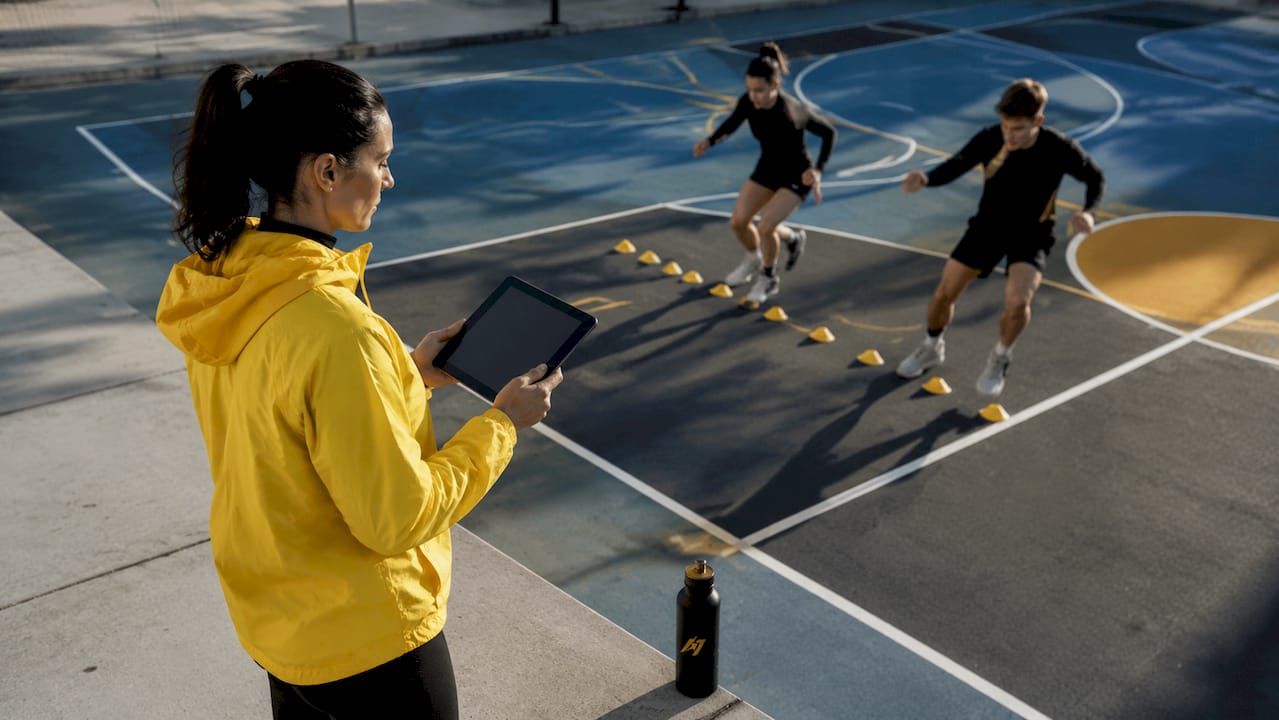
Challenge-based training is a coaching method that deliberately introduces manageable difficulties to accelerate skill retention, deepen engagement, and sharpen performance under pressure. Coaches across football, rugby, cricket, and netball adopt this approach because it targets the precise psychological and cognitive conditions that produce durable athlete development. The method draws on established principles including the Zone of Proximal Development, the challenge state, and gamification theory. Understanding why coaches use challenge-based training means understanding how difficulty, when calibrated correctly, becomes the most powerful tool in a coach’s session plan.
Why coaches use challenge-based training: the ZPD advantage
Challenge-based training places athletes at their Zone of Proximal Development, the boundary between what they can do independently and what they can achieve with the right level of difficulty. This boundary is where learning accelerates fastest. Too easy, and athletes coast. Too hard, and they shut down. The “just-right” level of difficulty is where coaches do their most important work.
Coaches identify this boundary through observation, performance data, and session feedback. A footballer who completes every passing drill without error is not developing. The coach’s job is to raise the constraint, perhaps by reducing time, adding a pressing opponent, or limiting touches, until the athlete is genuinely stretched. That stretch is the point of productive discomfort.
The science behind this is well established. Introducing desirable difficulties into practice leads to stronger long-term skill retention, even when immediate performance dips. That last point is critical. Athletes and coaches often misread short-term performance drops as failure. They are not. They are evidence of deeper cognitive processing and the building of durable skill memory.
- Spaced repetition: Spreading challenge exposure over time forces retrieval and strengthens memory traces.
- Interleaving: Mixing skill types within a session disrupts fluency temporarily but produces superior transfer to competition.
- Varied conditions: Changing the environment, surface, or opposition type prevents over-reliance on a single context.
- Reduced feedback frequency: Withholding immediate correction forces athletes to self-monitor and self-correct.
Pro Tip: When an athlete’s performance drops noticeably during a new challenge, resist the urge to simplify the task immediately. Give it two to three sessions before adjusting. The dip is often the learning.
How does the challenge state improve athlete performance?
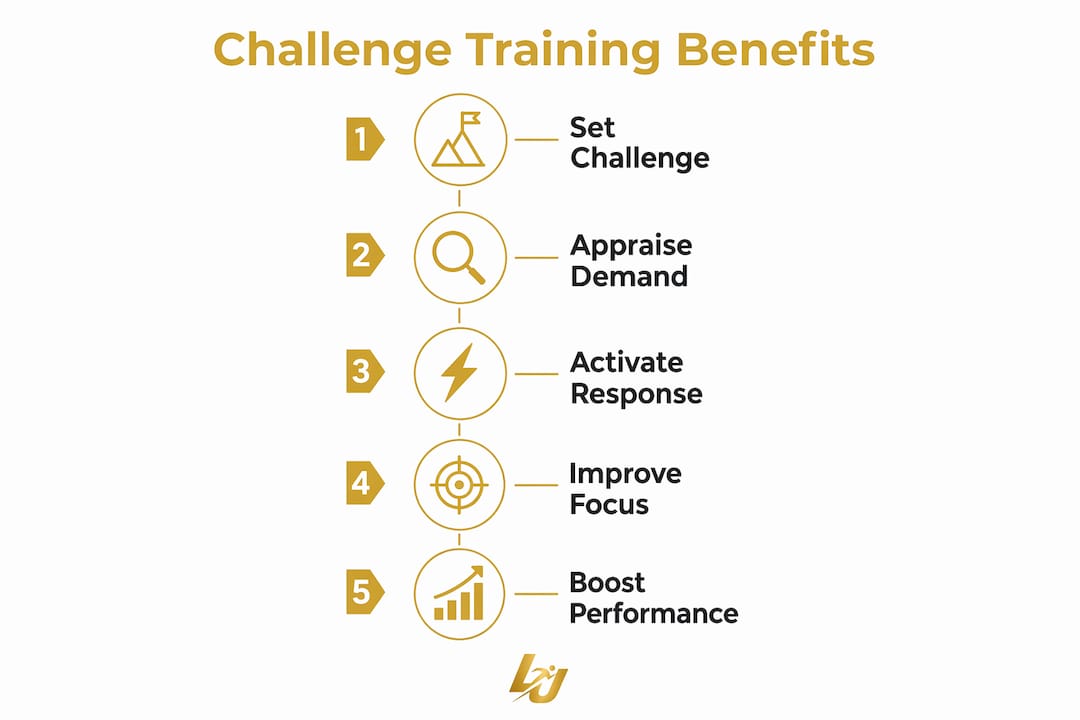
The challenge state is a specific physiological and psychological condition in which an athlete appraises a situation as demanding but manageable. It is the opposite of the threat state, where the athlete perceives demands as exceeding their resources. Cardiovascular responses in the challenge state show markers associated with peak performance: increased cardiac output and reduced vascular resistance. These markers do not appear in the threat state.

Training the challenge state means repeatedly exposing athletes to high-pressure scenarios in a controlled environment. Over time, athletes learn to appraise competitive pressure as energising rather than threatening. This is not a personality trait. It is a trainable response.
Coaches build the challenge state through:
- Controlled pressure drills: Penalty shootouts, final-minute scenarios, and sudden-death formats in training teach athletes to associate pressure with readiness.
- Positive resource appraisal: Coaches who consistently highlight athlete strengths before high-pressure tasks help shift appraisal from threat to challenge.
- Graduated exposure: Starting with low-stakes pressure and increasing intensity progressively builds tolerance and confidence.
- Debrief conversations: Post-drill discussions that focus on what the athlete controlled, rather than the outcome, reinforce challenge-state thinking.
The impact of challenge training on decision-making is particularly significant. Athletes in a challenge state maintain broader attentional focus and process information faster. In competition, that difference is measurable in split-second decisions that determine outcomes.
Does gamification actually motivate athletes in training?
Gamification drives motivation because it makes progress visible. Leaderboards, badge systems, and XP points convert abstract effort into concrete, trackable progress. Athletes perform better when their efforts are visibly tracked and observed, a phenomenon known as the Hawthorne effect. Coaches who build this visibility into their sessions create a self-reinforcing motivation loop.
Social accountability compounds this effect. When athletes can see where they rank relative to peers, two powerful psychological forces activate: social comparison and loss aversion. Athletes work harder to maintain a position than they do to achieve one. That asymmetry is a commitment device coaches can use deliberately.
Structured, time-bound challenge programmes with expert feedback outperform generic training by fostering accountability and skill correction. When continuing feels easier than quitting, dropout rates fall and skill development accelerates.
Practical implementation follows a clear sequence:
- Set a fixed timeline. A four-week challenge with defined milestones creates urgency and prevents drift.
- Define visible metrics. Track completion rates, improvement scores, or technical benchmarks athletes can see daily.
- Introduce peer review. Video submissions reviewed by coaches and peers add accountability and accelerate error correction.
- Award progression markers. Badges and tier advancement signal meaningful progress and sustain effort through difficult phases.
- Publish results. Shared leaderboards, even within a squad, activate social comparison and raise collective standards.
Pro Tip: Pair leaderboard visibility with private coach feedback. Public rankings motivate effort; private feedback directs it. Together, they produce faster development than either alone.
Social accountability mechanisms like leaderboards and video submissions serve as commitment devices that prevent dropout through peer influence and visible progress. This is why platforms built around gamified athlete development, such as Levelup360hq, have gained traction with coaches managing large squads across multiple sports.
Fixed versus dynamic challenge: which approach works better?
Static challenge programmes fail because athletic readiness varies daily. A session intensity that produces optimal growth on Monday may demotivate or injure an athlete on Thursday after accumulated fatigue. Flexible adaptation to fatigue, arousal levels, and accumulated learning is what separates effective challenge design from generic training plans.
Dynamic challenge calibration requires coaches to read three variables before each session: physical readiness, psychological state, and current skill level relative to the target. A rugby coach who ignores that a player is carrying a knock and runs the same high-intensity decision drill as planned is not applying challenge-based training. They are applying a fixed schedule.
Effective challenges are also specific to competition conditions. Time pressures and decision demands in practice should mirror real events. A netball coach who designs passing drills without defensive pressure is not preparing athletes for match conditions. Matching contextual constraints leads to better behavioural adaptation and skill transfer under competitive stress.
| Approach | Challenge calibration | Athlete response | Transfer to competition |
|---|---|---|---|
| Fixed challenge | Same difficulty every session | Boredom or burnout over time | Low: context mismatch |
| Dynamic challenge | Adjusted per session conditions | Sustained engagement and growth | High: mirrors real demands |
| Competition-specific | Mirrors match constraints | Heightened readiness and decision speed | Very high: direct transfer |
The table makes the case plainly. Dynamic, competition-specific challenge design produces the outcomes coaches are paid to deliver. Fixed programmes are easier to administer but consistently underperform.
Key takeaways
Challenge-based training works because it targets the precise psychological and physiological conditions that produce durable skill development, sustained motivation, and competitive readiness.
| Point | Details |
|---|---|
| Zone of Proximal Development | Place athletes at their challenge boundary to maximise skill retention and cognitive engagement. |
| Challenge state training | Repeated pressure exposure trains athletes to appraise competition as energising, not threatening. |
| Gamification and accountability | Leaderboards, badges, and fixed timelines reduce dropout and raise collective training standards. |
| Dynamic calibration | Adjust challenge difficulty session by session to reflect fatigue, arousal, and current skill level. |
| Competition-specific design | Match practice constraints to real match demands for direct skill transfer under pressure. |
The uncomfortable truth about challenge in coaching
Coaches often underestimate how much discomfort they need to tolerate alongside their athletes. The instinct to reduce difficulty when an athlete struggles is natural, but it is also the most common reason challenge-based programmes fail to deliver. I have watched technically gifted coaches abandon a well-designed challenge drill after two sessions because the squad looked frustrated. What they missed was that the frustration was the signal, not the problem.
The athletes who develop fastest are not the ones who find training easy. They are the ones whose coaches hold the difficulty long enough for adaptation to occur. That requires trust in the process and the ability to distinguish productive discomfort from genuine overload. The two feel similar in the moment but have completely different outcomes over a six-week block.
Managing athlete expectations around performance dips is the hardest part of this work. Athletes expect linear progress. Challenge-based training does not produce linear progress. It produces plateaus, dips, and then sudden jumps. Coaches who explain this cycle before it happens retain athlete buy-in through the difficult phases. Coaches who do not explain it lose athletes to doubt.
Building a sustainable challenge culture means making the discomfort part of the identity of the squad. When athletes start to say “this is how we train here,” the coach’s job becomes significantly easier. That culture does not appear overnight. It is built session by session, through consistent application of well-calibrated difficulty and honest, specific feedback.
— Chris
How Levelup360hq supports challenge-based coaching
Coaches who want to apply challenge-based training at scale need tools that handle the tracking, accountability, and calibration work that would otherwise consume hours of administrative time.

Levelup360hq is built specifically for this. The platform gives coaches XP-driven challenge creation with real-time performance analytics, badge systems, and leaderboards that activate the social accountability mechanisms this article describes. Video assessment tools and approval workflows mean coaches can review athlete submissions, provide specific feedback, and adjust challenge parameters without losing session time. The result is a structured challenge environment that mirrors the dynamic, competition-specific design principles that produce real development. Coaches managing squads across football, rugby, cricket, or netball can explore the platform and test challenge programme creation directly.
FAQ
What is challenge-based training in sport?
Challenge-based training is a coaching method that deliberately places athletes at their Zone of Proximal Development, introducing manageable difficulties that accelerate skill retention and competitive readiness. It combines cognitive science, performance psychology, and structured accountability to produce durable athlete development.
How does the challenge state differ from the threat state?
The challenge state occurs when an athlete appraises demands as manageable relative to their resources, producing cardiovascular markers associated with peak performance. The threat state occurs when demands feel excessive, impairing decision-making and focus under pressure.
Why do athletes sometimes perform worse during challenge-based training?
Short-term performance dips during challenging tasks indicate deeper cognitive processing, not failure. These dips are an expected part of building durable skill memory and typically precede measurable performance gains over a four to six week period.
How often should coaches adjust challenge difficulty?
Coaches should assess and adjust challenge parameters session by session, accounting for athlete fatigue, arousal, and accumulated learning. Static challenge programmes that ignore daily variability consistently underperform against dynamically calibrated approaches.
Does gamification genuinely improve training outcomes?
Visible progress tracking through leaderboards and badge systems activates the Hawthorne effect and loss aversion, both of which increase athlete effort and reduce dropout during difficult training phases. Structured, time-bound challenges with peer accountability outperform generic training programmes in skill correction and retention.
Recommended
Turn potential into a player card.
LevelUp360 tracks every match, builds your child's player card, and shows their development over time.
Get started free