Why clubs benefit from athlete tracking systems
Published 13 June 2026
Athlete tracking systems are the defining competitive advantage for sports clubs that want to reduce injuries, sharpen coaching decisions, and run leaner operations. The industry term is athlete monitoring systems, and whether your club uses GPS wearables, IoT sensors, or integrated software platforms like Catapult, WHOOP, or Polar Team Pro, the core principle is the same: structured data replaces guesswork. This article explains why clubs benefit from athlete tracking systems across four dimensions: injury prevention, coaching quality, operational efficiency, and technology selection. Every claim below is grounded in 2026 research.
Why clubs benefit from athlete tracking systems: injury prevention first
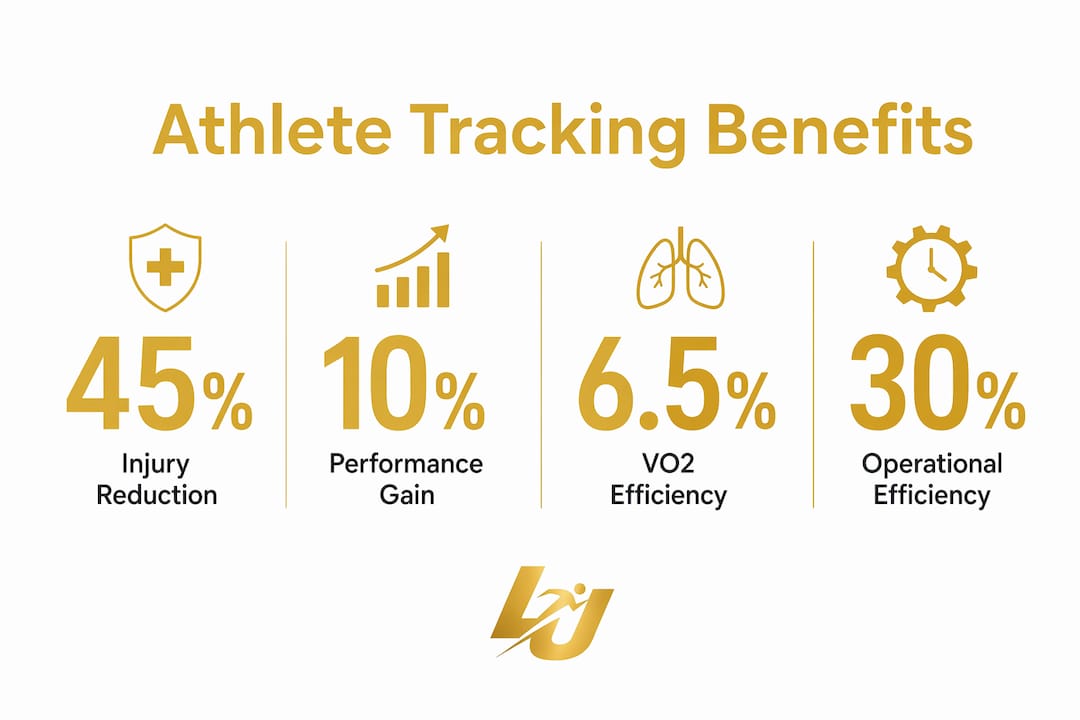
The most immediate return from athlete monitoring is a measurable reduction in injuries. Athletes using deeply integrated wearable tracking systems experience 45% fewer time-loss injuries over a 12-week period. That figure represents weeks of lost training time, squad depth, and in professional contexts, significant wage costs avoided.
The mechanism behind this is the acute-to-chronic workload ratio. Tracking systems calculate the relationship between an athlete’s recent training load and their longer-term conditioning baseline. When the ratio spikes, injury risk rises sharply. GPS systems in professional football now collect data at up to 5 Hz, detecting workload spikes early enough for coaches to intervene before soft-tissue damage occurs.
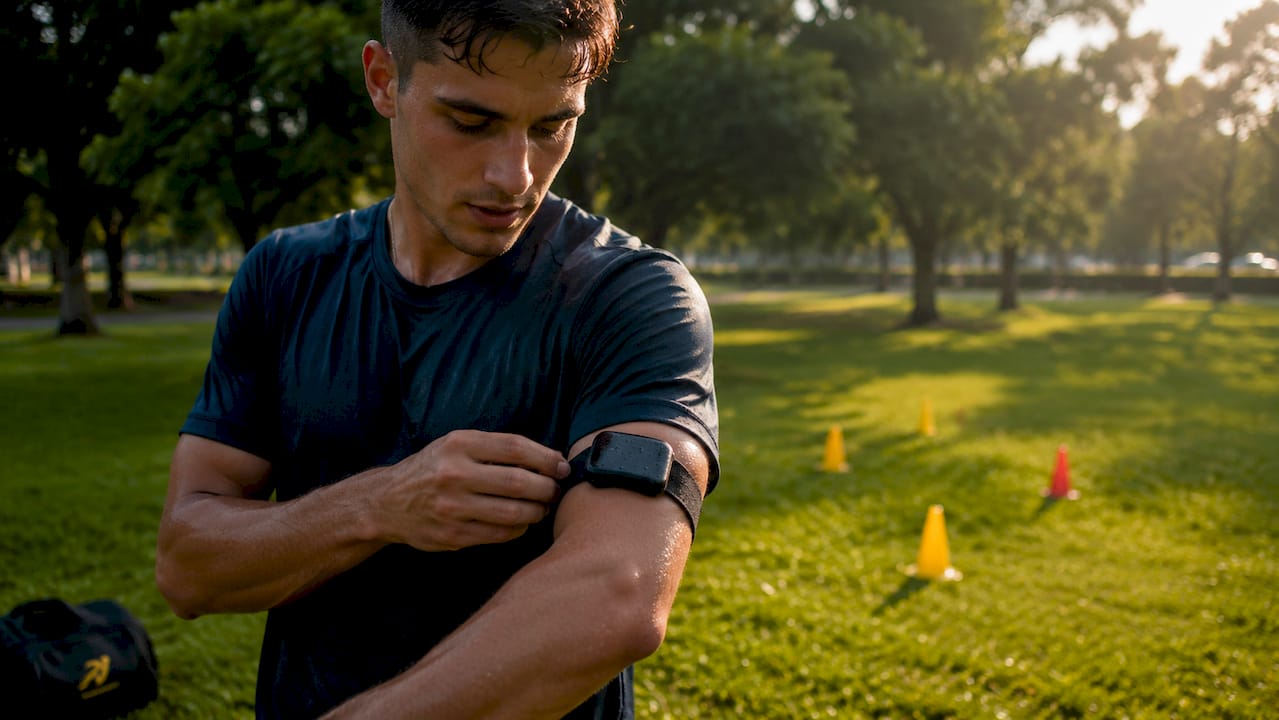
Youth athletes represent a particularly high-value use case. GPS data flags workload spikes linked to soft-tissue injuries during growth phases, where adult-style loading is genuinely dangerous. Clubs running youth academies in football, rugby, or netball can use tracking to individualise load thresholds by age and physical maturity rather than applying a blanket squad programme. The long-term durability gains compound over a player’s development arc.
The same 2026 study that recorded the 45% injury reduction also found a 6.5% drop in VO2 consumption and a 10.3% improvement in movement quality. This means athletes are not just getting injured less. They are moving better and recovering more efficiently, which translates directly into on-field performance.
Pro Tip: Integrate tracking data with medical and wellness inputs, including sleep quality, nutrition logs, and physiotherapy notes, to build a genuinely holistic picture of athlete readiness rather than relying on physical load data alone.
How does tracking data improve coaching decisions?
Tracking data transforms coaching from an art based on observation into a discipline grounded in evidence. Real-time IoT training load frameworks now achieve 98.7% accuracy with low latency in monitoring athlete load, with an F1 score of 95.2%. That level of precision means a coach reviewing session data after training is working with near-perfect information, not estimates.
The practical benefits for coaching staff include:
- Individualised training adjustments. When a midfielder’s sprint distance drops 15% below their personal threshold, the system flags it. The coach can reduce intensity that session rather than waiting for the athlete to report fatigue or sustain a strain.
- Tactical efficiency analysis. Modern GPS platforms measure pressing intensity, distance covered in high-intensity zones, and positional compactness. Coaches at clubs using Catapult or STATSports can compare tactical execution in training against match data to identify where shape breaks down under fatigue.
- Objective performance benchmarks. Tracking removes the subjectivity from squad selection debates. Two athletes competing for the same position can be assessed on speed, acceleration, and work-rate data rather than the coach’s most recent impression.
- Load management across a congested fixture schedule. During periods with matches every three or four days, tracking data helps coaches rotate intelligently, protecting high-mileage players without sacrificing tactical preparation.
The critical caveat is that monitoring metrics are best used as operational indicators that support adaptive training, not as replacements for coach judgement. A wellness survey or a countermovement jump test can tell you an athlete is fatigued. Only the coach knows whether that athlete needs to train through it or rest. Data informs the decision. It does not make it.
For clubs with limited budgets, simplified metrics like wellness surveys and submaximal heart rate responses are scalable for low-resource environments and still deliver meaningful coaching insights without requiring a full GPS infrastructure.
What operational efficiencies do clubs gain from tracking systems?
Beyond the training pitch, athlete monitoring systems deliver significant operational and financial benefits that club managers often underestimate until they experience the alternative.
-
Eliminating data fragmentation. Data fragmentation costs clubs millions annually through duplicate efforts, slowed decisions, and inconsistent athlete insights. When GPS data sits in one platform, medical records in another, and performance assessments in a spreadsheet, no single staff member has a complete picture. Decisions made on partial information produce suboptimal outcomes in both coaching and rehabilitation.
-
Establishing a master athlete identity. Clubs must resolve fragmentation by creating a unified athlete profile that consolidates physical, medical, and performance data. This single source of truth accelerates decisions across coaching, medical, and recruitment functions and reduces the administrative burden on support staff.
-
Improving staff productivity. When data is centralised, analysts, physios, and coaches spend less time chasing information and more time acting on it. The speed of decision-making in injury management and return-to-play protocols improves materially.
-
Strengthening insurance and compliance positions. Insurance underwriters favour clubs with systematic health tracking protocols, including incident logs and return-to-play compliance records. Documented monitoring reduces a club’s risk profile in ways that waivers alone cannot achieve. For academies and community clubs, this is a concrete financial benefit that offsets technology costs.
-
Supporting multi-club and talent portfolio management. Athlete analytics are transitioning to core organisational infrastructure shaping recruitment, contracts, and valuations. City Football Group uses shared analytics across its network of clubs to manage talent pipelines and asset values at scale. Clubs with ambitions to grow or affiliate with larger organisations need the data infrastructure to participate in that ecosystem.
Pro Tip: Prioritise data governance before expanding your technology stack. Define who owns athlete data, how it is stored, and who has access before adding new tools. A governance framework prevents the fragmentation problem from reappearing as you scale.
Which tracking technology suits your club’s needs?
Selecting the right system depends on your club’s size, sport, budget, and the technical capacity of your staff. The table below compares the most widely used platforms.
| Platform | Best suited for | Data capture | Key strength | Limitation |
|---|---|---|---|---|
| Catapult | Elite and semi-professional clubs | Up to 10 Hz GPS | Tactical and physical analytics depth | High cost, steep learning curve |
| STATSports | Academy and semi-professional clubs | Up to 10 Hz GPS | Accessible interface, strong football focus | Less suited to non-field sports |
| Polar Team Pro | Multi-sport clubs | Continuous heart rate + GPS | Heart rate accuracy, multi-sport versatility | Less granular positional data |
| WHOOP | Individual athlete monitoring | Continuous biometric | Recovery and sleep tracking depth | No GPS, limited team-level view |
| Wellness surveys + jump tests | Low-resource clubs | Session-based | Zero hardware cost, scalable | Lower data granularity |
The right choice is not always the most technically advanced option. A community rugby club with one part-time analyst gains more from a simple wellness monitoring protocol than from a Catapult system that nobody has time to interpret. Membership tracking for MMA gyms demonstrates how even contact sports clubs with modest resources see measurable retention and performance benefits from structured athlete monitoring. Similarly, student progress tracking in martial arts shows that the principles of athlete monitoring translate across disciplines well beyond football.
The guiding principle is to select metrics that are scalable to your club’s actual capacity. Effective monitoring selects relevant metrics rather than gathering excessive data, preventing analysis paralysis and keeping coaching decisions grounded in what is actionable.
Key takeaways
Clubs that implement athlete monitoring systems with clear data governance, scalable metrics, and integration across coaching and medical functions achieve measurable gains in injury reduction, coaching quality, and operational efficiency.
| Point | Details |
|---|---|
| Injury reduction is quantifiable | Integrated wearable systems reduce time-loss injuries by 45% over 12 weeks, with movement quality improving by 10.3%. |
| Data supports, not replaces, coaches | Monitoring metrics are operational indicators; coach judgement remains the final decision-making authority. |
| Fragmentation is a financial risk | Fragmented athlete data costs clubs millions annually through duplicated effort and inconsistent insights. |
| Insurance benefits are real | Documented health monitoring protocols reduce club risk profiles and are favoured by insurance underwriters. |
| Match technology to club capacity | Low-resource clubs gain more from scalable wellness surveys than from complex GPS platforms they cannot fully utilise. |
The uncomfortable truth about tracking technology adoption
I have seen clubs invest in Catapult or STATSports systems and then use roughly 20% of the available data. The hardware sits on athletes. The dashboards open at the start of the week. And then the coaching staff revert to what they already knew, because nobody built the internal process to turn data into decisions.
The technology is not the hard part. The hard part is building a data culture inside a club where coaches trust the numbers enough to act on them, and where the numbers are clean enough to deserve that trust. That starts with data governance, not hardware procurement. Before you spend a pound on sensors, define your master athlete identity. Decide what you are measuring, why you are measuring it, and who is responsible for acting on it.
The clubs I have seen get genuine value from athlete monitoring systems share one characteristic: they started small. They picked two or three metrics that directly connected to their biggest coaching problems, whether that was soft-tissue injury rates, sprint drop-off in the second half, or return-to-play timelines. They built confidence in those metrics before adding complexity. That discipline is rarer than it should be.
The other caution I would offer is about youth development specifically. The long-term durability gains from tracking youth athletes through growth phases are genuinely significant, but only if the club has the expertise to interpret growth-phase data correctly. Applying adult workload thresholds to a 14-year-old because the system uses the same algorithm is worse than not tracking at all. Get the methodology right before you get the technology in.
— Chris
How Levelup360hq supports clubs with athlete tracking
Levelup360hq is built for clubs that want athlete monitoring integrated with development, engagement, and club management in a single platform. The Levelup360hq platform combines performance analytics with FIFA-style player cards, XP-driven challenges, and real-time ratings, giving coaches the data they need while giving athletes a reason to engage with their own development. For club managers, white-label branding, CRM tools, and subscription management sit alongside the tracking and analytics layer.

If you want to see how the system works in practice, the interactive demo walks you through the tracking and performance features without a sales call. Clubs across football, cricket, netball, and rugby are already using it to connect athlete data with operational management.
FAQ
What are the main benefits of athlete tracking for sports clubs?
Athlete tracking systems reduce time-loss injuries, improve coaching decisions through objective load data, and cut operational costs by eliminating data fragmentation. The advantages of athlete tracking span both performance and financial outcomes for clubs of all sizes.
How do clubs use tracking technology without overwhelming coaches with data?
Effective athlete monitoring selects a small number of scalable, relevant metrics such as wellness surveys, jump tests, and heart rate responses rather than capturing every available data point. This prevents analysis paralysis and keeps insights directly connected to coaching decisions.
Do athlete tracking systems benefit youth academies specifically?
Youth athletes benefit significantly because GPS and wearable data flags workload spikes during growth phases, where sudden load increases carry a higher soft-tissue injury risk than in adult athletes. Adjusting training intensity based on tracking data builds long-term durability rather than short-term performance gains.
Can smaller clubs afford athlete monitoring systems?
Yes. Low-resource clubs can implement effective monitoring using wellness surveys and submaximal heart rate tests at minimal cost. The impact of tracking on athlete performance does not require expensive GPS hardware when the club lacks the staff capacity to analyse high-frequency data.
How does athlete tracking affect a club’s insurance position?
Insurance underwriters favour clubs with documented health monitoring protocols, including incident logs and return-to-play compliance records. Systematic tracking reduces a club’s risk profile in ways that standard liability waivers cannot replicate.
Recommended
Turn potential into a player card.
LevelUp360 tracks every match, builds your child's player card, and shows their development over time.
Get started free