What is sports club branding software?
Published 6 July 2026

Sports club branding software is a category of digital tools designed to help clubs create, manage, and maintain a unified brand identity across every touchpoint, from social media to matchday signage. These tools fall into two broad categories: content and visual production tools, and operational branding platforms. The distinction matters because most clubs need both. A consistent brand identity drives fan loyalty, attracts sponsors, and signals professionalism to prospective members. Platforms like Levelup360hq demonstrate how branding functions can sit inside a wider club management system, making it easier for administrators to keep every communication on-brand without relying on a dedicated design team.
What is sports club branding software and what does it actually do?
Sports club branding software is defined as any digital platform that centralises a club’s visual assets and automates their consistent application across communications. The two primary categories serve different but complementary purposes.
Content and visual production tools handle graphic creation. These include AI-powered template builders, mockup generators, and image editors built specifically for sports contexts. They let club administrators produce matchday graphics, social posts, and sponsor presentations without design expertise. AI-powered branding tools remove design bottlenecks, allowing clubs without design teams to create professional branded visuals easily. That matters because most grassroots clubs rely on volunteers who have no formal design training.

Operational branding platforms go further. They manage the entire brand ecosystem: white-label member apps, communication hubs, CRM systems, and event pages. These platforms allow 100% brand consistency by centralising all approved brand kit assets with controlled access. Every template, colour code, and logo lives in one place, so no volunteer can accidentally publish an off-brand graphic.
Pro Tip: Before selecting any software, audit every place your club’s name or logo currently appears. That list becomes your minimum integration requirement.
The key difference between the two categories is scope. A visual production tool helps you make great graphics. An operational platform makes sure every graphic, page, and notification looks like it came from the same club.
How do sports clubs implement branding software effectively?
Effective implementation follows a clear sequence. Software alone does not create a strong brand. A brand strategy must precede software adoption; without a defined story and visual pillars, even the best software only amplifies confusion.
Follow these steps to get implementation right:
-
Define your core identity. Write down your club’s values, mission, and the audience you serve. A youth football academy has a different brand voice than a semi-professional rugby club. This document becomes the filter for every creative decision.
-
Create a one-page brand guideline. Include your primary, secondary, and tertiary colours as hex codes, your approved fonts, and rules for logo use. Adopting the ‘rule of three’ colour palette ensures visual cohesion across all platforms. Three colours are enough to create variety without creating chaos.
-
Upload assets to a central brand kit. Load your logo files, colour codes, and approved fonts into the software before anyone creates a single graphic. This step is non-negotiable. If assets are scattered across email threads and personal drives, the software cannot enforce consistency.
-
Set user roles and lock templates. Assign editing permissions based on what each person needs to change. A volunteer posting match results should be able to update the score, not the club crest. Locked templates protect the brand while giving non-designers the freedom to publish.
-
Integrate the software with your other club systems. Connect it to your website, social channels, and member communications. Fragmented digital systems force clubs to manually replicate branding settings multiple times, increasing the risk of inconsistent identity.
Pro Tip: Publish your one-page brand guideline inside the software itself as a pinned reference document. New volunteers find it immediately and have no excuse for going off-brand.
The most common implementation failure is skipping step one. Clubs buy software, upload a logo, and assume the rest follows. It does not. The software is the vehicle; the brand strategy is the destination.
What features should sports club branding software include?
The right branding solution for a sports club covers five core capability areas. Each one addresses a specific operational gap that clubs face when managing their identity without a professional design team.
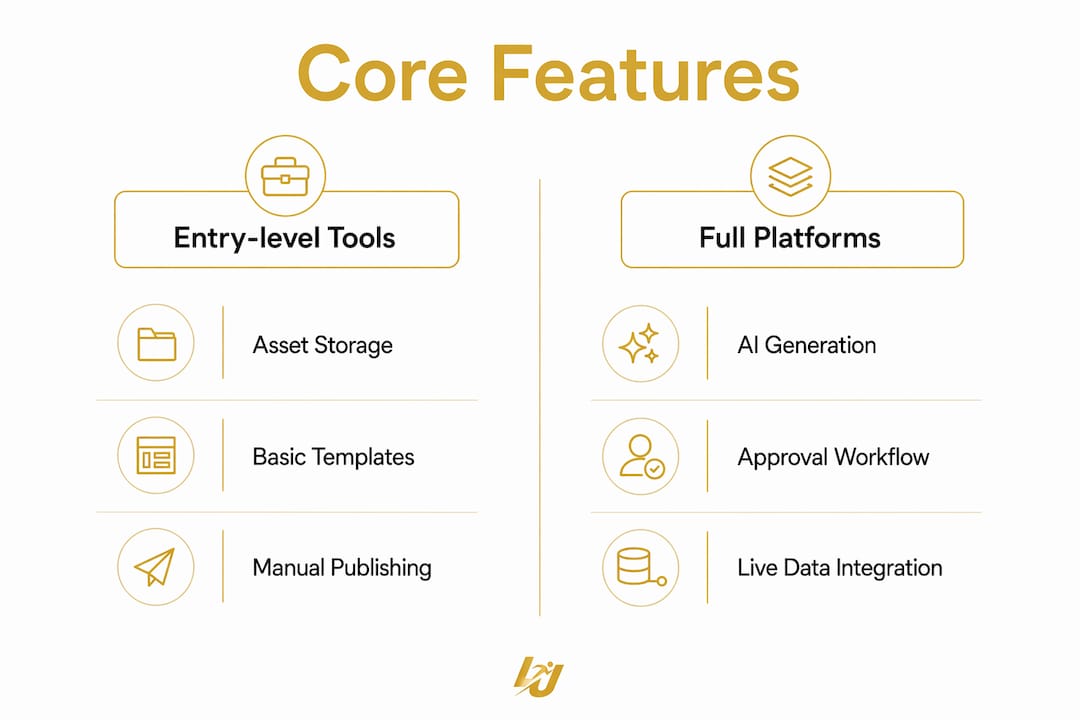
Centralised brand asset management is the foundation. Every logo variant, approved font, and colour palette lives in one location. Administrators control who can access and edit each asset. This single source of truth prevents the slow drift of inconsistency that happens when files are shared informally.
AI-powered graphic generation accelerates content production. Sponsorship mockup generators enable instant creation of branded visuals showing sponsor logos on jerseys, stadiums, and events. Traditional mockups that once cost hundreds of pounds and days of work can now be generated in minutes. That speed changes how clubs approach sponsor proposals entirely.
Real-time data integration is where branding software becomes genuinely powerful. Linking branding tools with live sports data automates real-time creation of branded graphics, supporting fast, relevant fan engagement. A match result graphic that publishes automatically within seconds of the final whistle is far more engaging than one posted an hour later.
Locked templates and approval workflows protect the brand at scale. Tools allowing non-designers to edit only allowed text or images maintain brand consistency while empowering volunteers. The administrator sets the boundaries; the volunteer works within them.
Multi-channel publishing closes the loop. The software should push content directly to social media accounts, the club website, and the member app from a single interface. Switching between platforms to post the same graphic in different formats wastes time and introduces errors.
Here is a quick reference for evaluating branding software by capability level:
| Feature | Entry-level tools | Full operational platforms |
|---|---|---|
| Brand asset storage | Basic file library | Centralised kit with access controls |
| Template editing | Open editing | Locked templates with user roles |
| Data integration | None | Live match stats and CRM feeds |
| Publishing channels | Manual export | Direct multi-channel publishing |
| Approval workflows | None | Built-in review and sign-off process |
What are the benefits of AI-powered sports branding tools for smaller clubs?
AI-powered branding tools are the most significant development for amateur and grassroots clubs in recent years. They remove the dependency on professional designers entirely.
The practical benefits are direct:
- No design bottleneck. A volunteer can open a template, update the score and scorers, and publish a professional-looking matchday graphic in under two minutes.
- Automatic colour matching. AI tools detect the club’s primary colour and apply it consistently across new templates without manual input.
- Instant sponsor visualisations. A club seeking a new shirt sponsor can generate a photorealistic mockup of the sponsor’s logo on the kit within seconds, making proposals far more persuasive.
- Consistent volume. Clubs that post consistently build larger, more engaged audiences. AI tools make it realistic for a two-person committee to maintain a daily posting schedule.
- Auto-sizing for platforms. The same graphic resizes automatically for Instagram, Facebook, and Twitter, removing a tedious manual step.
Small clubs gain visual sophistication through AI-enabled tools, making professional branding achievable without expensive design resources. The gap between a grassroots club’s visual output and a professional club’s was once enormous. AI has narrowed it significantly.
Branding is a cohesive ecosystem; every element from the mobile app to sponsor signage contributes to the emotional connection of the community. AI tools make it possible for small clubs to maintain that ecosystem without a full-time marketing staff member.
Key takeaways
Sports club branding software is most effective when a clear brand strategy precedes the technology, and when centralised asset control is combined with AI-powered content creation.
| Point | Details |
|---|---|
| Two core categories | Content production tools and operational platforms serve different needs; most clubs benefit from both. |
| Strategy before software | Define values, colours, and guidelines before uploading a single asset to any platform. |
| Locked templates protect brands | Restricting what volunteers can edit maintains consistency without removing their ability to publish. |
| AI removes design barriers | Smaller clubs can produce professional graphics and sponsor mockups without a design team. |
| Data integration drives engagement | Connecting branding tools to live match data automates timely, relevant content for fans. |
Why most clubs get branding software wrong
I have worked with enough sports clubs to spot the pattern immediately. The committee votes to buy a branding tool, someone uploads the logo, and within three months the club’s social media looks like it was designed by four different people on four different days. The software did not fail them. The strategy did.
Branding is not merely about a logo. It is about building a cohesive ecosystem where every touchpoint tells the same story. The clubs that get this right treat their brand guideline as a living document, not a PDF that gets emailed once and forgotten. They run short onboarding sessions for new volunteers. They use approval workflows so that nothing goes out without a second pair of eyes.
The feature I see underused most consistently is data integration. Clubs invest in branding software and then manually type match results into templates. Connecting the software to a live data feed takes an afternoon to set up and saves hours every week. More importantly, it means the graphic goes out while fans are still talking about the match.
My honest advice: spend as much time on your brand guidelines as you do on evaluating software. The best platform in the world cannot compensate for a club that has not decided what it stands for.
— Chris
How Levelup360hq supports sports club branding
Levelup360hq is built for exactly the kind of club that needs professional branding without a professional marketing team.
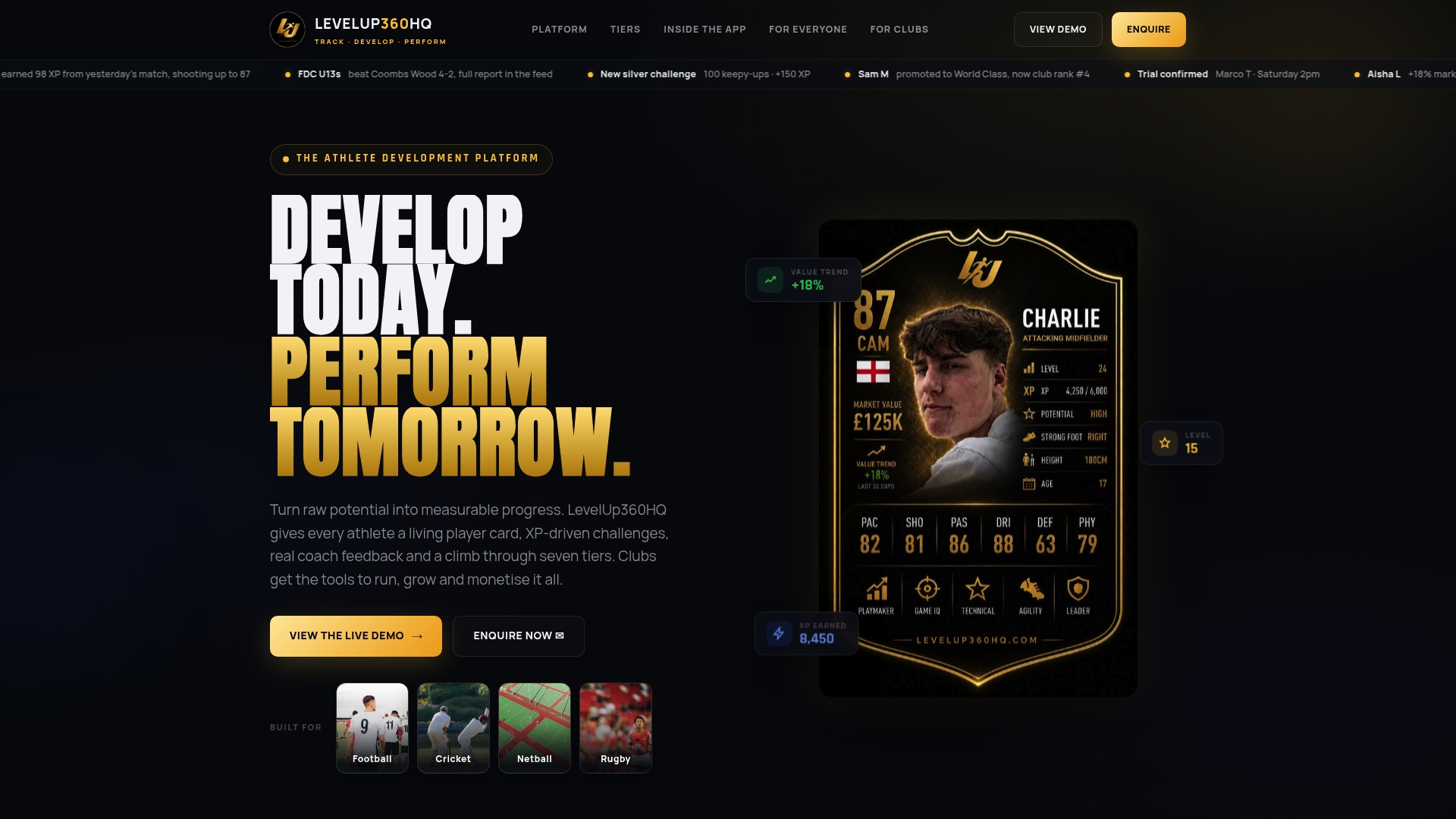
The platform offers white-label branding capabilities that let clubs apply their colours, logos, and identity across member-facing tools including player cards, leaderboards, and the club app. Administrators control the brand centrally while volunteers and coaches work within it. The CRM, subscription management, and store integrations mean the brand appears consistently at every member interaction, not just on social media. For clubs that want to see how it works before committing, the platform demo walks through the key features with real examples. Levelup360hq supports football, cricket, netball, and rugby, so the branding tools are built around the rhythms of those sports specifically.
FAQ
What is sports club branding software?
Sports club branding software is a digital platform that centralises a club’s visual assets and automates consistent brand application across communications, social media, and member-facing tools. It combines content creation features with operational brand management to remove the need for a dedicated design team.
What features should I look for in branding software for sports clubs?
The core features are centralised brand asset management, locked templates with user roles, AI-powered graphic generation, real-time data integration, and multi-channel publishing. Approval workflows are critical for clubs with multiple volunteers creating content.
Can small or amateur clubs benefit from branding software?
Yes. AI-powered tools remove the design expertise barrier entirely, allowing volunteers to produce professional-grade graphics using locked templates and automated colour matching. The visual gap between grassroots and professional clubs has narrowed significantly because of these tools.
How does the ‘rule of three’ colour palette work in sports branding?
The rule of three means selecting one primary colour, one secondary colour, and one tertiary colour for all club communications. Using only three colours creates enough variety for different content types while maintaining visual cohesion across every platform.
What is the biggest mistake clubs make when adopting branding software?
The most common mistake is adopting software before defining a brand strategy. Without documented values, colour codes, and usage guidelines, the software has no consistent brief to enforce, and the club’s visual identity fragments quickly regardless of the tools in use.
Recommended
Turn potential into a player card.
LevelUp360 tracks every match, builds your child's player card, and shows their development over time.
Get started free