What is sports club brand differentiation?
Published 18 July 2026

Sports club brand differentiation is the process of creating and consistently expressing a unique identity that separates a club from every other competitor in its market. It goes well beyond a crest or a colour palette. Cluster analysis of 1,702 voluntary sports clubs identified five distinct organisational archetypes, which shows that differentiation is rooted in internal capacity, community engagement, and resilience, not just marketing visuals. For sports club managers and marketers, understanding what makes a sports brand unique is the foundation of every commercial, fan engagement, and sponsorship decision you will ever make.
What is sports club brand differentiation, and why does it matter?
Brand differentiation in sports clubs is the industry term for what marketers also call “competitive positioning.” It describes how a club occupies a distinct and valued place in the minds of fans, sponsors, and the wider community. A club without a clear differentiator competes on price, geography, or results alone. All three are unstable foundations.

Thematic analysis identified 12 sub-themes across four main strategic dimensions for effective sports brand management: business, social, cultural, and technological. Each dimension shapes how a club is perceived. A club that manages all four coherently builds a brand that survives poor seasons, ownership changes, and shifting demographics.
Sports brands also occupy a rare marketing position. Sports brands outperform cultural brands in their balanced use of both relational marketing (content, community) and transactional marketing (merchandise, ticketing). That balance is itself a differentiator. Clubs that treat matchday revenue and fan storytelling as separate functions miss the compounding effect of aligning both.
The importance of brand differentiation becomes clearest when clubs face adversity. A club with a well-defined identity retains fan loyalty through relegation. A club without one struggles to sell season tickets even in a promotion year.
What organisational factors underpin effective brand differentiation?
The five organisational archetypes identified in large-scale sports club research range from small, volunteer-led community clubs to professionalised multi-sport organisations. Each archetype has a different capacity for brand investment, and each requires a different differentiation approach. Trying to copy the brand strategy of a professionalised club when you are a volunteer-led one is a common and costly mistake.
The four strategic dimensions from sports brand management research give you a practical framework for assessing where your club stands.
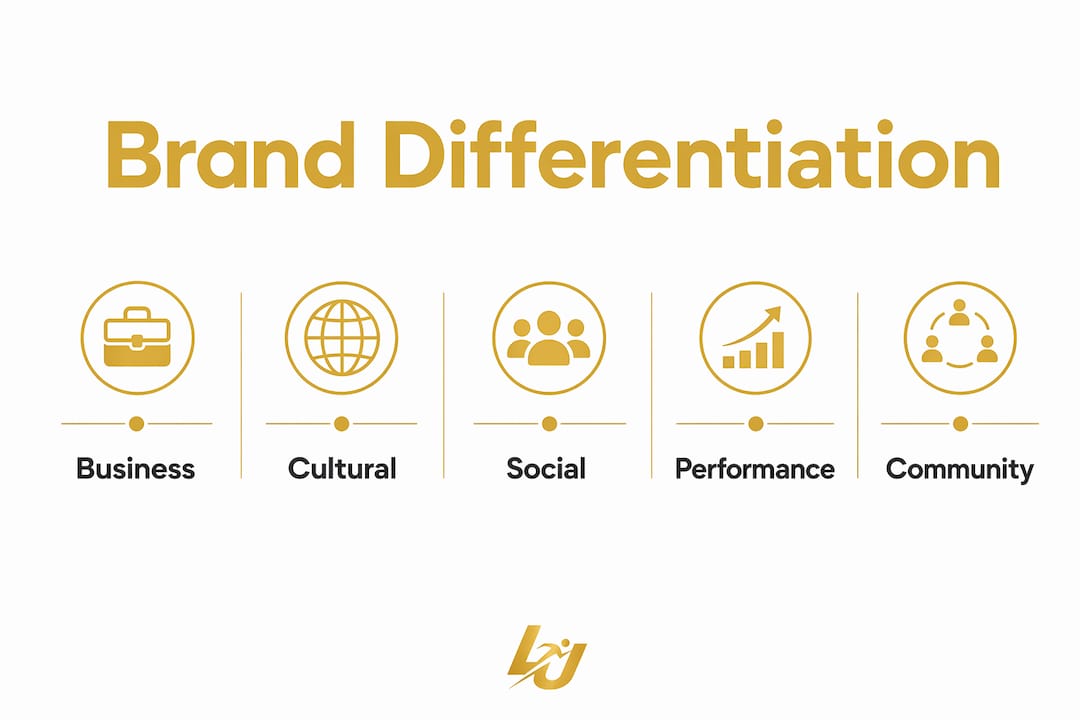
| Strategic dimension | What it covers | Differentiation opportunity |
|---|---|---|
| Business | Revenue, sponsorship, commercial partnerships | Unique commercial propositions and pricing models |
| Social | Community programmes, inclusion, fan relations | Authentic local identity and grassroots loyalty |
| Cultural | Heritage, values, traditions, rituals | Emotional equity built over time |
| Technological | Digital platforms, data, content tools | Reach, personalisation, and fan experience |
Most clubs invest heavily in the business dimension and neglect the cultural and social ones. The clubs with the strongest long-term brand equity do the opposite. They build cultural and social capital first, then monetise it.
Internal capacity matters as much as external messaging. A club with strong volunteer networks, clear governance, and active community programmes has differentiation assets that no agency can manufacture. These assets are genuine and they are visible to fans.
Pro Tip: Before commissioning any external branding work, audit your club’s internal strengths across all four dimensions. Your most credible differentiators are already inside the organisation.
How do comprehensive brand identity systems create sustained differentiation?
A crest alone does not constitute a brand identity. Most clubs rely solely on crests, which leads to inconsistent brand presentation across every output from social media posts to sponsorship decks. A comprehensive identity system covers typography, colour application rules, kit design language, broadcast graphics, and tone of voice.
Building a full identity system follows a clear sequence:
- Internal audit. Map your club’s history, culture, fan base, and ambitions before touching any visual element.
- Verbal identity. Define your tone of voice, key messages, and naming conventions for all programmes and teams.
- Visual identity. Develop a primary and secondary colour palette, typeface hierarchy, and logo usage rules.
- Kit and apparel language. Establish design principles that carry across playing kit, training wear, and merchandise.
- Digital asset library. Create templates for social media, email, and broadcast graphics that any staff member can use correctly.
- Brand guidelines document. Codify every rule in a single reference document distributed to all staff, suppliers, and partners.
A full brand identity engagement typically runs 12–16 weeks. Clubs with academies, women’s programmes, or multiple sport sections require longer timelines because each sub-brand must align with the parent identity without losing its own character.
The payoff is significant. Coherent branding improves sponsor confidence because partners can see exactly how their logo will appear across every touchpoint. It also builds emotional equity with fans over time. Every consistent touchpoint reinforces the same feeling, and that feeling becomes loyalty.
Pro Tip: The most common branding mistake clubs make is updating the crest without updating the surrounding system. A new badge on an old, inconsistent framework produces a more confused brand, not a stronger one.
Why does niche specialisation strengthen a sports club’s brand?
Specialist brands build stronger communities and clearer narratives than generalist ones. Specialist brands simplify marketing and production by keeping product development, storytelling, and community focus coherent. A club that tries to be everything to everyone ends up being nothing to anyone.
The evidence against broad diversification is consistent. Consumers increasingly prefer brands that specialise deeply in one community or sport category over broad generalist brands. That preference translates directly into purchasing behaviour, attendance, and social media engagement.
The benefits of committing to a niche are concrete:
- Clearer messaging. Every piece of content serves one defined audience, so nothing feels generic.
- Stronger community. Fans who share a specific identity bond more deeply with each other and with the club.
- Focused resource investment. Budget spent on one sport or community segment produces higher returns than the same budget spread thin.
- Authentic storytelling. A specialist club has a genuine, specific story to tell. Generalist clubs produce content that could belong to any club.
- Sponsor alignment. Niche clubs attract sponsors who want to reach that specific audience, often at premium rates.
A grassroots football club that commits fully to its local borough, its youth development philosophy, and its community history will outperform a multi-sport club with no clear identity in fan loyalty metrics every time. Specificity is not a limitation. It is a competitive advantage.
How does digital storytelling support sports club brand differentiation?
Digital storytelling is the primary channel through which clubs express their identity to fans who will never attend a match in person. Borussia Dortmund’s global growth results from consistently expressing a well-defined identity across all digital content, structured around intensity, authenticity, binding force, and ambition. That is not a content calendar. It is a brand model applied to content.
The contrast between traditional and digital storytelling approaches is stark.
| Approach | Traditional storytelling | Digital storytelling |
|---|---|---|
| Format | Match programmes, press releases | Short-form video, social posts, podcasts |
| Audience reach | Local and attending fans | Global, including non-attending fans |
| Production speed | Weekly or monthly | Daily or real-time |
| Personalisation | None | Platform and language-specific |
| Heritage use | Archive photos in print | Archival footage repurposed for social |
| Challenge | Slow to update | Requires consistent brand discipline |
AI-powered tools allow clubs to create multi-format video content aligned with core brand identity, adapting pacing, language, and format for different platforms and audiences. This is not about replacing human creativity. It is about maintaining brand consistency at a scale that would otherwise require a much larger team.
The clubs that win on digital are those that treat content as an extension of their brand identity, not as a separate marketing function. Every post, every video, and every caption should feel like it could only have come from your club.
Balancing heritage with modern digital storytelling produces more sustainable growth than chasing short-term trends. Clubs that pivot to every new platform without a consistent identity build audiences that are wide but shallow.
Key takeaways
Sports club brand differentiation succeeds when clubs align organisational identity, a full brand system, niche focus, and consistent digital storytelling across every touchpoint.
| Point | Details |
|---|---|
| Differentiation goes beyond visuals | Internal capacity, community engagement, and cultural heritage are the strongest differentiators. |
| Full brand systems are non-negotiable | Typography, voice, and digital templates matter as much as the crest. |
| Niche focus beats generalisation | Specialist clubs build deeper loyalty and clearer narratives than multi-sport generalists. |
| Digital storytelling must reflect brand identity | Every post and video should be instantly recognisable as yours, not interchangeable with any other club. |
| All four strategic dimensions need attention | Business, social, cultural, and technological factors collectively determine brand strength. |
The uncomfortable truth about sports club branding
Most clubs I encounter have the same problem. They commission a new crest, update their social media headers, and call it a rebrand. Six months later, nothing has changed in how fans or sponsors perceive them. The visual refresh was real. The brand work was not.
The clubs that build genuinely differentiated identities do something uncomfortable first. They sit with the question of what they actually stand for, not what they wish they stood for. That means honest conversations about community relationships, coaching philosophy, and the gap between the club’s stated values and its daily behaviour.
I have also seen clubs dilute strong identities by trying to appeal to every demographic simultaneously. A club that speaks to everyone speaks to no one. The most loyal fan bases I have observed belong to clubs that made a clear choice about who they are for, and then committed to that choice across every channel, every season, and every hire.
The emerging role of AI in content creation is real and worth taking seriously. But AI amplifies whatever brand identity already exists. If your identity is vague, AI will produce vague content faster. Get the identity right first, then use technology to scale it.
Staff alignment is the final piece that most brand guides ignore. Your kit manager, your academy coaches, and your social media intern are all brand ambassadors. If they cannot articulate what makes your club different, your fans cannot either.
— Chris
How Levelup360hq supports clubs building a differentiated brand
Clubs that want to move from brand theory to measurable practice need tools that connect identity to performance. Levelup360hq gives clubs a white-label platform that carries your brand across every athlete interaction, from player development tracking to community engagement features like leaderboards and badge systems.
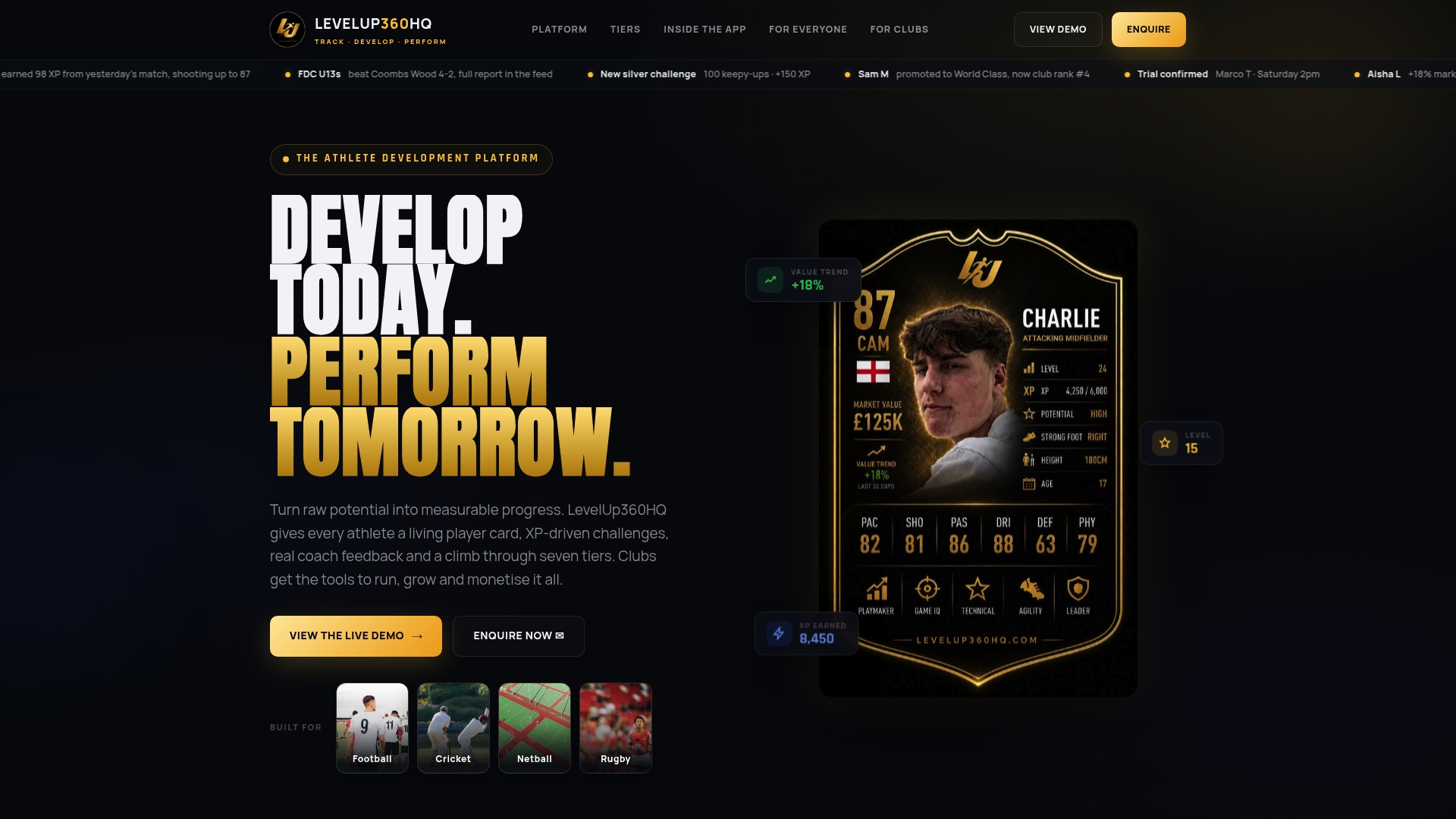
The platform’s CRM, subscription management, and analytics tools give club managers the data to understand which community programmes are driving engagement and which are not. That data is the foundation of every credible differentiation decision. Clubs using Levelup360hq can also explore the platform demo to see how white-label branding, performance analytics, and fan-facing features work together in a single system built for clubs across football, cricket, netball, and rugby.
FAQ
What is sports club brand differentiation?
Sports club brand differentiation is the process of creating and consistently expressing a unique identity that separates a club from its competitors across all touchpoints, including community programmes, digital content, and commercial partnerships.
Why is brand differentiation important for sports clubs?
Without clear differentiation, clubs compete on results and geography alone, both of which are unstable. A strong brand identity retains fan loyalty through poor seasons and attracts sponsors who value a defined audience.
What makes a sports brand unique?
A sports brand becomes unique through a combination of organisational culture, community focus, niche specialisation, and a consistent visual and verbal identity system applied across every output.
How long does it take to build a full brand identity system?
A full brand identity engagement typically takes 12–16 weeks, with larger clubs or those running academies and multiple programmes requiring additional time to align all sub-brands.
How does digital storytelling support brand differentiation?
Digital storytelling extends a club’s identity to fans who never attend in person. Clubs like Borussia Dortmund use a defined brand model to ensure every piece of content, regardless of platform or format, feels consistent and recognisably theirs.
Recommended
Turn potential into a player card.
LevelUp360 tracks every match, builds your child's player card, and shows their development over time.
Get started free