What is a sports achievement badge?
Published 7 June 2026

A sports achievement badge is a formal award given to an athlete who meets defined, measurable performance standards across specific physical disciplines. Unlike trophies handed out for finishing position, these badges recognise what you can do, not just where you placed. Germany’s Deutsches Sportabzeichen, described as the highest award outside competitive sport in the country, is one of the most prominent examples. The Pony Club UK runs a parallel system for young riders. Both use tiered levels, typically bronze, silver, and gold, to distinguish performance standards and give athletes a clear progression to work towards.
What is a sports achievement badge and how does it work?
A sports achievement badge is a performance award given after meeting defined physical standards in specific motor abilities. The badge itself can take several forms: a cloth patch sewn onto kit, a metal pin worn on a jacket, or an increasingly common digital insignia displayed on an athlete profile. What separates a sports achievement badge from a participation ribbon or a competition medal is the criterion-based nature of the award. You either meet the standard or you do not.
The Deutsches Sportabzeichen tests four core physical areas: endurance, strength, speed, and coordination. Candidates must also provide proof of swimming ability as a prerequisite before any other results count. This multi-discipline requirement reflects the original philosophy behind sports recognition badges: that genuine athletic competence spans more than one skill set. An athlete who can sprint but cannot swim has not demonstrated the breadth the badge demands.
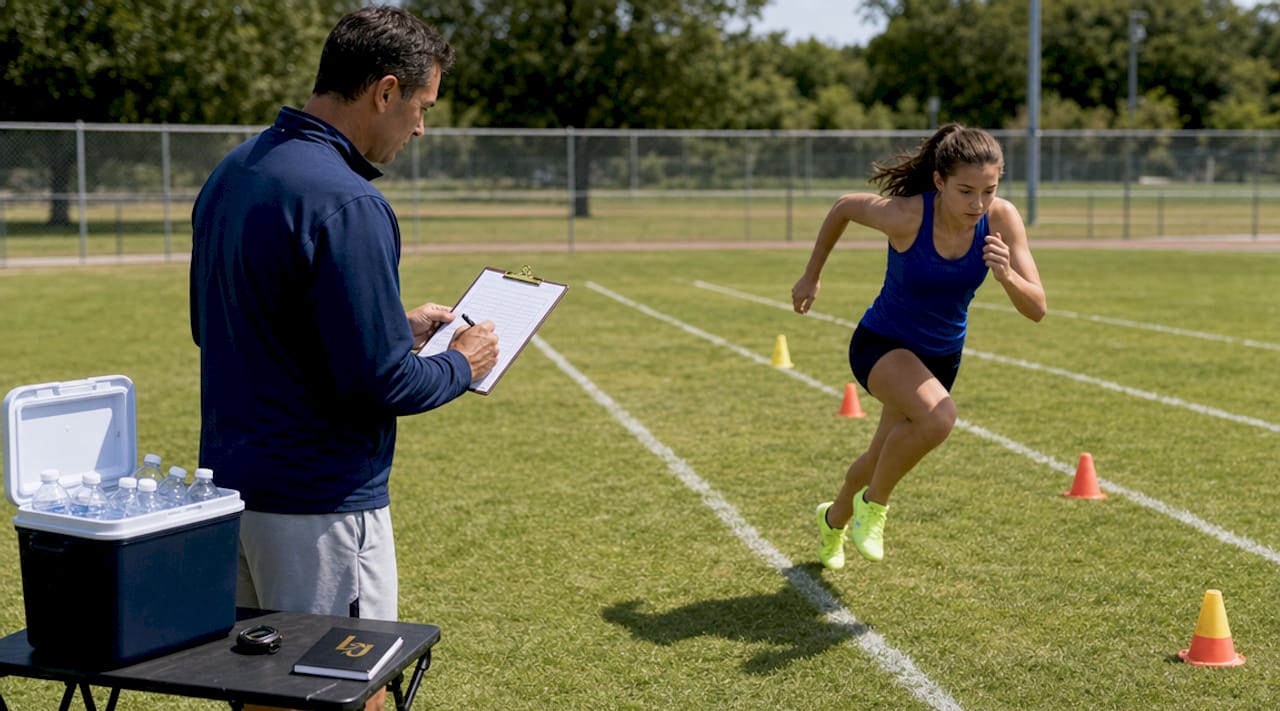
The tiered structure is central to how these awards motivate. Bronze represents the entry-level standard, silver a moderate step up, and gold the highest performance threshold. This means a recreational runner and an elite club athlete can both pursue the same badge programme, targeting different tiers according to their current ability. The structure creates a personal challenge rather than a head-to-head competition, which is precisely why sports achievement awards of this type sustain engagement across age groups and ability levels.
Most national programmes also accommodate athletes with disabilities through adapted testing criteria, ensuring the recognition system remains genuinely inclusive rather than performative.
Pro Tip: If you are preparing for a tiered badge test, train specifically across all tested disciplines rather than focusing only on your strongest event. Many candidates fail at the prerequisite stage, not the performance stage.
How are sports achievement badges awarded?
The awarding process follows a structured examination model administered by qualified officials, not self-reported by athletes. Germany’s badge programme requires tests administered by local sports clubs and associations, with qualified trainers overseeing each discipline. Crucially, club membership is not required to participate. Any candidate can present themselves for testing within the official window.
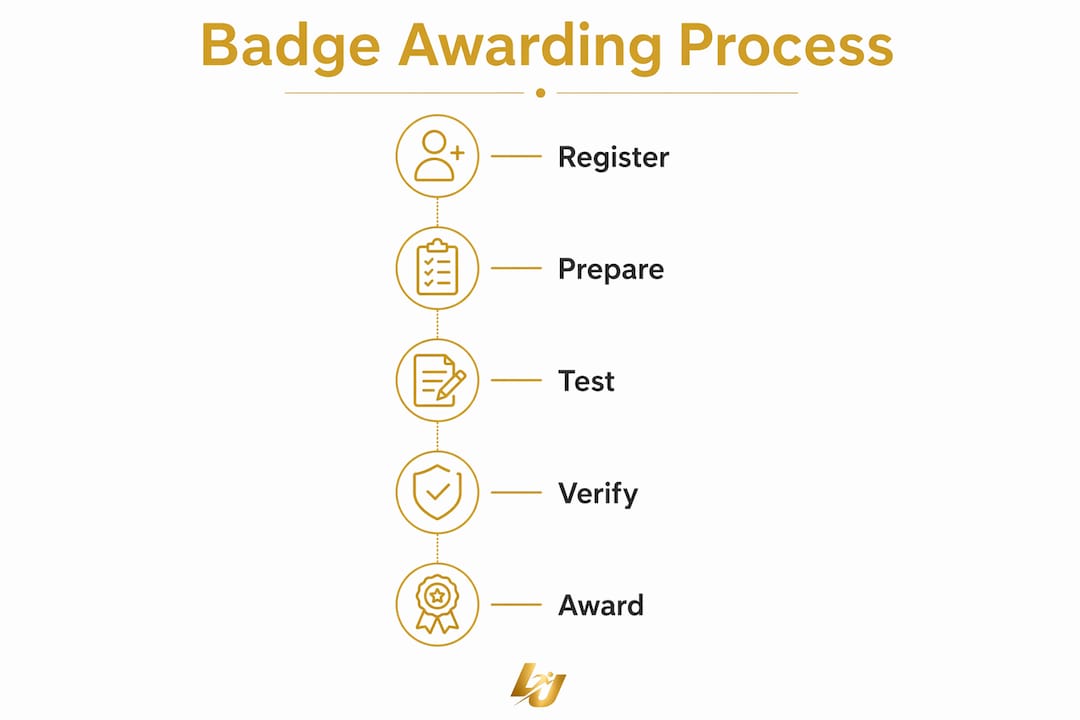
The testing window for the Deutsches Sportabzeichen runs from 1 January to 31 December, meaning candidates complete requirements within the calendar year. The badge can be earned once per year, which creates an annual renewal cycle that keeps athletes returning to training rather than treating the award as a one-time achievement. Children from the age of six and adults from eighteen are eligible, making the programme one of the broadest in scope of any national sports recognition system.
Once all criteria are met, the badge is awarded alongside an official certificate, giving it the character of an honorary decoration rather than a casual sticker. The certificate documents the specific performance levels achieved, which matters for athletes who want to track their progression year on year. In the city of Hof alone, almost 22,000 badges have been awarded since 1985, which illustrates the scale of participation these programmes can generate when the criteria are clear and the administration is reliable.
Common performance areas tested across national badge programmes include:
- Endurance: distance running, cycling, or swimming over set distances within time thresholds
- Strength: shot put, long jump, or similar power-based disciplines
- Speed: sprint distances with age and gender-adjusted benchmarks
- Coordination: disciplines requiring technical skill alongside physical output
What types of sports badges exist across different organisations?
Sports achievement badges vary significantly in structure, eligibility, and physical form depending on the organisation running the programme. The table below compares three well-known implementations to show how the same concept is applied differently in practice.
| Programme | Eligibility | Award classes | Physical form |
|---|---|---|---|
| Deutsches Sportabzeichen (Germany) | Children from 6, adults from 18 | Bronze, silver, gold | Metal badge with certificate |
| Austrian Sports Badge | Age and gender-based divisions | Bronze, silver, gold | Cloth patches or metal badges |
| Pony Club UK | Youth members by syllabus level | Mini, standard, advanced, sports | Cloth badge or pin |
The Austrian Sports Badge mirrors the German model in its tiered class structure but introduces age and gender divisions that adjust the performance thresholds accordingly. This makes the award more equitable across demographics without diluting the achievement. The physical form of the badge, whether cloth or metal, also carries social meaning. A metal badge worn on a blazer communicates a different level of formality than a patch on a sports bag, and organisations choose the format deliberately to match their culture.
The Pony Club UK’s badge structure takes a different approach by tying achievement directly to a published syllabus. Mini, standard, advanced, and sports badges each correspond to a defined level of skill demonstration, and progression through the tiers maps onto a young rider’s overall development pathway. This syllabus-based model is particularly effective for youth sports because it connects badge achievement to a broader learning framework rather than treating it as a standalone test.
A critical distinction worth understanding is the difference between criterion-based performance badges and nomination-based achievement awards. The Isle of Wight Sports Achievement Awards nominate athletes, coaches, and volunteers for excellence, which is a fundamentally different process. Nomination awards recognise outstanding contribution as judged by a panel. Performance badges recognise meeting a published standard as verified by an examiner. Confusing the two leads to misaligned expectations and weakens the credibility of whichever programme you are running.
What are the benefits of sports badges for motivation and development?
Sports achievement badges frame training goals and create motivational milestones that competition alone cannot provide. For non-elite athletes, competition results are often discouraging because they measure performance relative to others. A badge measures performance relative to a fixed standard, which means improvement is always rewarded regardless of who else is competing.
Clear, measurable criteria and tiered levels motivate training and sustained engagement better than ambiguous participation rewards. This is not a theoretical claim. The German badge programme’s published catalogue of standards gives athletes a precise target to train towards, which produces more consistent preparation than a vague goal like “get fitter.” Specificity drives behaviour.
“Structured badge systems in youth sports encourage stepwise skill development and long-term motivation across age groups.” — Pony Club badges, North Herefordshire branch
For teams and clubs, badge programmes build a shared culture of development. When multiple athletes in a squad are working towards the same tiered standards, training sessions gain collective purpose. The social dimension of earning a badge alongside teammates, or watching a peer achieve a higher tier, creates community reinforcement that individual goal-setting cannot replicate.
The benefits for youth athletes are particularly pronounced. Young people respond to visible, tangible recognition. A badge worn on kit or displayed on a digital profile communicates achievement to peers, parents, and coaches in a way that a personal best time recorded in a spreadsheet does not. Structured badge systems give young athletes a reason to return to training after setbacks because the next tier remains within reach.
Key benefits of sports recognition badges include:
- Providing concrete short-term goals within a long-term development plan
- Recognising progress independent of competitive ranking
- Building community and shared identity within a squad or club
- Sustaining participation among recreational and youth athletes who may not compete regularly
- Creating a documented record of athletic development over time
How to implement a sports badge programme for your team
Running an effective badge programme requires more than printing criteria on a poster. The German badge programme’s reliability comes from decades of consistent administration through local clubs with qualified examiners. That consistency is what gives the badge its credibility and its motivational power.
Follow these steps to build a programme that works:
- Publish clear, measurable criteria. Every participant must know exactly what they need to achieve at each tier before they begin training. Vague standards produce confusion and disputes at assessment time.
- Establish a tiering structure. Bronze, silver, and gold remain the most universally understood framework, but any three-level system works provided the thresholds are genuinely differentiated.
- Secure qualified examiners. Examinations administered by clubs with qualified trainers carry more weight than self-assessed results. Build examiner availability into your planning calendar before you announce test dates.
- Set a defined testing window. An annual or seasonal window creates urgency and gives athletes a clear preparation timeline. Open-ended testing reduces motivation.
- Distinguish your programme type clearly. Decide upfront whether you are running a criterion-based performance badge or a nomination-based achievement award. Communicate this distinction to all participants from the outset to prevent misaligned expectations.
- Document and celebrate results. Issue certificates or digital records alongside the physical badge. Recognition that is documented carries more long-term value than recognition that is not.
Pro Tip: Plan your examiner schedule at least eight weeks before the testing window opens. Last-minute examiner shortages are the most common reason well-designed badge programmes fail at the delivery stage.
Key takeaways
Sports achievement badges work because they combine measurable criteria, tiered progression, and formal recognition into a single system that motivates athletes at every level.
| Point | Details |
|---|---|
| Definition is criterion-based | A sports achievement badge is awarded for meeting defined physical standards, not for participation or competitive placement. |
| Tiered levels drive progression | Bronze, silver, and gold structures give athletes a clear pathway and sustain motivation beyond a single test. |
| Administration determines credibility | Programmes run through qualified examiners and local clubs, as in Germany’s Deutsches Sportabzeichen, carry greater trust and participation. |
| Badge type matters | Criterion-based performance badges and nomination-based achievement awards serve different purposes and must not be conflated. |
| Digital formats are growing | Platforms like Levelup360hq now enable badge tracking and display within athlete development systems, extending the reach of traditional programmes. |
Why badges matter more than most coaches realise
I have spent years watching clubs invest heavily in competition calendars while treating recognition systems as an afterthought. The assumption is that results speak for themselves. They do not, especially for the 80% of athletes in any squad who will never finish on a podium.
What strikes me most about programmes like the Deutsches Sportabzeichen is not the badge itself but the annual renewal cycle. An athlete who earns a bronze badge in year one has an immediate, concrete reason to train harder in year two. That is a retention mechanism most clubs are not building into their own systems. The badge does the motivational work that a coach cannot always do individually.
The digitalisation of badge systems is the development I find most significant right now. When a badge lives on an athlete’s profile on a platform like Levelup360hq, it becomes visible to coaches, teammates, and scouts in a way a cloth patch never could. That visibility changes the social value of the achievement. It also creates a longitudinal record of development that is genuinely useful for talent identification and athlete welfare conversations.
My honest concern is that organisations rush to create badge programmes without doing the hard work of defining criteria precisely. A badge awarded for vague effort is worse than no badge at all. It trains athletes to expect recognition without earning it, which is the opposite of what these systems are designed to do. Get the criteria right first. The badge is just the symbol.
— Chris
Track and reward athlete progress with Levelup360hq

Levelup360hq is built for exactly the kind of structured athlete development that sports achievement badge programmes demand. The platform supports badge systems, XP-driven challenges, and tier progression across football, cricket, netball, rugby, and more. Coaches can set measurable performance criteria, track athlete progress in real time, and issue digital badges that live on each athlete’s profile. For clubs running their own recognition programmes, the white-label tools mean your badge system carries your brand. Explore the platform or try the demo to see how badge tracking integrates with the full athlete development workflow.
FAQ
What is the difference between a sports badge and a sports medal?
A sports medal is typically awarded for competitive placement, such as finishing first, second, or third. A sports achievement badge is awarded for meeting a defined performance standard, regardless of how other athletes perform.
Can adults earn sports achievement badges?
Adults can earn sports achievement badges in most national programmes. Germany’s Deutsches Sportabzeichen is open to adults from the age of eighteen, with performance thresholds adjusted by age group.
How often can you earn a sports achievement badge?
Most programmes allow athletes to earn a badge once per annual cycle. The Deutsches Sportabzeichen, for example, can be obtained once per calendar year, which encourages athletes to return and improve their tier each year.
What is the difference between criterion-based badges and nomination awards?
Criterion-based badges are earned by meeting published performance standards verified by a qualified examiner. Nomination-based awards, such as the Isle of Wight Sports Achievement Awards, are granted by a panel based on judged excellence or contribution.
Do sports achievement badges work for youth athletes?
Structured badge systems are particularly effective for young athletes because they provide visible, tangible recognition tied to a clear development pathway. The Pony Club UK’s multi-tier badge structure is a well-established example of this approach in youth sport.
Recommended
Turn potential into a player card.
LevelUp360 tracks every match, builds your child's player card, and shows their development over time.
Get started free