What does athlete tier ranking mean in sports?
Published 21 June 2026

Athlete tier ranking is a classification system that groups athletes into labelled categories, such as S, A, B, C, D, and F, based on performance level and competitive consistency rather than exact numeric positions. Understanding what does athlete tier ranking mean gives you a clearer picture of where an athlete stands relative to their peers without getting lost in the noise of single-digit positional differences. The system originated in Japanese grading culture and has since spread across professional sports, youth academies, and digital performance platforms worldwide. Levelup360hq uses this exact framework to help athletes, coaches, and clubs track development and make informed decisions about progression and opportunity.
What does athlete tier ranking mean in competitive sports?
Athlete tier ranking is a structured method of categorising competitors into defined performance bands. Instead of saying a player is ranked 47th versus 51st, a tier system places both athletes in the same band if their performances are broadly equivalent. This reduces the emotional weight of minor positional differences and focuses attention on meaningful ability gaps.
The system typically runs from S at the top through A, B, C, D, and F at the bottom. S stands for “superior” and reflects elite performers who consistently outperform the field. Each descending tier represents a measurable drop in performance output, consistency, or competitive results. The key distinction from a numbered list is that tiers group athletes with similar capability rather than forcing an artificial order between them.

This approach is particularly useful in sports where performance varies by surface, season, or competition format. A footballer who excels in domestic league play may sit in A-tier for club performance but drop to B-tier in international competition. Tier ranking captures that nuance in a way that a single number cannot.
How do athlete tier rankings work in professional sports?
Professional sports bodies use sophisticated methods to assign tier positions. The structure and weighting of those methods vary by sport, but the underlying logic is consistent: reward quality of performance across multiple events, not just peak results.
World Athletics uses a blended scoring model that combines performance scores with placing points. Olympic champions receive 260 placing points, while Diamond League winners receive 140. That gap reflects the difference in competition significance. A world record set at a minor invitational carries less weight than a personal best at a World Championships final.
ATP tennis rankings operate differently. The ATP uses a rolling 52-week system where points earned at tournaments expire after one year. Rankings update weekly during tour weeks, which means players must defend their previous year’s results continuously. This rewards sustained performance rather than a single strong season.
Key features of professional tier ranking systems include:
- Competition weighting: Points or scores from major events count more than those from lower-tier competitions.
- Rolling windows: Systems like ATP’s 52-week model prevent athletes from coasting on old results.
- Consistency emphasis: Multiple strong performances across a season matter more than one exceptional result.
- Blended metrics: Objective performance data combines with competition-level context to produce a final score.
| Sport | Ranking method | Key weighting factor |
|---|---|---|
| Athletics | Performance score + placing points | Competition significance |
| Tennis (ATP) | Rolling 52-week points | Consistency over time |
| Football | Club and international ratings | Match importance and opponent strength |
| Cricket | ICC ratings | Match format and opposition ranking |
What does each athlete tier represent?
Each tier in a sports tier system carries a specific meaning. S-tier athletes are the elite performers in their discipline. They win at the highest level consistently and set the standard others measure themselves against. In track and field, an S-tier sprinter is someone who regularly competes in World Championship and Olympic finals.
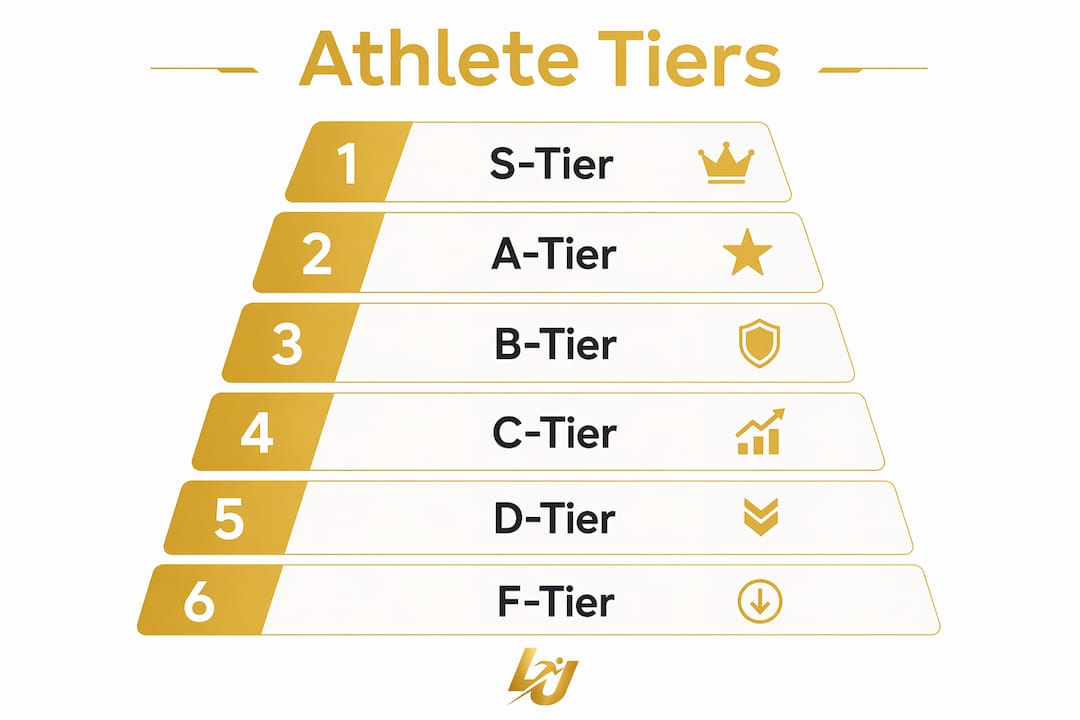
A-tier athletes are excellent. They compete at the top level and occasionally beat S-tier opponents, but they lack the consistency or peak output to sit in the highest band. B-tier and C-tier athletes represent good to average performers. They are competitive within their sport but rarely challenge for the top prizes at the highest level of competition.
D-tier and F-tier athletes are below average or at the lowest performance level within the ranking pool. These labels are not permanent judgements. A youth athlete in D-tier today may progress to B-tier within two seasons with the right development programme. Tier rankings group similar-level athletes to reduce pointless debate over close numeric positions and give coaches a cleaner picture of where each athlete genuinely sits.
Pro Tip: Never treat a tier label as a fixed identity. Tiers are snapshots of current performance, not permanent assessments. Use them to identify the next development target, not to define an athlete’s ceiling.
The origins of S-tier come from Japanese school grading, where “S” denoted a grade above the standard A-to-F scale. That cultural root explains why S sits above A rather than replacing it. The label carried over into competitive gaming tier lists and then into broader sports performance analysis.
How do tier rankings differ from traditional numeric rankings?
Traditional numeric rankings assign every athlete a unique position. Rank 1 is better than rank 2, rank 2 is better than rank 3, and so on down the list. This creates a false sense of precision. The difference between rank 12 and rank 13 is often statistically insignificant, yet the numeric system treats it as meaningful.
Tier systems solve this problem by grouping athletes into bands. Tier ranking creates definable categories rather than triggering emotional debate over close numeric positions. A coach evaluating two B-tier athletes knows they are broadly equivalent and can focus on specific skill gaps rather than arguing about who is ranked higher.
The benefits of tier systems over linear rankings include:
- Clearer communication of ability gaps between genuinely different performance levels.
- Reduced psychological pressure on athletes from minor positional shifts.
- Better support for long-term development, particularly in youth sports.
- Easier decision-making for tournament entry, squad selection, and scouting.
Youth sports programmes favour tiering over fixed rankings because it encourages growth without the psychological pressure of concrete numbers. A 14-year-old told they are ranked 47th nationally may feel defeated. The same athlete told they are in B-tier and progressing towards A-tier has a clear, motivating target.
Tier systems also carry important limitations. Tier rankings are fluid snapshots of the current competitive environment, influenced by changes in rules, equipment, or competition format. An athlete’s tier can shift without any change in their actual skill level if the competitive field around them strengthens or weakens. This fluidity is a feature, not a flaw, but it requires careful communication to athletes and parents.
“Tier rankings promote healthier athlete evaluation by focusing on defined ability categories rather than incrementally fine differences.” — The Athletic
High-quality tier rankings blend objective performance metrics with expert observation. Without that combination, rankings lack the authority needed for career or scouting decisions. Data alone misses context. Expert judgement alone misses consistency. The strongest tier systems use both.
What practical uses do tier rankings have for athletes, coaches, and scouts?
Athlete tier rankings serve concrete purposes across the entire sports ecosystem. They are not just labels. They are decision-making tools that shape training priorities, competition entry, and career planning.
- Identifying competitive readiness. A coach can use tier placement to decide whether an athlete is ready to compete at the next level. An athlete moving from C-tier to B-tier has demonstrated the consistency needed to enter higher-grade competitions.
- Setting development milestones. Tier progression gives athletes a clear target. Moving from one tier to the next requires specific performance improvements, which coaches can build training plans around.
- Supporting squad selection. Scouts and selectors use tier data to compare athletes across different clubs or regions without needing to watch every match. A-tier athletes from different leagues are broadly comparable, which speeds up the selection process.
- Motivating athletes without pressure. Tier labels communicate progress without the anxiety of a single number. Athletes can see movement within a tier as progress even before they cross into the next band.
- Informing tournament entry decisions. Competition organisers use tier data to seed draws and balance competitive fields. This produces fairer competitions and better development opportunities for athletes at every level.
Pro Tip: If you are using tier rankings to guide training, focus on the specific metrics that define the boundary between your current tier and the next one. Targeted improvement on those metrics produces faster tier progression than general fitness work.
Digital platforms are making tier tracking more accessible. Levelup360hq integrates tier progression for skill monitoring directly into athlete profiles, giving coaches and athletes a live view of performance development across sessions and competitions.
Lower-tier-rated athletes can outperform higher-tier competitors when their specific strengths align with the demands of a particular competition. This is why tier rankings work best as one input among several, not as the sole basis for selection or development decisions.
Key takeaways
Athlete tier ranking groups competitors into performance bands from S to F, giving coaches, scouts, and athletes a clearer and fairer picture of competitive ability than numeric rankings alone.
| Point | Details |
|---|---|
| Tiers replace numeric positions | Grouping athletes into bands reduces false precision and positional disputes. |
| S-tier is the elite standard | S-tier athletes consistently perform at the highest level across major competitions. |
| Professional systems blend data | World Athletics and ATP both weight competition quality, not just raw results. |
| Tiers are fluid, not fixed | Rule changes, equipment updates, and field strength all shift tier positions. |
| Youth athletes benefit most | Tier systems support long-term development without the pressure of fixed numbers. |
Why tier rankings matter more than most coaches admit
Tier rankings have been part of competitive sports analysis for longer than most people realise. The language is new, but the concept of grouping athletes by broad ability band is as old as sport itself. What has changed is the precision of the data behind those groupings and the willingness of coaches and federations to use them openly.
My honest view is that the biggest mistake coaches make with tier rankings is treating them as permanent verdicts. I have seen talented young athletes written off because they sat in C-tier at 16 and nobody bothered to look at their trajectory. Tier position at a single point in time tells you almost nothing. Tier movement over six to twelve months tells you everything.
The second mistake is chasing S-tier for its own sake. An athlete who is a strong A-tier performer in their natural style will consistently outperform a forced S-tier selection that does not suit their strengths. The research supports this. Comfort-picks aligned to playstyle often yield more consistent results than blindly targeting the top tier. The same principle applies in sport. Play to your strengths, develop your weaknesses, and let the tier reflect the work rather than chasing the label.
The future of tier ranking in sport is digital and real-time. Platforms that update tier positions after every session or competition give athletes and coaches a live feedback loop that static annual rankings cannot match. That shift is already happening, and the athletes who engage with it seriously will have a genuine advantage.
— Chris
Track your tier progression with Levelup360hq

Levelup360hq is a gamified athlete development platform built for athletes, coaches, and clubs across football, cricket, netball, and rugby. The platform integrates tier progression directly into live player profiles, so athletes can see exactly where they sit and what they need to do to move up. FIFA-style player cards display real-time ratings, XP-driven challenges set clear development targets, and performance analytics give coaches the data they need to make informed decisions. Whether you are managing a youth academy or tracking your own development as a competitive athlete, Levelup360hq gives you the tools to turn tier rankings into a genuine development plan. Explore the platform and see how tier tracking works in practice.
FAQ
What is athlete tier ranking?
Athlete tier ranking is a classification system that groups athletes into labelled performance bands, typically S, A, B, C, D, and F, based on competitive results and consistency rather than a single numeric position.
How are athletes ranked in a tier system?
Athletes are placed into tiers using a combination of performance scores, competition-level weighting, and expert assessment. Systems like World Athletics blend placing points with performance data to determine tier-equivalent standings.
What does S-tier mean in sports?
S-tier denotes the elite level of performance within a ranking pool. The label originates from Japanese grading culture, where S sat above the standard A-to-F scale to indicate a superior standard.
Are tier rankings the same as numeric rankings?
No. Numeric rankings assign every athlete a unique position, while tier rankings group athletes with broadly equivalent performance into the same band. Tiers reduce the significance of minor positional differences.
Can an athlete’s tier change without improving their skills?
Yes. Tier rankings are fluid snapshots of the current competitive environment. Changes in rules, competition format, or the strength of the field can shift an athlete’s tier position without any change in their actual ability.
Recommended
Turn potential into a player card.
LevelUp360 tracks every match, builds your child's player card, and shows their development over time.
Get started free