Unlock achievement badges: the athlete's 2026 guide
Published 27 June 2026
Achievement badges for athletes are digital or physical recognitions earned by completing specific fitness milestones or performance challenges within sport and fitness platforms. They sit at the heart of gamified training systems, turning abstract effort into visible, shareable proof of progress. Platforms like Levelup360hq use badge systems alongside XP-driven challenges and tier progression to keep athletes engaged across football, cricket, netball, and rugby. The drive to unlock achievement badges athletes pursue is not purely symbolic. At the elite end, London Marathon winners can earn base prize money of $55,000 with performance bonuses rising to $1 million, showing that achievement recognition carries real financial weight at every level of sport.
What types of achievement badges can athletes unlock?
Badge systems in sport and fitness fall into two broad categories: participation-based and merit-based. Understanding the difference shapes how you plan your training and which rewards you can realistically target first.
Participation badges are awarded for showing up and completing an activity, regardless of performance level. Finishing a 5K, logging a first gym session, or completing a 30-day streak all qualify. These badges are designed to lower the barrier to entry and reward consistency over raw ability.
Merit-based badges require hitting a specific performance threshold. A cycling platform might award a badge for sustaining 250 watts for 20 minutes. A running app might unlock a badge for completing a half marathon under two hours. Merit-based badges induce stronger motivation than participation badges because they demand genuine effort and signal real competency to others.
A third category is worth knowing about: hidden or secret badges. Some platforms deliberately conceal certain badge criteria to create surprise and delight. You might earn one unexpectedly after completing an unusual combination of activities. These function as discovery rewards and keep long-term athletes engaged when standard badge paths feel routine.
Zwift’s achievement system is a well-studied example. It features instant badges for quick wins alongside milestone badges for long-term progress, pairing small XP boosts with larger rewards for challenging achievements. That layered structure is intentional. It keeps athletes returning daily for the small wins while chasing the bigger milestones over weeks and months.
| Badge type | Unlock criteria | Typical reward |
|---|---|---|
| Participation | Complete an activity or session | XP points, profile flair |
| Merit-based | Hit a specific performance threshold | Larger XP boost, tier progression |
| Milestone | Cumulative volume or duration targets | Exclusive digital trophies, leaderboard recognition |
| Hidden/secret | Undisclosed combination of activities | Surprise XP, rare badge artwork |
| Social/engagement | Share progress or complete peer challenges | Community recognition, profile badges |
How to prepare before you start earning badges
Preparation separates athletes who earn badges consistently from those who chase them randomly and stall. Three things matter before you begin: platform selection, goal alignment, and tracking accuracy.
Platform selection is the first decision. Not every fitness app supports a structured badge system. Look for platforms that offer transparent badge catalogues, clear unlock criteria, and social sharing features. Levelup360hq provides a badge system integrated with live player cards and leaderboards, so every badge earned feeds directly into your visible athlete profile.
Goal alignment means matching your training targets to badge criteria before you start a training block. If a platform awards a badge for completing ten sessions in a month, build that into your weekly schedule rather than hoping it happens organically. Athletes who plan with badge criteria in mind reach milestones faster and with less wasted effort.
Tracking accuracy is non-negotiable. GPS watches, power metres, and heart rate monitors must be correctly paired and calibrated. A badge for a 10K run will not trigger if your GPS drops mid-session and logs only 9.4 kilometres. Check device firmware before key sessions and confirm your platform profile is set to the correct sport mode.
- Pair your GPS device with your platform account before your first session, not after.
- Set your athlete profile to the correct sport category so badge criteria apply correctly.
- Enable push notifications so you receive badge confirmations in real time.
- Review the platform’s badge catalogue weekly to identify which criteria you are closest to meeting.
- Log every session, including recovery work, as some platforms award badges for total weekly activity volume.
Pro Tip: Before a long training block, screenshot the badge criteria you are targeting and pin them somewhere visible. Athletes who keep badge goals in sight during training are far more likely to hit the specific thresholds required.
Step-by-step guide to unlocking sports badges effectively
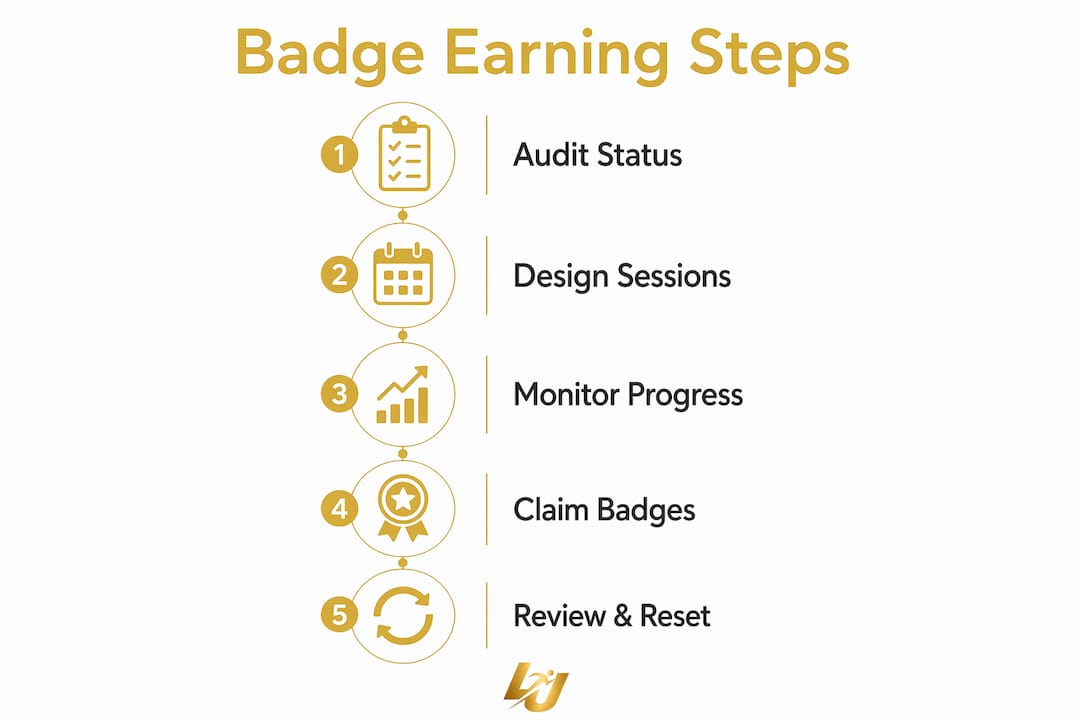
The most efficient athletes do not chase badges one at a time. Planning sessions to trigger multiple badges simultaneously can double progress and accelerate tier progression on gamified platforms. A single long-distance ride, for example, might simultaneously satisfy a duration badge, a distance milestone badge, and a weekly volume badge.
Step 1: Audit your current badge status
Open your platform’s badge catalogue and identify three categories: badges you have already earned, badges you are within 20% of completing, and badges that require a significant step up in performance. Focus the next four weeks on the middle category. These are your highest-return targets.
Step 2: Design badge-targeted sessions
Build at least two sessions per week around specific badge criteria. If a badge requires 60 minutes of continuous activity, do not plan a 45-minute session with a warm-down. Structure the session to meet the exact threshold. Precision here matters more than general fitness volume.
Step 3: Monitor progress mid-session
Most platforms display live metrics during a session. Use them. If a badge requires 500 metres of climbing and you are at 420 metres with 15 minutes remaining, you know to push on rather than ease off. Real-time awareness prevents the frustrating near-misses that waste training effort.
Step 4: Claim and verify badges promptly
Some platforms require manual confirmation or a sync before a badge registers. After every session, open the app and confirm the badge has been awarded. If it has not, check whether the session data uploaded correctly. Delayed syncs are the most common reason badges fail to appear.
Step 5: Review and reset weekly
At the end of each week, review which badges you earned and which you missed. Adjust the following week’s plan accordingly. Athletes who treat badge progress as a weekly review metric improve faster than those who train without structured feedback loops.
Pro Tip: Stack a milestone badge target with a social challenge badge in the same session. Many platforms award both independently, meaning one well-planned workout can deliver two badge unlocks and a significant XP boost.
A common pitfall is chasing prestige badges too early. A badge requiring a sub-20-minute 5K is not a useful target for an athlete currently running 26 minutes. Set a staged progression: earn the participation badge first, then the intermediate merit badge, then the elite threshold. Skipping stages leads to repeated failure and erodes motivation rather than building it.
How to use your badge collection to build motivation and credibility
Badges function as social currency, validating effort and expertise and signalling quality to athletic networks. Earning them is only half the value. How you use them determines whether they stay as private milestones or become professional assets.
- Share newly earned badges on LinkedIn and Instagram immediately after unlocking them. Platforms like Mentorloop have shown that badges shared on LinkedIn increase profile visibility and signal commitment to coaches and potential sponsors.
- Build a digital trophy cabinet by collating your badge history in one place. Levelup360hq’s live player card system displays your earned badges alongside real-time performance ratings, giving coaches and clubs an instant read of your development history.
- Use merit-based badges as verification of training commitment when approaching clubs or academies. A badge for completing 100 hours of logged training carries more weight than a self-reported claim.
- Treat your badge collection as a layered motivation system. When long-term goals feel distant, the next achievable badge provides a short-term target that keeps daily training purposeful.
- High-performing athletes use digital and physical badges as social proof that enhances reputation among peers and attracts endorsement opportunities.
At the elite level, achievement recognition carries significant weight. The 2026 U.S. Open prize fund reached $22.5 million, with $4.5 million awarded to the winner. That scale of reward reflects how deeply achievement recognition is woven into professional sport culture, from digital badges at grassroots level to prize cheques at the top.
Key takeaways
Effective badge systems combine frequent small-win badges with significant milestone badges to sustain athlete engagement over time.
| Point | Details |
|---|---|
| Understand badge categories | Know the difference between participation, merit-based, and hidden badges before planning your training. |
| Prepare your tracking tools | Calibrate GPS devices and confirm platform settings before targeting specific badge criteria. |
| Stack badge targets in sessions | Design workouts to trigger multiple badge criteria simultaneously for faster tier progression. |
| Share badges as social proof | Post earned badges on LinkedIn and professional profiles to increase visibility with coaches and sponsors. |
| Review progress weekly | Treat badge progress as a structured feedback metric and adjust your training plan each week. |
Why badges changed how I think about athlete motivation
The conventional view is that badges are a nice extra, a small reward bolted onto real training. I disagree with that framing entirely. After working with athletes across multiple sports, the clearest pattern I have seen is this: athletes who train with visible, short-term badge targets are more consistent than those chasing only long-term performance goals. The long-term goal, a faster race time or a higher power output, is too abstract to feel urgent on a cold Tuesday morning. A badge that is three sessions away is not.
What I find most underused is the combination of short-term and long-term badge structures. Most athletes pick one or the other. They either chase every small badge compulsively or ignore the badge system entirely and focus on raw numbers. The athletes who progress fastest treat the small badges as daily fuel and the milestone badges as monthly anchors. That combination keeps training purposeful at every timescale.
My practical advice is to integrate badge goals into your training plan the same way you would integrate a race or a match. Give them a date, a target, and a review point. Badges are not a distraction from serious training. They are a structure that makes serious training sustainable.
— Chris
Levelup360hq: track your badges and athlete progress in one place
Levelup360hq is built for athletes who want their training to mean something beyond the session log. The platform combines a badge system with FIFA-style live player cards, XP-driven challenges, and performance analytics, so every badge you earn updates your visible athlete profile in real time.
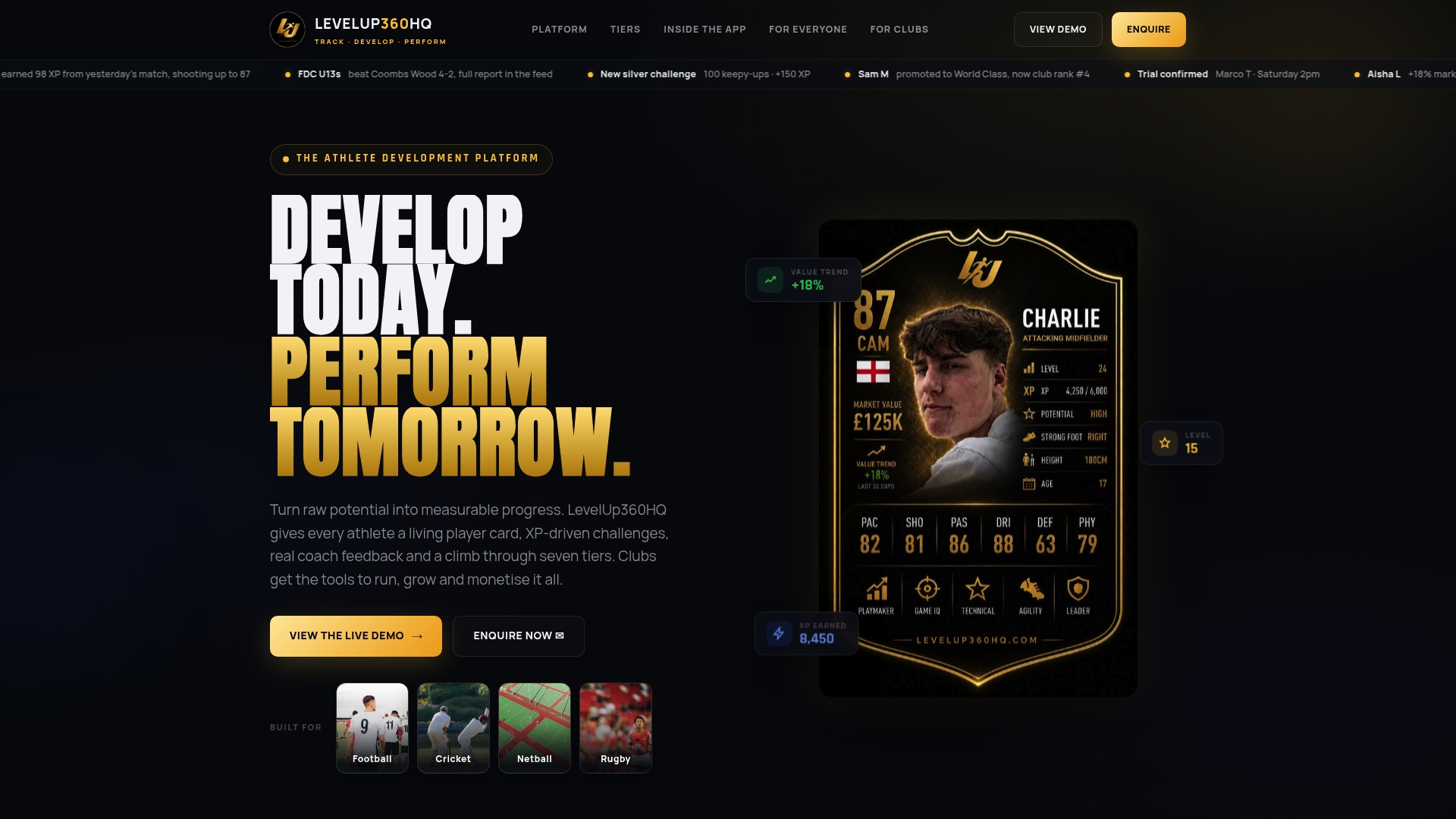
Coaches can review badge progress alongside video assessments and session data, giving clubs a complete picture of athlete development. Whether you play football, cricket, netball, or rugby, Levelup360hq supports your sport with white-label club tools and a leaderboard system that makes badge collection genuinely competitive. Visit Levelup360hq to see how the platform works, or try the interactive demo to explore the badge and XP system before committing.
FAQ
What are achievement badges for athletes?
Achievement badges are digital or physical recognitions awarded when an athlete completes a specific fitness milestone, performance threshold, or challenge within a sport or fitness platform. They serve as verifiable proof of training progress and commitment.
How do I earn achievement badges on fitness platforms?
Earn badges by meeting the specific criteria set by your platform, such as completing a distance, hitting a power output, or finishing a set number of sessions. Review the badge catalogue on your chosen platform and plan sessions to meet those exact thresholds.
Can achievement badges help with athlete motivation?
Effective gamified platforms use a blend of frequent small-win badges and significant milestone badges to maintain athlete engagement over time. The combination of short-term and long-term rewards keeps training purposeful across weeks and months.
Are achievement badges useful for professional development?
Merit-based badges shared on professional networks like LinkedIn act as verified signals of training commitment and skill level. Coaches and sponsors increasingly use digital badge portfolios to assess athlete credibility before making decisions.
What is the difference between merit-based and participation badges?
Participation badges are awarded for completing an activity regardless of performance level. Merit-based badges require hitting a specific performance threshold, such as a pace target or power output, and carry stronger motivational value as a result.
Recommended
Turn potential into a player card.
LevelUp360 tracks every match, builds your child's player card, and shows their development over time.
Get started free