Top digital badge systems for athletes: UK club guide
Published 2 August 2026

For UK sports clubs and coaches, Levelup360hq is the recommended digital badge platform. It combines sports-first coach workflows, mobile-first athlete and parent UX, and exportable badge credentials in a single gamified development environment.
- Sports-focused coach workflows: issue badges in-session from mobile, with video assessment and approval built in
- Mobile-first UX for athletes and parents: one-tap badge acceptance, no mandatory account creation, instant social sharing
- Badge portability: credentials export from athlete profiles, keeping records useful beyond a single club or season
This recommendation suits clubs that want tight coach control, parent visibility into progress, and measurable engagement data rather than a generic credentialing tool bolted onto a spreadsheet.
Table of Contents
- What does a digital badge system for athletes actually do?
- Key features UK clubs must evaluate in a badge system
- How to choose the right digital badge system for your club
- How Levelup360hq maps to these club priorities
- Step-by-step rollout plan for UK clubs
- What does a badge system actually cost, and how do you measure ROI?
- Key takeaways
- Why sports-first platform design is the deciding factor
- Levelup360hq: what it offers and how to get started
- Useful sources and further reading
What does a digital badge system for athletes actually do?
A digital badge system lets coaches issue verified, custom-branded achievement credentials that live permanently in an athlete’s profile or development passport. Parents and athletes can view, share, and export them. Badges are not just stickers; they carry metadata: who issued the badge, when, what criteria were met, and what evidence supports the award.
The direct benefits split cleanly across the four groups involved:
- Clubs: automated credential issuing cuts admin time; branded badges raise visibility when shared on social media
- Coaches: approval workflows replace paper sign-off; video evidence backs every award
- Athletes: a portable achievement record that travels with them across clubs, trials, and scholarship applications
- Parents: real-time visibility into progress without chasing the coach after training
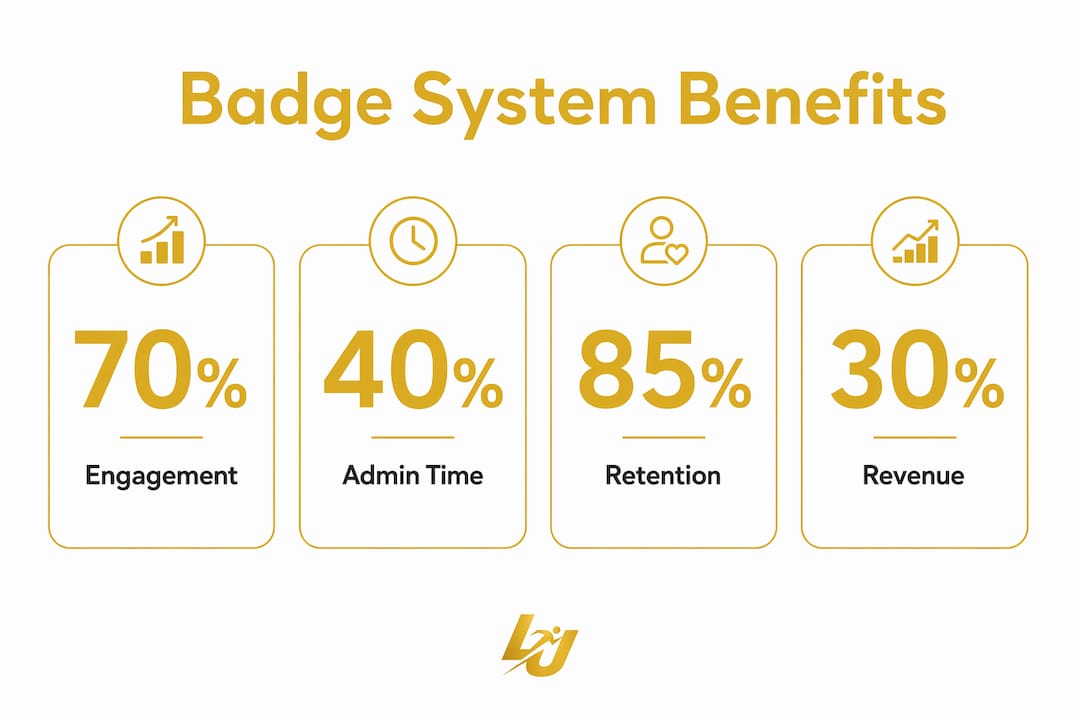
Platforms that combine XP-based challenges with badges report higher engagement and measurable administrative time savings through automated credential issuing. That combination, motivation plus automation, is what separates a badge system from a simple certificate generator.
Key features UK clubs must evaluate in a badge system
Not every platform is built for sport. Here is what actually matters when you are issuing badges at scale across multiple age groups and disciplines.

Portability and open standards
Open Badges compliance means a credential is verifiable outside the issuing platform’s ecosystem. When an athlete moves clubs or applies for a development programme, their badges travel with them. Proprietary-only badges die the moment a club switches vendors.
Verification options
Coach approval workflows, video evidence uploads, and automated verification tiers all serve different use cases. A grassroots club might need simple coach sign-off; a performance academy needs video-backed verification with documented retention policies.
Mobile-first issuance
Coaches issue badges during or immediately after sessions. If that requires a laptop and a desktop browser, it will not happen consistently. One-tap delivery from a mobile app, with equally frictionless acceptance for parents, is the baseline. Requiring account creation before a parent can view their child’s badge reduces credential sharing significantly.
High-volume and bulk issuance
Large academies running tournaments or end-of-season awards need to issue hundreds of badges in minutes, not hours. Evaluate whether bulk issuance is included in the base plan or charged separately.
Integrations
Look for connections to your existing club-management software, LMS, payment processor, and CRM. When evaluating digital credential platforms, high-volume issuance, LMS integrations, and open-standards support are the three criteria that most affect long-term fit.
Analytics
Badge acceptance rates, share counts, session-to-badge conversion, and admin time saved are the metrics that justify the spend to a board or committee.
Pro Tip: Design badges to be earned at natural social moments: end-of-session awards, match reports, and milestone completions. Badges earned at high-emotion moments get shared far more often than those issued quietly in a batch.
How to choose the right digital badge system for your club
Selection checklist
- Map your requirements — list sports, age groups, badge types, and expected annual issuance volume
- Confirm open-standards support — ask whether the platform supports Open Badges or equivalent exportable credentials
- Run a short pilot — test with one age group for four weeks before committing the whole club
- Stakeholder sign-off — get coach, parent, and admin input before final procurement
- Data portability test — export a sample of badge data and confirm it opens correctly outside the platform
Vendor questions to ask
- Does the platform support Open Badges 3.0 or equivalent exportable credentials?
- Who owns the badge data, and what happens to it if we cancel?
- Where is data stored, and does the platform meet UK GDPR requirements?
- Is bulk issuance included, or charged per badge?
- What integration endpoints exist for club-management and payment tools?
- Is white-label branding included, or a paid add-on?
Red flags
- No data export or closed proprietary badge format
- No mobile issuance for coaches
- No clarity on UK data residency or GDPR compliance
- Video evidence stored indefinitely with no documented retention or deletion policy
- Setup or custom-branding fees buried in small print
A typical evaluation, pilot, and rollout runs 4–12 weeks depending on club size. Smaller community clubs can move faster; multi-sport academies with complex integrations should budget the full twelve.
How Levelup360hq maps to these club priorities
Levelup360hq is built specifically for the athlete development ecosystem, not retrofitted from a corporate credentialing tool. Here is how its features map to the checklist above.
| Club priority | Levelup360hq feature |
|---|---|
| Sports-focused coach workflows | In-session mobile badge issuance with approval workflows |
| Verification and portability | Video assessments with coach sign-off; exportable athlete profiles |
| Scalability | Multi-sport, multi-squad architecture with bulk badge management |
| Integrations | CRM, payments, store, and subscription management built in |
| Parent and athlete UX | Live player cards, XP challenges, leaderboards, social feed |
| Analytics | Real-time engagement metrics, badge adoption, session tracking |
| Pricing model | Club-level subscription with per-athlete tiers |
Small community club scenario: a grassroots football club with three age groups uses Levelup360hq to issue end-of-session skill badges. Coaches issue from their phones; parents receive notifications and share to social media. The club reports reduced post-session admin and stronger parent engagement within the first month.
Medium academy scenario: a multi-sport academy running football, cricket, and netball uses the platform’s syllabus-linked badge system to track progression milestones. Video assessments back every performance badge; the white-label branding keeps the academy’s identity front and centre across all athlete-facing screens.
The platform’s full feature set covers live player cards, real-time ratings, XP challenges, badge management, and video assessment workflows in one environment.
Pro Tip: Link each badge directly to a syllabus milestone and trigger an automatic parent notification on award. That single workflow turns a badge from a quiet admin event into a visible, shareable moment of recognition.
Step-by-step rollout plan for UK clubs
Rollout sequence
- Weeks 1–2 (Coach/Head of Development): select one age group for the pilot; define three to five badge types and their criteria; brief coaches on mobile issuance
- Weeks 3–4 (Coach): run live sessions with badge issuance; collect parent and athlete feedback on acceptance flow
- Weeks 5–6 (Head of Development/Admin): review badge acceptance rates and share data; refine criteria and approval rules based on feedback
- Weeks 7–10 (Admin/IT): expand to remaining squads; connect payment or store modules if relevant
- Weeks 11–12 (Head of Development): full-club review against baseline metrics; present ROI data to committee
Measurement metrics to track
- Badge acceptance rate (target: above 80% within four weeks)
- Social shares per badge issued
- Admin time saved per session (compare pre- and post-rollout)
- Session-to-badge conversion rate across coaches
Best practices
- Run a 30-minute coach training session before go-live; mobile issuance takes minutes to learn but skipping it causes inconsistency
- Send parents a one-page explainer before the first badge is issued; explain what badges are, how to accept them, and how data is handled
- Document your video retention policy clearly: how long footage is kept, who can access it, and how deletion is handled. This is not optional under UK GDPR
For further reading on coaching tool workflows and integration considerations, partner resources can help clubs understand what to expect from connected platforms.
What does a badge system actually cost, and how do you measure ROI?
Common pricing models
- Club-level subscription: a flat monthly or annual fee covering the whole club; suits most grassroots and community clubs
- Per-athlete fees: charged per registered athlete; scales with growth but costs rise predictably
- Tiered bundles: entry, growth, and enterprise tiers with feature gates; check whether bulk issuance and white labelling sit behind a higher tier
Hidden costs to check
- Custom branding or white-label fees charged separately from the base plan
- Integration or setup charges for connecting to existing club-management tools
- Per-video verification storage costs
- Training or dedicated support fees beyond standard onboarding
Measuring ROI
The clearest ROI signals for badge systems are admin hours saved, athlete retention and renewal rates, and incremental revenue from monetised features such as store sales, event bookings, and subscription management. Shareable badges also carry a marketing value: each badge shared on social media can reach new audiences, extending club visibility without additional spend.
A simple payback calculation: multiply admin hours saved per month by your staff hourly cost, add any incremental revenue from monetised features, and compare against the annual platform fee. Most clubs reach payback within the first season.
Platforms combining gamification with automated badge issuing report measurable engagement gains alongside the admin savings, which strengthens the business case when presenting to a board.
Key takeaways
Levelup360hq is the strongest fit for UK sports clubs that need sports-first workflows, mobile coach issuance, and exportable athlete credentials in one platform.
| Point | Details |
|---|---|
| Open standards matter | Insist on exportable credentials so athlete records survive a platform change. |
| Mobile issuance is non-negotiable | Coaches must be able to issue badges in-session from a phone or adoption will stall. |
| Pilot before full rollout | Run a four-week pilot with one age group before committing the whole club. |
| Measure the right metrics | Track badge acceptance rate, social shares, and admin time saved from week one. |
| Levelup360hq recommendation | Built for multi-sport clubs with coach workflows, XP challenges, and white-label branding included. |
Why sports-first platform design is the deciding factor
The credentialing market is full of platforms built for corporate training that have been repositioned for sport. The difference shows up immediately in coach workflows: a platform designed for an L&D manager issuing compliance certificates will ask a football coach to navigate menus that make no sense in a changing room.
What actually matters is whether the platform was designed around the moment of recognition, not the moment of administration. Badges earn their value when they are issued at the right time, accepted without friction, and shared widely enough to mean something beyond the club’s own walls. That requires sports-first thinking at the product level, not a feature checkbox added after the fact.
Levelup360hq treats badges as part of a broader data-backed development story: linked to syllabuses, backed by video evidence, and visible on live player cards that athletes actually want to share. That is a materially different proposition from a certificate generator with a sports skin.
Levelup360hq: what it offers and how to get started
Clubs that want mobile badge issuance, exportable athlete credentials, XP-driven engagement, and white-label branding without stitching together three separate tools have a direct route with Levelup360hq.
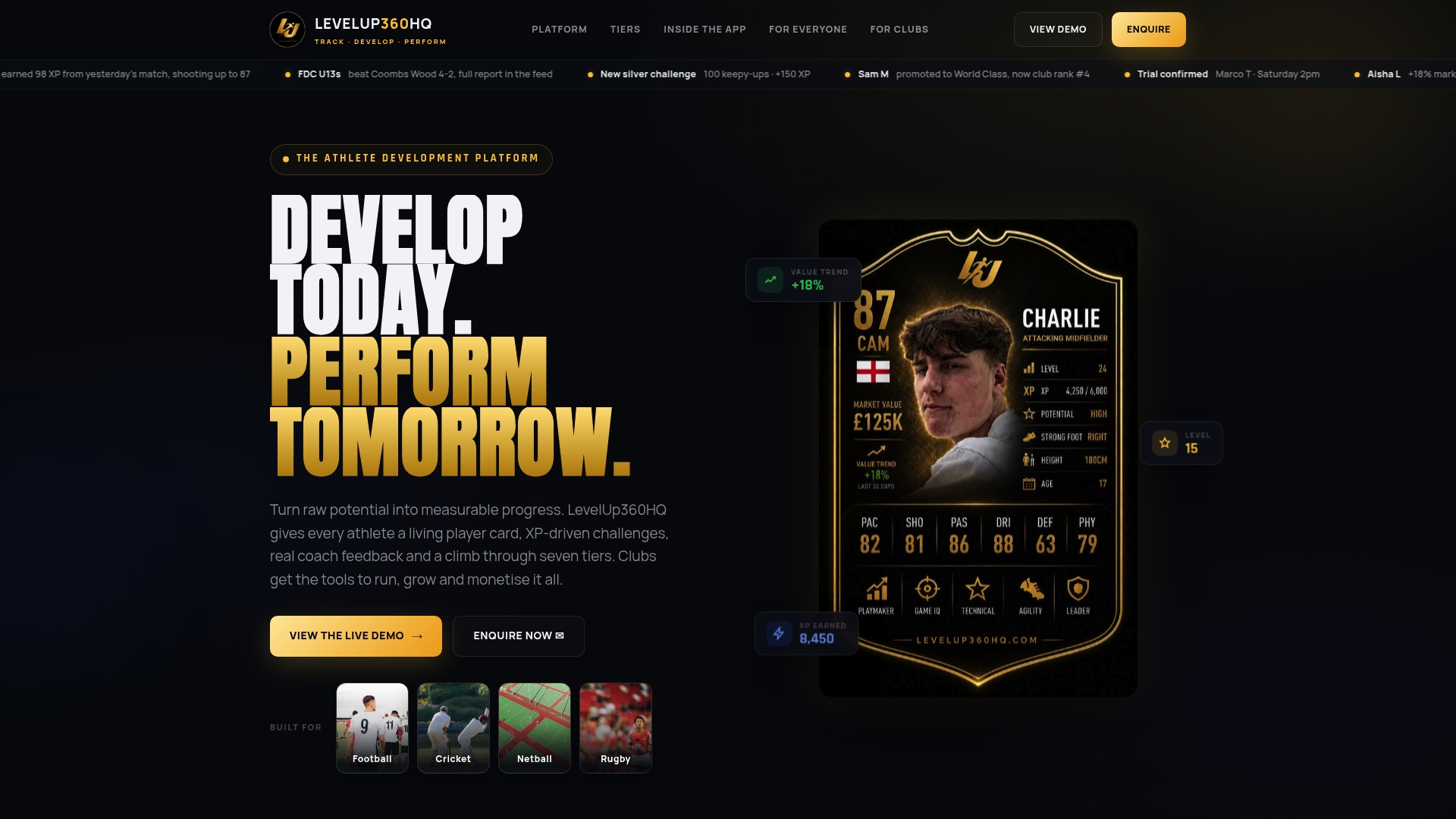
The platform covers every priority in this guide: coach mobile issuance, video assessment workflows, live player cards, analytics, CRM, and integrated payments, all under your club’s own brand. It supports football, cricket, netball, rugby, and more, so multi-sport academies do not need separate systems per discipline.
The clearest next step is a live demo. See the platform in action to walk through badge issuance, athlete profiles, and the parent-facing experience before committing to a pilot. Or visit the main platform page to review features and pricing options relevant to your club’s size.
Useful sources and further reading
| Resource | What it covers |
|---|---|
| Open Badges standard (IMS Global) | Technical specification for portable, verifiable digital credentials |
| UK GDPR guidance (ICO) | Data protection obligations for clubs handling athlete and parent data |
| Levelup360hq platform overview | Full feature set, multi-sport support, and club pricing |
| Levelup360hq demo | Live prototype for clubs evaluating the platform before procurement |
| Coaching tool integration notes | Partner resource covering coach workflows and connected platform options |
Recommended
Turn potential into a player card.
LevelUp360 tracks every match, builds your child's player card, and shows their development over time.
Get started free