Sports challenge types for progression: a coach's guide
Published 19 July 2026
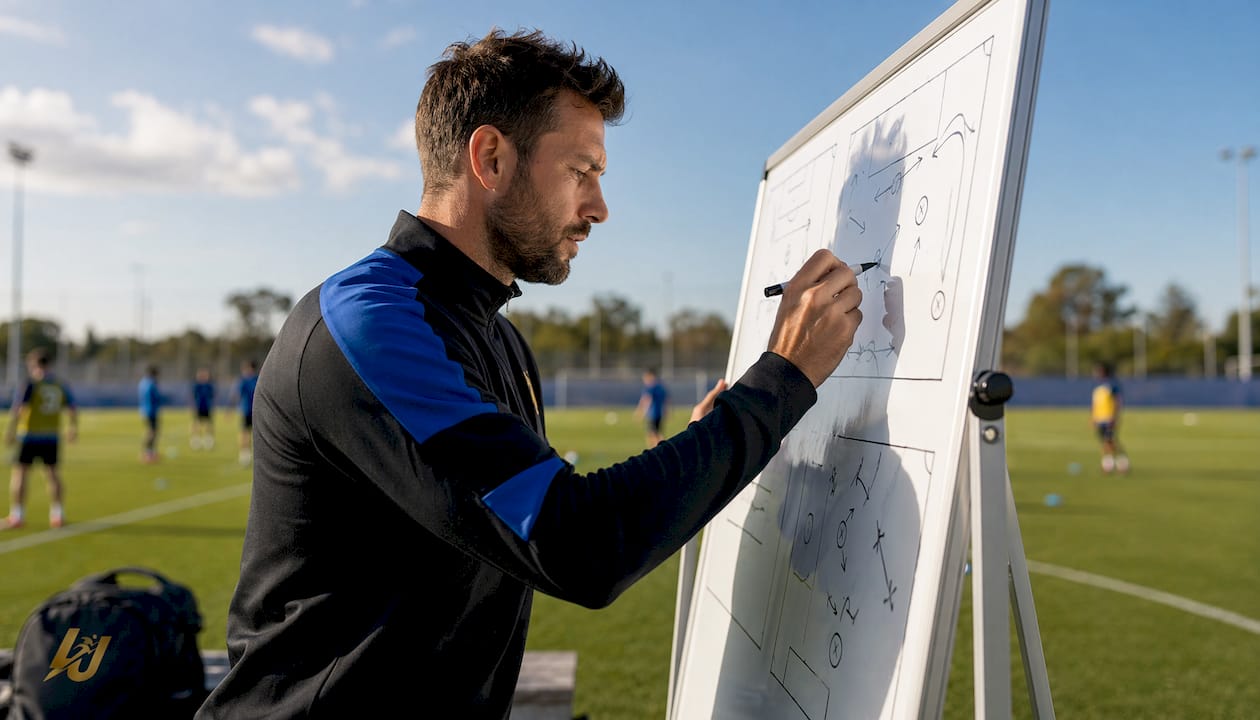
Sports challenge types for progression are structured formats that improve athletic skills and fitness by progressively increasing difficulty and engagement across defined timeframes. The industry recognises four core models: count-based, threshold-based, streak-based, and completion-based challenges, with hybrid formats combining these for advanced programmes. Governing bodies in sports science recommend block periodisation as the structural backbone for any serious progression challenge. Platforms like Levelup360hq have built their entire athlete development architecture around these models, using XP-driven challenges and tier progression to keep athletes engaged and developing consistently.
What are the main sports challenge types for progression?
Four engagement models define the challenge landscape: count-based, threshold-based, streak-based, and completion-based. Each serves a distinct training objective, and choosing the wrong model for your goal is one of the most common mistakes coaches make.
- Count-based challenges track a specific action within a set timeframe. A footballer completing 500 passes in a week, or a cricketer facing 200 deliveries in a fortnight, are classic examples. This model builds habits and creates a measurable daily rhythm.
- Threshold-based challenges require athletes to hit a defined score or value. A netballer must achieve a shooting accuracy of 70% before progressing to the next phase. Progress is tied to quality, not just quantity.
- Streak-based challenges reward consecutive successful sessions. Miss a day, and the streak resets. This model is exceptionally effective for building consistency, though it can create anxiety if the reset penalty feels too punishing.
- Completion-based challenges present a list of distinct objectives. Tick them off in any order. This format drives exploration and broad skill activation, making it ideal for multi-discipline athletes.
- Hybrid models combine two or more mechanics. A rugby player might need to complete 300 tackles (count-based) while maintaining a 75% success rate (threshold-based). Hybrid models are increasingly used for sophisticated progression programmes in 2026.
Pro Tip: If you are coaching beginners, start with count-based challenges. They create early wins without the pressure of quality thresholds, which builds confidence before introducing performance benchmarks.
How does block periodisation enhance challenge effectiveness?

Block periodisation divides a training cycle into distinct phases, each with a specific physiological or technical focus. Applied to challenges, it prevents the two most common failure points: overtraining and stagnation.
Industry-standard challenge durations run from 7 to 30 days, with 30-day formats recommended for building serious long-term momentum. The four weekly phases follow a clear pattern.
- Base-building (week 1): Low volume, low intensity. Athletes establish movement patterns and baseline metrics. The challenge sets achievable daily targets to build confidence.
- Volume increase (week 2): Total workload rises while intensity stays moderate. Count-based targets increase. Threshold benchmarks remain constant so athletes can focus on hitting them more consistently.
- Intensity increase (week 3): Volume holds steady, but the difficulty of each session rises. Threshold targets tighten. Streak requirements lengthen. This is where real adaptation happens.
- Deload and test (week 4): Volume drops sharply. Athletes rest, recover, and then complete a benchmark test. This is the moment where progress becomes visible and measurable.
This structure prevents the plateau that kills most self-designed challenges. Without a deload phase, athletes accumulate fatigue and mistake tiredness for lack of progress.
Pro Tip: Build your benchmark test into the challenge itself as a completion-based objective. Athletes who “unlock” the test feel a sense of achievement before they even complete it.
Which challenge types best support skill acquisition?
Skill acquisition demands a different challenge structure than fitness development. Completion-based and hybrid challenges are the most effective formats for technical progression. They force athletes to practise specific movements rather than simply accumulating volume.
Challenges designed purely on volume miss skill acquisition entirely. Volume-only formats produce strength gains without technical mastery. A footballer completing 1,000 touches a week will get fitter, but without structured skill tasks embedded in the challenge, their first-touch quality may not improve at all.
Most athletes achieve key technical benchmarks within 6 to 12 weeks of consistent structured training that integrates skill-focused practice alongside conditioning. That timeline assumes the challenge includes scheduled skill sessions, not just fitness targets.
| Challenge type | Best for | Skill integration | Typical timeline |
|---|---|---|---|
| Count-based | Habit formation | Low | 1–4 weeks |
| Threshold-based | Performance benchmarks | Medium | 2–6 weeks |
| Completion-based | Skill mastery | High | 4–12 weeks |
| Hybrid | Comprehensive development | Very high | 6–12 weeks |
Blending vertical growth (strength and fitness metrics) with horizontal growth (new skills and techniques) prevents progression inflation. When challenges only reward athletes for lifting heavier or running faster, the rewards lose meaning. Adding new skill unlocks keeps the challenge feeling fresh and the progress feeling real.
How adaptive difficulty keeps athletes engaged
Adaptive difficulty is the practice of scaling challenge intensity to match an athlete’s rising capability. Without it, challenges either become too easy too quickly or too hard too suddenly. Both outcomes kill engagement.
Difficulty curves must dynamically scale to keep athletes in a flow state. Flow theory, developed by psychologist Mihaly Csikszentmihalyi, describes the mental state where challenge and skill are perfectly balanced. In sports challenge design, this means the difficulty should rise slightly faster than the athlete’s skill level, creating a productive stretch without tipping into frustration.
Failure in a well-designed challenge is not a setback. It is a data point. The best progression challenges make failure visible, recoverable, and explained, so athletes understand exactly what they need to do differently next time.
Visible, recoverable failure with clear feedback keeps athletes engaged and learning rather than demoralised. A streak reset that shows the athlete their longest streak to date, alongside what broke it, turns a negative moment into motivation.
Static progression systems fail diverse skill levels. Segmented challenges solve this by offering different difficulty tiers within the same challenge. A beginner rugby player and an academy-level player can participate in the same 30-day challenge, with the beginner earning visible wins on the entry tier while the advanced athlete pursues mastery-level objectives.
- Adjust variables progressively: speed, complexity, load, and decision-making pressure.
- Use segmented thresholds so beginners and advanced athletes both feel challenged.
- Build in visible progress markers every 3 to 5 days to maintain momentum.
- Allow partial completion credit so athletes who miss a day do not abandon the challenge entirely.
Practical recommendations for choosing and combining challenge types
Selecting the right challenge format starts with a clear training objective. Habit development calls for count-based formats. Performance benchmarking suits threshold models. Skill mastery requires completion-based or hybrid structures. Motivation and broad engagement benefit most from streak mechanics layered on top of another format.
- Match the format to the goal. A coach building pre-season fitness uses count-based challenges. A coach developing technical skills uses completion-based challenges with embedded skill tasks.
- Combine count and threshold mechanics for athletes who need both habit formation and quality benchmarks. Set a daily count target, then add a threshold gate at the end of each week before the athlete can progress.
- Layer challenges in phases using block periodisation. Run a count-based challenge in week one, introduce threshold requirements in week two, and shift to a completion-based format in weeks three and four.
- Use seasonally themed challenges to sustain momentum across a full year. Pre-season, in-season, and off-season challenges each carry a different emphasis, preventing the staleness that comes from running the same format repeatedly.
- Avoid volume-only pitfalls. A challenge that only counts repetitions without any skill component produces athletes who are fitter but not better. Every challenge should include at least one technical objective per phase.
Pro Tip: Review your challenge design against this question: “If an athlete completes every target, will they be a better player?” If the answer is only “fitter,” add a skill layer.
| Objective | Recommended format | Phase to introduce |
|---|---|---|
| Habit formation | Count-based | Week 1 |
| Performance benchmarking | Threshold-based | Week 2 |
| Skill mastery | Completion-based | Weeks 3–4 |
| Comprehensive development | Hybrid | Full cycle |
Challenges should function cyclically with evolving content to maintain motivation and prevent boredom. A 30-day challenge that resets with new objectives at the start of each month gives athletes a reason to return. Levelup360hq builds this cyclical structure directly into its XP-driven challenge system, with tier progression that rewards athletes for completing successive challenge cycles.
Key takeaways
The most effective sports challenge types for progression combine adaptive difficulty, block periodisation, and both vertical and horizontal growth to produce athletes who are fitter and technically better.
| Point | Details |
|---|---|
| Four core models exist | Count, threshold, streak, and completion-based challenges each serve a distinct training goal. |
| Block periodisation structures progress | A four-phase weekly cycle prevents overtraining and makes gains visible at the deload stage. |
| Skill work must be embedded | Volume-only challenges produce fitness without technical mastery; add skill tasks to every phase. |
| Adaptive difficulty sustains engagement | Segmented thresholds and dynamic scaling keep beginners and advanced athletes challenged simultaneously. |
| Hybrid formats deliver the most | Combining two or more challenge mechanics produces the broadest and most durable athlete development. |
Why I think most coaches are designing challenges backwards
Chris here. After working across football, cricket, and rugby environments, I have noticed the same pattern repeatedly. Coaches design challenges around what is easy to measure, not what actually produces better athletes. Volume is easy to count. Skill quality is harder to quantify. So challenges default to repetition targets, and athletes get fitter without getting better.
The shift I have seen work consistently is treating the challenge as a curriculum, not a competition. The best challenges I have encountered tell athletes exactly what skill they are developing, why it matters, and what “good” looks like at each stage. That context transforms a count target from a chore into a purposeful act.
The other thing I would push back on is the idea that harder is always better. The flow state principle is genuinely underused in sports coaching. Athletes disengage when a challenge is too easy for too long just as quickly as they do when it is too hard. Getting that curve right is the real craft in challenge design.
Platforms like Levelup360hq are moving in the right direction by building adaptive, XP-driven challenge structures that evolve with the athlete. The coaches who will develop the best athletes in the next decade are the ones who treat challenge design as a discipline in its own right.
— Chris
How Levelup360hq supports challenge tracking and progression
Levelup360hq gives athletes and coaches the tools to build, track, and adapt every challenge type covered in this article.

The platform’s XP-driven challenge system supports count-based, threshold-based, and completion-based formats within a single environment. Coaches can design periodised challenge cycles, set adaptive thresholds for different athlete tiers, and monitor progress through real-time performance analytics. Athletes see their development reflected in live player cards, badge systems, and leaderboards, which sustains the motivation that well-designed challenges create. For clubs running multiple squads across football, cricket, netball, or rugby, the platform’s demo shows how challenge management scales without added administrative burden.
FAQ
What are the four main sports challenge types for progression?
The four core models are count-based, threshold-based, streak-based, and completion-based challenges. Each targets a different training objective, from habit formation to skill mastery.
How long should a structured sports challenge last?
Industry standards recognise 7, 14, 21, and 30-day formats, with 30 days recommended for building serious long-term momentum using block periodisation phases.
How quickly can athletes expect to see technical skill improvements?
Most athletes achieve key technical benchmarks within 6 to 12 weeks of consistent structured training that integrates scheduled skill work alongside conditioning.
What is the biggest mistake in sports challenge design?
Designing challenges around volume alone is the most common error. Volume-only formats produce fitness gains without technical mastery, leaving athletes fitter but not more skilled.
How do adaptive challenges benefit mixed-ability groups?
Segmented and adaptive challenges allow beginners to earn visible wins on entry-level tiers while advanced athletes pursue mastery objectives within the same challenge structure.
Recommended
Turn potential into a player card.
LevelUp360 tracks every match, builds your child's player card, and shows their development over time.
Get started free