Sports achievement badge categories: a coach's guide
Published 10 June 2026
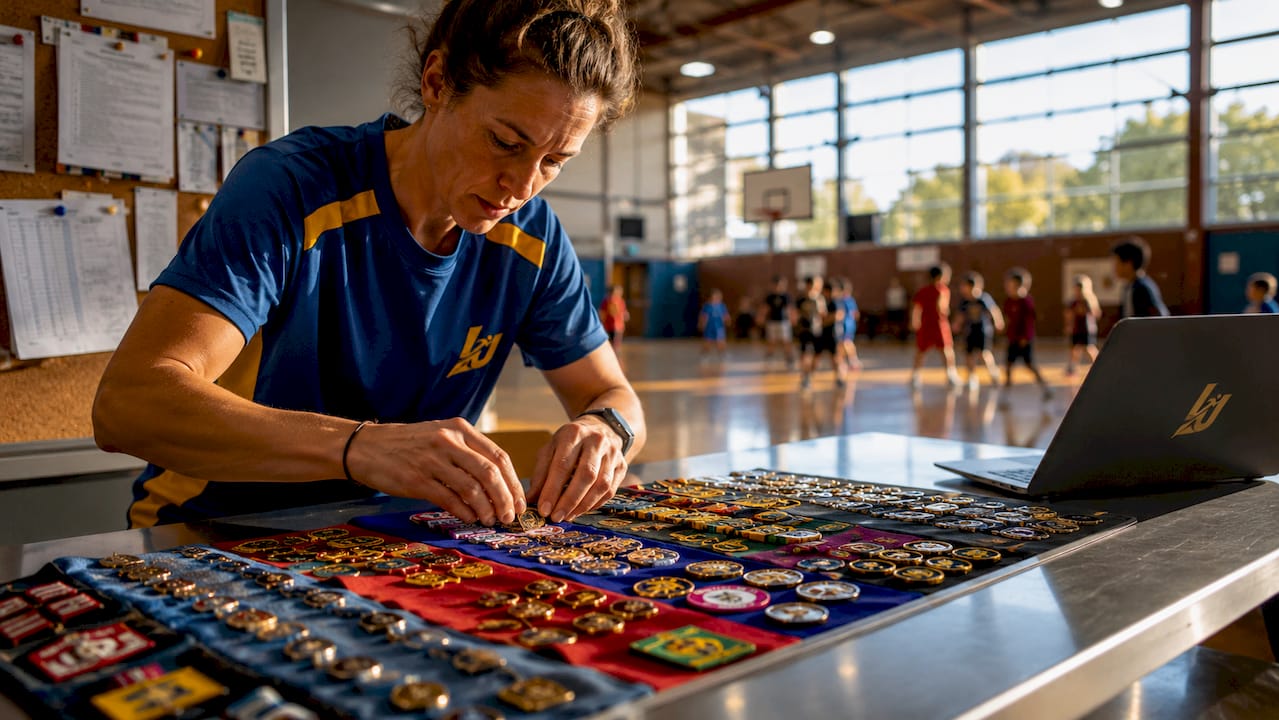
Sports achievement badge categories are the formal classification system used to recognise, reward, and track athletic accomplishment across skill, fitness, and participation domains. From the German Sports Badge, which classifies nationwide achievement into endurance, strength, speed, coordination, and flexibility, to digital milestone systems built into athlete development platforms, these categories serve one primary function: giving athletes a clear, credible target to pursue. Whether you are a coach building a youth programme, an academy director designing a recognition structure, or an athlete mapping your own progression, understanding how badge categories work is the foundation for making them effective.
1. The main sports achievement badge categories explained
Sports achievement badge categories divide into two primary types: physical achievement badges and digital badges. Physical badges take the form of metal medals, embroidered patches, and enamel pins. Digital badges are app-based, data-tracked recognitions awarded when an athlete meets a measurable milestone within a platform or programme. Both types serve the same motivational purpose, but they differ significantly in how they are earned, displayed, and maintained.
Physical badges carry a tactile permanence that digital formats cannot replicate. A brass medal awarded at a sanctioned competition or an embroidered patch sewn onto a training kit communicates achievement in a way that is visible to teammates, coaches, and opponents alike. Digital badges, by contrast, update in real time and can reflect ongoing performance data, making them better suited to continuous development tracking rather than single-event recognition.
- Physical achievement badges: Metal medals, embroidered patches, enamel pins, and woven crests awarded at events or upon completing a defined standard.
- Digital achievement badges: App-based milestones, XP-triggered rewards, and data-verified certifications awarded through platforms tracking training load, match performance, or fitness testing.
- Hybrid recognition: Programmes that pair a digital badge with a physical token, combining real-time tracking with a tangible reward at key milestones.
Pro Tip: When designing a badge programme, start with the display context. If athletes train daily in kit, embroidered patches on training wear create constant visibility. If your programme is app-based, digital badges with shareable graphics extend reach beyond the training ground.
2. How physical criteria shape badge classification
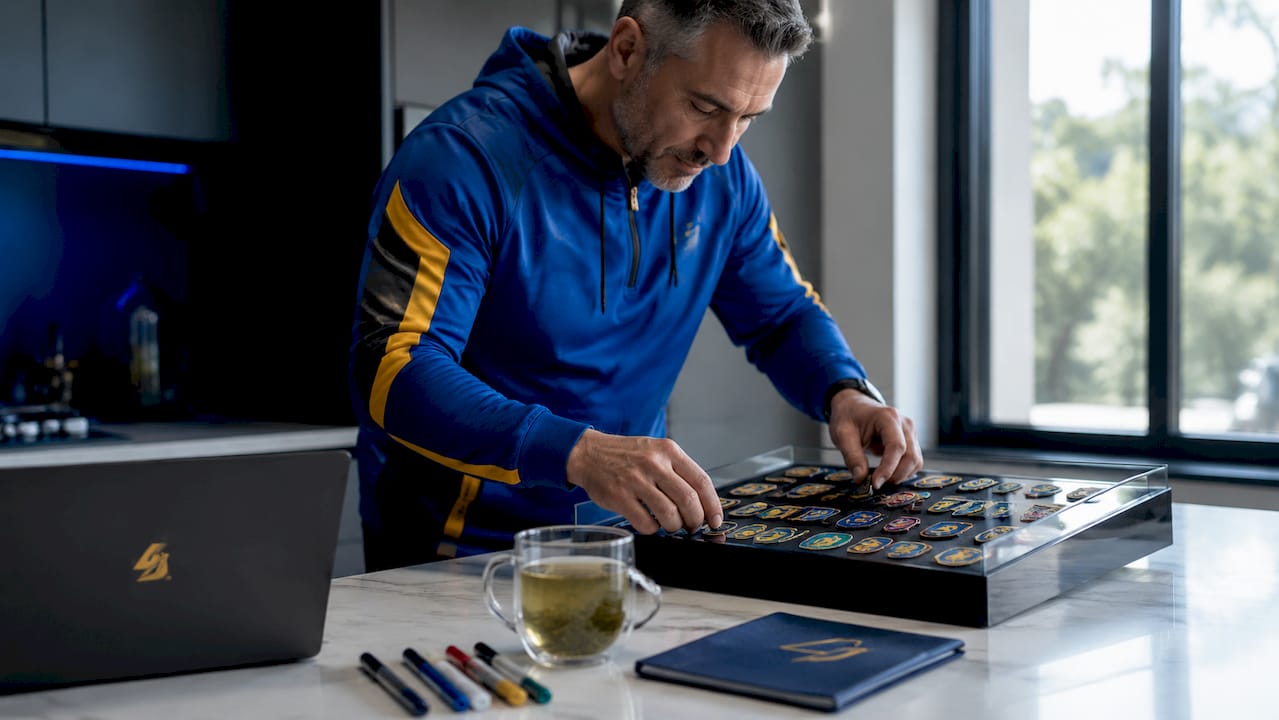
The most widely used framework for categorising achievement badges for sports groups athletic demands into five domains: endurance, strength, speed, coordination, and flexibility. The German Sports Badge, one of Europe’s most recognised national award systems, uses precisely this structure to assess athletes across age groups and ability levels. Each domain requires athletes to meet a defined standard through a tested activity, such as a timed run for endurance or a measured throw for strength.
The Norwegian Sports Federation applies a comparable model, with standardised testing protocols that are recognised internationally. Notably, the Federation permits authorised testing to take place worldwide without requiring a certified examiner to be present on site. This cross-border credibility is what separates a well-designed badge category from a participation sticker.
| Physical domain | Example test activity | Why it matters |
|---|---|---|
| Endurance | 1,000m timed run or 30-minute swim | Measures aerobic capacity and sustained effort |
| Strength | Shot put distance or pull-up repetitions | Assesses functional power output |
| Speed | 50m or 100m sprint | Tracks explosive movement and reaction time |
| Coordination | Ball skills circuit or agility ladder | Evaluates motor control and technical precision |
| Flexibility | Standing forward bend or shoulder reach | Monitors injury risk and joint mobility |
“Badge value depends on athlete development, not just the token. Adherence to officiated activity ensures programme integrity.” This principle, drawn from multisport merit badge frameworks, applies equally to national badge systems and club-level awards.
3. What earning a sports badge actually requires
Earning a recognised sports badge is not a single-session event. Structured badge programmes typically require a minimum of three to four months of consistent training, participation in multiple officiated events, and a formal review process covering sportsmanship, safety, and injury prevention. This timeline exists to confirm that the athlete has genuinely developed, not simply performed well on one occasion.
Scouting America’s Sports Merit Badge is a well-documented example of this structure. Athletes must participate in a sport for a defined season, compete in sanctioned events, and complete a counselling session that covers topics including safe training practices and the role of fair play. The counselling element is often overlooked by organisations designing their own systems, yet it is precisely what gives the badge credibility beyond the physical test.
- Define the training period. Set a minimum duration, typically three to four months, during which the athlete must demonstrate consistent participation.
- Require officiated competition. At least two to three events judged or timed by a qualified official should be mandatory to prevent self-reporting bias.
- Include a knowledge component. A discussion or written assessment covering safety, nutrition, or sportsmanship adds depth and programme integrity.
- Document everything. Training logs, competition results, and counsellor sign-offs create an auditable record that protects both the athlete and the organisation.
- Award publicly. Presentation in front of peers reinforces the social value of the achievement and motivates others to pursue the same standard.
Pro Tip: For youth sports achievement awards, build in a self-assessment step before the formal review. Athletes who articulate their own progress during the process retain the lesson far longer than those who simply receive a badge at the end.
4. How material and design choices vary by badge category
Material and design choices communicate a badge’s value and intended use before anyone reads the inscription. Championship medals use larger formats and premium materials, typically brass or zinc alloy, while participation awards are lightweight and cost-effective. This distinction is not arbitrary. A heavy, polished medal signals that something significant was achieved. A lightweight enamel pin signals inclusion and belonging.
Embroidered badges occupy a different space entirely. Embroidered patches are preferred for training wear because they withstand repeated washing, resist fading, and carry the team’s visual identity into every session. Collectible enamel pins, by contrast, are designed for display rather than daily wear, and many clubs use them as a revenue source through merchandise sales and fan engagement.
- Participation badges: Lightweight metals or PVC, small format, designed for volume production and broad distribution.
- Achievement badges: Mid-weight embroidered patches or die-cast metals, awarded upon meeting a defined standard.
- Championship medals: Large format, brass or zinc alloy, often with ribbon or lanyard, reserved for podium finishes or top-tier certifications.
- Collectible pins: Enamel or soft metal, designed for trading, display, and fan merchandise rather than athletic recognition.
The practical implication for coaches and club managers is straightforward. Match the material to the occasion. Awarding a cheap plastic badge for a genuine athletic milestone devalues the achievement. Equally, distributing premium medals for basic participation inflates perceived value and ultimately reduces the motivational power of your top-tier awards.
5. Matching badge categories to organisational goals
Sports achievement badges are effective motivational tools when aligned with clear organisational objectives and athlete needs. The category you choose should reflect what you are trying to achieve, not simply what is easiest to produce or procure.
For youth academies, the priority is usually sustained engagement. A layered badge structure, such as the four-level system used by the Pony Club (Mini, Achievement, Advanced, Sport), keeps participants motivated across years rather than months. Each level is attainable but requires genuine progression, which prevents the twin problems of disengagement from goals that feel impossible and complacency from goals that feel trivial.
- Motivation-focused programmes: Use tiered achievement badges with visible progression paths. Athletes need to see the next level clearly to stay committed.
- Team identity programmes: Embroidered crests and club badges worn on training kit build cohesion and signal belonging. These are not achievement markers; they are identity markers.
- Performance tracking programmes: Digital badges tied to measurable data points, such as sprint times, match ratings, or training attendance, provide coaches with an objective record of development.
- Fan and community engagement: Collectible pins and limited-edition badges generate revenue and deepen supporter connection, particularly for amateur clubs seeking additional income streams.
- Professional and semi-professional contexts: Certification-level badges tied to verified testing standards, similar to the Norwegian Sports Federation model, add credibility to athlete profiles and support recruitment decisions.
For organisations working across multiple sports, such as multi-sport academies or national governing bodies, the most practical approach is a modular system. Define the core categories (participation, achievement, advanced, elite) and apply consistent criteria within each sport’s specific demands. This gives athletes a shared language for progression regardless of the discipline they practise. Amateur golf accolades, for example, follow a similar tiered recognition logic that translates well to other individual sports.
6. Digital badges and the future of sports certification levels
Digital badges represent the fastest-growing segment of sports certification levels, driven by the shift towards app-based training and performance analytics. Unlike physical awards, digital badges update continuously, can be shared on social platforms, and integrate directly with performance data. A digital badge for completing 50 training sessions carries more credibility when it is backed by timestamped attendance records than when it is self-reported.
The key advantage of digital systems is the ability to track micro-progressions that physical badges cannot capture. A youth footballer improving their throwing accuracy or passing completion rate over a season can receive incremental digital recognition at each threshold, maintaining motivation between major milestones. This granularity is what makes digital badge systems particularly well-suited to long-term athlete development programmes.
The risk, however, is badge inflation. When every minor action triggers a reward, the system loses meaning. The most effective digital badge programmes mirror the discipline of physical ones: clear criteria, verified data, and a limited number of awards that genuinely reflect development.
Key takeaways
A well-designed badge system combines clear physical criteria, credible validation, and layered progression to drive genuine athletic development rather than token recognition.
| Point | Details |
|---|---|
| Two primary categories | Sports badges divide into physical (metal, embroidered) and digital (app-based, data-tracked) types. |
| Physical criteria matter | Endurance, strength, speed, coordination, and flexibility are the standard domains for classifying athletic achievement. |
| Earning requires structure | Effective programmes mandate three to four months of training, officiated competition, and a knowledge review. |
| Material signals value | Championship medals use premium metals; participation awards use lightweight formats. Match material to occasion. |
| Align categories to goals | Choose tiered badges for motivation, embroidered crests for identity, and digital badges for ongoing performance tracking. |
Why most badge programmes fail before they start
The honest problem I see repeatedly is that organisations design badge programmes around what they can produce cheaply, rather than what athletes actually need to stay motivated. A badge without a clear progression path is just a token. It might generate a moment of pride, but it does not change behaviour or sustain development over time.
The Pony Club’s four-level structure is one of the better models I have come across because it solves the engagement problem at both ends of the ability spectrum. The Mini level is genuinely attainable for beginners, which means no one is excluded from the system. The Sport level is genuinely difficult, which means experienced athletes still have something worth pursuing. Most club-level programmes I have reviewed collapse somewhere in the middle, offering too few levels to maintain interest across a full development cycle.
The other mistake is treating physical and digital badges as competing formats rather than complementary ones. Physical badges carry emotional weight. Digital badges carry data. The most effective programmes I have seen use digital tracking to verify the journey and physical awards to mark the destination. Neither format alone does the full job.
My practical advice: before you design a single badge, map your athletes’ development journey from first session to peak performance. Then ask where the natural milestones are. Build your categories around those milestones, not around what fits your budget or your existing trophy cabinet.
— Chris
Track every badge milestone with Levelup360hq
Levelup360hq is built for exactly the kind of structured, data-backed badge programme described in this article. The platform combines digital badge tracking, XP-driven progression, and performance analytics so coaches and clubs can verify achievement rather than simply award it.
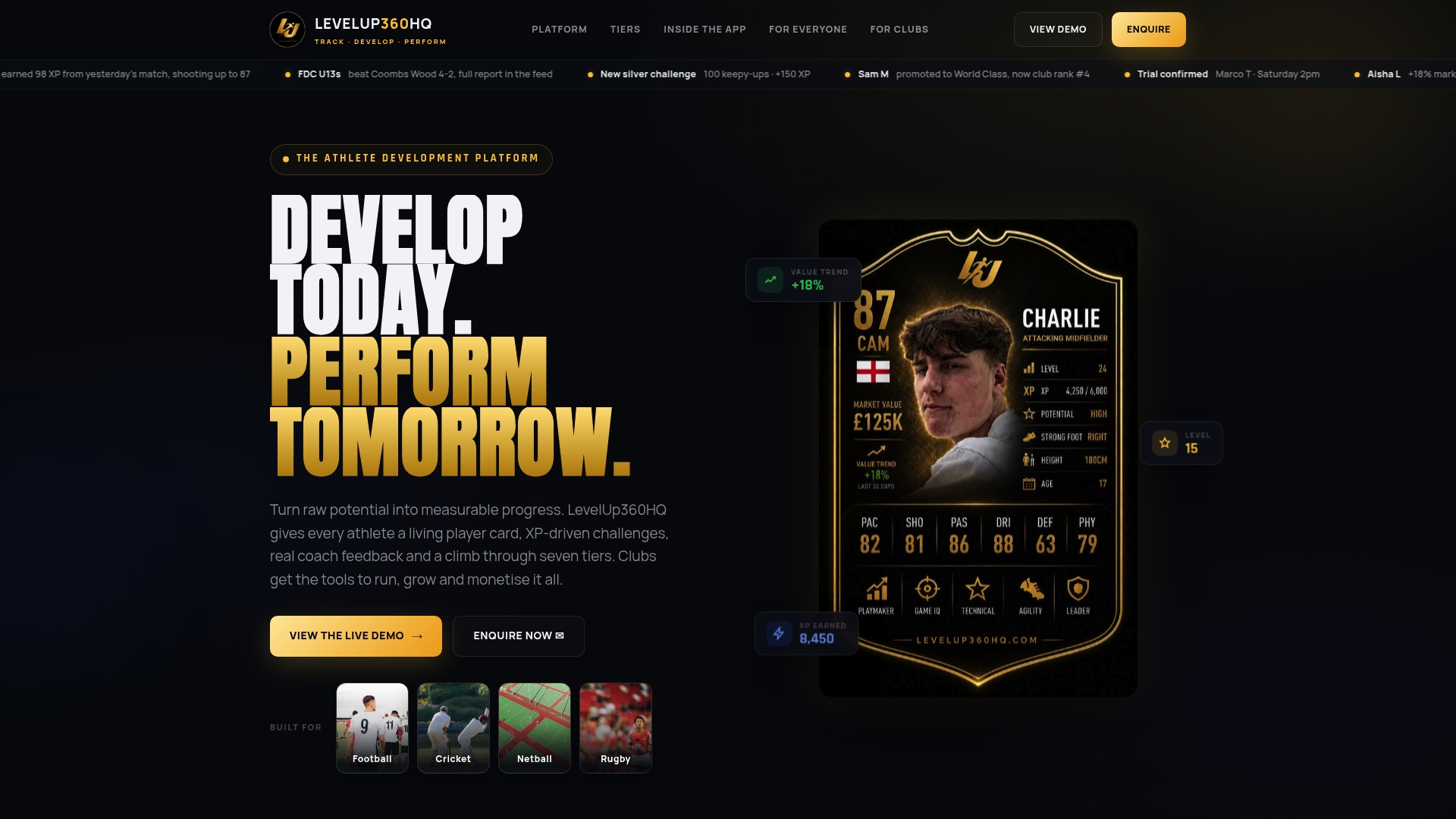
Whether you are running a youth football academy, a multi-sport club, or a national development programme, Levelup360hq gives you the tools to track athlete development across every badge category in real time. FIFA-style player cards, tiered progression systems, and coach approval workflows mean every badge awarded on the platform carries genuine credibility. Explore the platform prototype to see how badge tracking works in practice before you commit.
FAQ
What are the main sports achievement badge categories?
Sports achievement badge categories divide into physical badges (metal medals, embroidered patches, enamel pins) and digital badges (app-based, data-tracked milestones). Within physical categories, the most common classification domains are endurance, strength, speed, coordination, and flexibility.
How long does it take to earn a sports achievement badge?
Structured badge programmes typically require three to four months of consistent training and competition. Programmes such as Scouting America’s Sports Merit Badge mandate officiated event participation and a formal counselling session before the badge is awarded.
What materials are used for different types of sports badges?
Championship medals use brass or zinc alloy for durability and prestige, while participation awards use lightweight metals or PVC for cost-effective volume production. Embroidered patches are preferred for training wear due to their durability through repeated washing.
How do digital badges differ from physical sports awards?
Digital badges are awarded through platforms based on verified performance data, such as training attendance, match ratings, or fitness test results. They update continuously and can reflect micro-progressions that physical awards cannot capture, making them well-suited to long-term development tracking.
Which badge category works best for youth sports programmes?
Tiered badge structures with four or more levels, such as the Pony Club’s Mini, Achievement, Advanced, and Sport system, work best for youth programmes. They keep athletes engaged across years by offering attainable early milestones and genuinely challenging advanced standards.
Recommended
Turn potential into a player card.
LevelUp360 tracks every match, builds your child's player card, and shows their development over time.
Get started free