Role of XP points in skill building for athletes
Published 5 July 2026

XP points, formally known as experience points, are defined as numeric values assigned to training tasks that quantify effort and mark measurable progress toward skill mastery. The role of xp points in skill building is to convert invisible daily effort into visible milestones, giving athletes and coaches a shared language for progress. A footballer completing a passing drill, a cricketer refining their bowling action, or a netball player working on court positioning all generate effort that would otherwise go unmeasured. XP systems change that. They capture incremental gains, trigger level-ups at defined thresholds, and create a structured record of development that both athlete and coach can act on. Platforms like Levelup360hq are built on this principle, using XP-driven challenges and tier progression to make athlete development concrete and trackable.
What is the role of XP points in skill building?
XP points serve as the backbone of any structured skill progression system. They quantify training effort by assigning numeric values to completed tasks, then trigger level-ups that correspond to improved performance tiers. That mechanism matters because athletes rarely perceive their own micro-progress without an external measure to reflect it back to them.

The level-up model follows a tiered structure. Proficiency bonuses increase at defined levels: +2 at levels 1–4, +3 at levels 5–8, +4 at levels 9–12, +5 at levels 13–16, and +6 at levels 17–20. Each tier shift represents a genuine performance threshold, not an arbitrary reward. Coaches can use these benchmarks to set training targets that align with where an athlete actually sits in their development curve.
XP points also create a shared reference point between athlete and coach. Without a numeric system, feedback tends to be subjective. With XP, both parties can see exactly how much effort has been logged, which skills have been prioritised, and where the next level-up sits. That clarity changes the quality of coaching conversations.
How do XP points improve motivation and retention in training?
XP systems improve motivation by fulfilling two core psychological needs: competence and autonomy. Competence grows when athletes see their numbers rise. Autonomy grows when athletes choose which challenges to pursue to earn those points. Together, these two drivers create intrinsic motivation that outlasts any external prize.
The most effective XP systems separate points into two parallel tracks. A base XP track rewards general training attendance and effort. A skill-specific XP track rewards mastery of particular techniques. Dual-track XP systems increase engagement significantly because athletes can progress on both tracks simultaneously, reducing the feeling of stagnation when one skill proves difficult.
Immediate, visual feedback is the other critical ingredient. XP acts as visible feedback, converting incremental gains into tangible progress athletes can monitor daily. That daily visibility matters because athletes are often unaware of their own micro-progress without a system to surface it.
“XP alone is insufficient. Integrating points into a reward cycle with badges and leaderboards maximises engagement and sustains long-term motivation in training environments.”
The reward cycle matters as much as the points themselves. Combining XP with badges and leaderboards creates multiple layers of recognition. An athlete earns XP for effort, earns a badge for reaching a milestone, and sees their name rise on a leaderboard. Each layer reinforces the others, building a habit loop that keeps athletes returning to training.
- Competence feedback: XP rises with every completed drill, showing athletes their effort is working.
- Autonomy: Athletes choose which skills to focus on, giving them ownership of their development path.
- Milestone rewards: Level-ups at defined thresholds create moments of genuine achievement.
- Social proof: Leaderboards and badges make progress visible to peers and coaches alike.
- Daily habit formation: Visible progress bars encourage athletes to log training consistently.
How are skill levels calculated through XP?
Skill progression through XP follows a formula that combines several inputs. The standard calculation uses base XP, a performance multiplier, bonus XP for exceptional effort, and a rested bonus for athletes returning after a recovery period. A practical example: 1,000 base XP multiplied by a 1.2 performance multiplier, plus 50 bonus XP, with a 20% rested bonus, totals 1,500 XP gained in a single session. That figure then feeds into the athlete’s cumulative total and determines when the next level-up triggers.
The table below shows how XP thresholds and proficiency bonuses map across skill tiers.
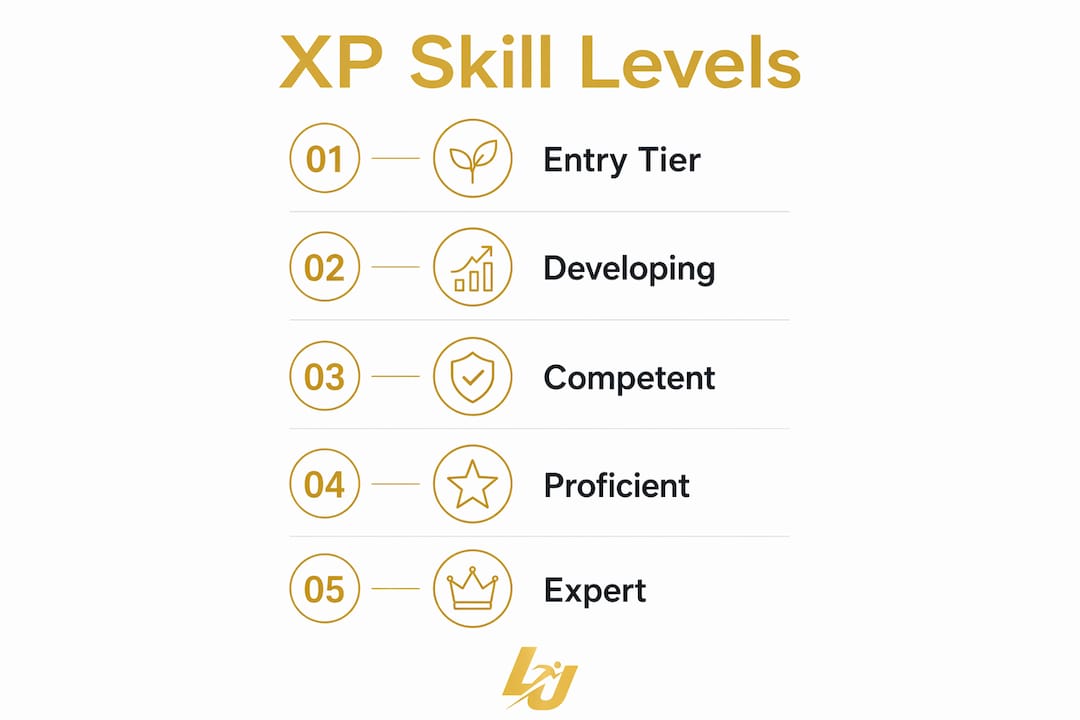
| Skill level | XP threshold (cumulative) | Proficiency bonus |
|---|---|---|
| 1–4 | Entry tier | +2 |
| 5–8 | Developing tier | +3 |
| 9–12 | Competent tier | +4 |
| 13–16 | Advanced tier | +5 |
| 17–20 | Elite tier | +6 |
Each tier shift carries a meaningful performance implication. Moving from the developing tier to the competent tier is not just a number change. It signals that an athlete has logged enough varied, quality training to perform at a reliably higher standard under pressure.
The multiplier component rewards quality over quantity. An athlete who completes a technically demanding drill earns a higher multiplier than one who repeats a basic exercise. This design pushes athletes toward progressively harder challenges, which aligns directly with the progressive overload principle used in sports science.
Pro Tip: Track your multiplier score session by session. A falling multiplier is an early signal that your training has become too repetitive, and it is time to introduce a new drill or increase intensity.
Rested bonuses serve a specific purpose. They reward athletes who respect recovery, returning to training with a temporary XP boost. This mechanic reinforces the sports science principle that adaptation happens during rest, not just during effort.
What are the challenges and nuances of XP-based skill systems?
XP systems are not without complexity. Three specific mechanics require careful management: XP decay, diminishing returns, and the presentation of progress data.
XP decay simulates skill atrophy by reducing an athlete’s XP total over time if a skill is not practised. This mirrors the physiological reality that unused skills deteriorate. A rugby player who stops working on lineout timing will lose sharpness. XP decay makes that loss visible before it becomes a performance problem, prompting the athlete to re-engage with neglected skills before the gap widens.
Diminishing returns on repetitive tasks incentivise varied training. When an athlete repeats the same drill, each repetition yields less XP than the last. This is not a flaw. It is a deliberate design that pushes athletes toward new challenges, which is exactly where skill growth happens. A coach who understands this mechanic will build session plans that rotate drills frequently.
- XP decay: Signals skill atrophy early, prompting athletes to revisit neglected areas before performance drops.
- Diminishing returns: Rewards variety and complexity, discouraging repetitive, low-effort training loops.
- Progress visibility: Progress bars motivate more effectively than raw numeric totals alone.
Visible XP progress bars motivate athletes more effectively than abstract numbers. An athlete who sees a bar at 80% completion feels compelled to finish the level. The same athlete looking at a raw total of 4,200 XP has no immediate reference point. Coaches should prioritise platforms that display progress visually, not just numerically.
Pro Tip: When designing a training programme, schedule at least one new drill type per week. This keeps XP multipliers high, prevents diminishing returns from flattening progress, and introduces the variety that drives genuine skill adaptation.
How to apply XP points effectively in athlete development programmes
Applying XP effectively requires a deliberate structure. The following steps give athletes and coaches a practical framework for maximising skill gains through XP-based training.
- Set a baseline. Before assigning XP values to drills, assess where each athlete sits across key skill categories. This baseline determines starting tier and makes the first level-up feel achievable rather than distant.
- Assign XP values by difficulty. Simple drills earn base XP. Technically demanding or high-pressure drills earn a higher multiplier. This hierarchy pushes athletes toward the challenges that produce the most growth.
- Review XP data weekly. Weekly reviews reveal which skills are progressing, which are stagnating, and which are at risk of decay. Coaches can adjust session plans based on this data rather than intuition alone.
- Combine XP with badges and leaderboards. XP tracks effort. Badges mark milestones. Leaderboards create social accountability. All three working together produce the reward cycle that sustains long-term engagement.
- Use level-ups to set the next goal. Level-up milestones encourage athletes to set harder targets, directly complementing the progressive overload principle. Each new tier should come with a revised training target that reflects the athlete’s improved capacity.
- Monitor for decay signals. If an athlete’s XP in a specific skill category starts to fall, address it in the next session. Early intervention prevents the atrophy from becoming a performance deficit.
Levelup360hq supports this entire process through its XP-driven challenge system, tier progression tracking, and performance analytics. Coaches can monitor athlete progress in real time, approve completed challenges, and adjust development plans based on live data rather than periodic assessments.
Key takeaways
XP points drive skill development by converting training effort into measurable milestones, and the most effective systems combine XP with badges, leaderboards, and visible progress indicators to sustain athlete motivation across every tier.
| Point | Details |
|---|---|
| XP quantifies effort | Numeric values assigned to drills convert invisible progress into trackable milestones. |
| Dual-track systems boost engagement | Separating base XP from skill-specific XP creates parallel reward pathways that reduce stagnation. |
| Calculation includes multipliers | Base XP, performance multipliers, bonuses, and rested bonuses all contribute to total session XP. |
| XP decay prevents complacency | Skills lose XP over time if unpractised, mirroring real physiological atrophy and prompting re-engagement. |
| Visibility drives daily motivation | Progress bars outperform raw numeric totals in keeping athletes focused on their next level-up. |
XP in sports training: what I have actually seen work
Most coaches I have spoken with treat XP as a reward mechanism. That is only half the picture. The more powerful use of XP is diagnostic. When an athlete’s XP in a specific skill category plateaus or starts to decay, that is a coaching signal. It tells you the athlete has either stopped practising that skill or has hit a ceiling with their current drill selection. Neither problem is visible without the data.
The other thing I have seen coaches get wrong is treating all XP as equal. A player who earns 500 XP from a basic passing drill and another who earns 500 XP from a high-pressure decision-making exercise are not in the same place developmentally. The multiplier system exists precisely to distinguish these two athletes. Coaches who ignore multipliers are reading an incomplete picture.
The future of XP in sports training sits at the intersection of real-time data and personalised progression. Platforms like Levelup360hq are already moving in this direction, with live player card ratings that update as athletes complete challenges. The next step is predictive modelling: using an athlete’s XP trajectory to forecast when they will reach the next tier and what training inputs will get them there fastest. That is not a distant possibility. The data infrastructure already exists.
— Chris
How Levelup360hq supports XP-based athlete development
Levelup360hq is built around the principle that athlete development should be visible, measurable, and motivating at every stage.

The platform gives athletes XP-driven challenges tied to real skill categories across football, cricket, netball, and rugby. Coaches get session management tools, video assessment workflows, and approval systems that connect directly to each athlete’s XP record. Clubs benefit from performance analytics and leaderboard features that make progress visible across an entire squad. If you want to see how XP tracking works in practice, the Levelup360hq platform brings every element of this article to life in a single environment built for the athlete ecosystem.
FAQ
What are XP points in sports training?
XP points are numeric values assigned to training tasks that quantify effort and track skill progression. They trigger level-ups at defined thresholds, giving athletes and coaches a measurable record of development.
How do XP points affect skill development?
XP points convert training effort into visible milestones, fulfilling psychological needs for competence and autonomy. Dual-track systems that separate base XP from skill-specific XP increase engagement by creating parallel reward pathways.
What is XP decay and why does it matter?
XP decay reduces an athlete’s skill XP over time if that skill is not practised, simulating real physiological atrophy. It serves as an early warning signal, prompting athletes to re-engage with neglected skills before performance drops.
How is skill level XP calculated?
Skill level XP combines base XP, a performance multiplier, bonus XP for exceptional effort, and a rested bonus. For example, 1,000 base XP multiplied by 1.2, plus 50 bonus XP with a 20% rested bonus, totals 1,500 XP for one session.
Why are progress bars better than raw XP numbers?
Visible progress bars give athletes an immediate reference point, showing how close they are to the next level-up. Raw numeric totals lack that context, making daily motivation harder to sustain.
Recommended
Turn potential into a player card.
LevelUp360 tracks every match, builds your child's player card, and shows their development over time.
Get started free