Consistency tracking in youth sport: why it drives success
Published 26 July 2026

Why consistency tracking is the linchpin of youth sport success
Talent gets a young athlete noticed. Consistency is what keeps them progressing. The role of consistency tracking in youth sport success is not a coaching nicety — it is the mechanism that separates athletes who develop predictably from those who plateau or burn out.

Chris Pomfret of Condor Performance puts it plainly: consistency acts as a competitive advantage by reducing uncertainty, allowing coaches to trust player performance and helping athletes manage the confidence fluctuations that come from relying solely on statistics. That framing matters. When a young athlete’s development is tracked consistently over time, coaches gain reliable data to make decisions, parents gain transparency, and athletes gain a stable sense of their own progress.
The critical components that consistency tracking addresses include:
- Performance variability — identifying when fluctuations are genuine regression versus normal developmental noise
- Process adherence — monitoring whether athletes follow preparation routines, not just whether they win
- Confidence stability — giving athletes evidence of progress that does not depend on match results alone
- Longitudinal trajectories — distinguishing real development from transient performance swings over weeks and months
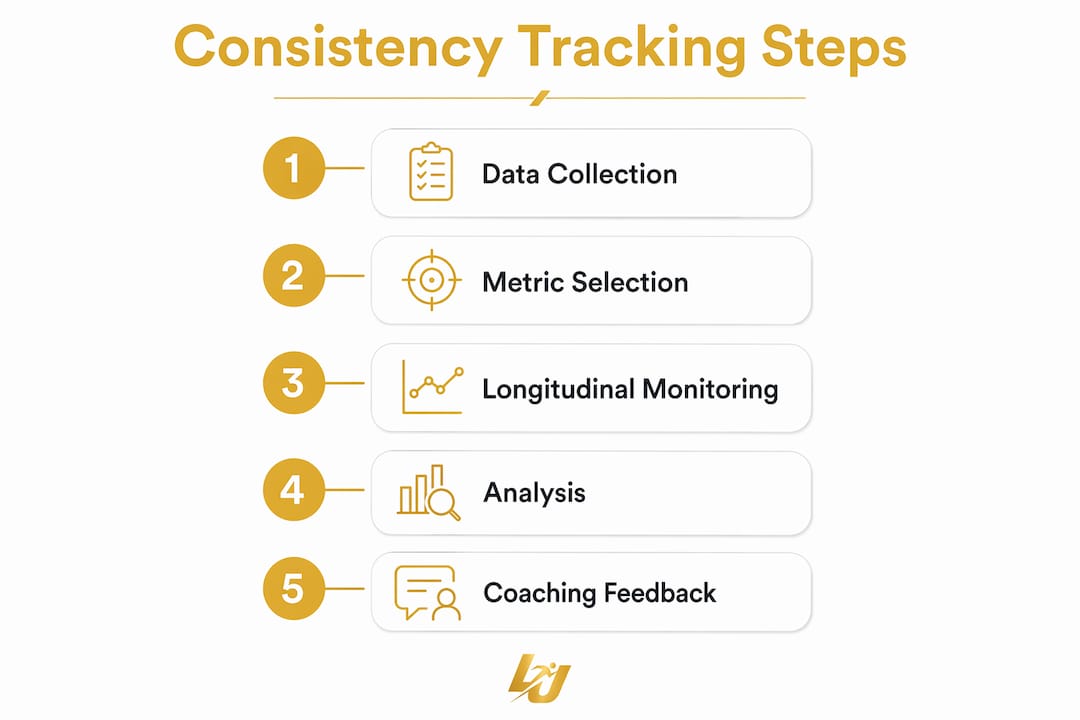
Youth athletes develop non-linearly. A single assessment tells you almost nothing. Longitudinal monitoring — tracking the same athlete across multiple data points over time — is what reveals whether a training programme is genuinely working.
Table of Contents
- The psychological and physical foundations of consistent performance
- How consistency tracking benefits youth clubs and teams
- How Levelup360hq supports consistency tracking in youth sport
- Key takeaways on consistency tracking in youth sport
- What consistency actually means for young athletes
- Levelup360hq gives your club a real tracking advantage
The psychological and physical foundations of consistent performance
Mindset comes first
Consistency in sport is not purely physical. It has two interdependent dimensions: a stable internal mindset and reliable physical preparation. Neither works without the other. Developing a consistent mindset through routines such as journaling, visualisation, and mindfulness complements physical preparation to yield stable athletic outcomes.
That distinction is worth sitting with. A young footballer who trains hard but has no reset routine after a mistake will perform differently under pressure than in training. The skill is there; the access to it is not.
Mental consistency training for youth athletes typically involves:
- Pre-performance journaling to anchor focus before sessions
- Breath-based reset routines between plays or drills
- Visualisation of process goals, not just outcomes
- Mindfulness practices that build attention control over time
Physical preparation as a controllable
On the physical side, common training errors often stem from inconsistent preparation rather than insufficient talent. Sleep quality, warm-up protocols, hydration, and recovery habits are all trackable controllables. When coaches monitor these alongside technical output, they can identify whether a dip in performance reflects a physical cause or a psychological one — a distinction that changes the intervention entirely.
Over-reliance on output statistics is a genuine risk. Statistics often reflect external variables and can undermine mental resilience if athletes treat them as the primary measure of their worth. Process-oriented tracking — did the athlete follow their routine, maintain their focus cues, complete their recovery work — gives a far more stable picture of development.
How consistency tracking benefits youth clubs and teams
A shared language for everyone involved
One of the most underappreciated benefits of structured tracking is what it does for communication. Consistency tracking acts as a linchpin for successful programmes by supporting objective feedback and transparent development conversations among coaches, athletes, and parents. When everyone is looking at the same data, disagreements about progress become far less common.
This matters particularly in UK youth sport, where parental involvement is high and expectations can diverge sharply from coaching priorities. A shared tracking framework gives all three parties — coach, athlete, parent — a common reference point grounded in evidence rather than opinion.
Key benefits for clubs adopting structured consistency tracking:
- Athlete safety — tracking load and recovery patterns flags overtraining before injury occurs
- Programme trust — objective data reduces the perception of favouritism in selection decisions
- Development alignment — coaches and parents work from the same picture of an athlete’s progress
- Informed adjustments — data reveals which training interventions are actually producing change
Choosing the right metrics
More data is not better data. Capping to three core metrics per monitored area achieves the right balance between detail and practicality, avoiding the information overload that causes coaches and athletes to disengage from tracking altogether.
| Domain | Example metrics to track | Why they matter |
|---|---|---|
| Physical | Training load, sleep quality, recovery rating | Flags overtraining and readiness |
| Technical | Skill execution rate, drill completion, error frequency | Measures process adherence, not just outcomes |
| Behavioural | Attendance, punctuality, communication with coach | Reflects commitment and coachability |
| Psychological | Pre-session focus rating, post-session confidence score | Tracks mental consistency alongside physical |
Keeping the table to three metrics per domain means coaches can act on what they see rather than drown in it.
How Levelup360hq supports consistency tracking in youth sport
Built for the whole athlete ecosystem
Levelup360hq is a gamified athlete development platform designed specifically for the athlete-coach-club triangle. Its core architecture is built around making consistency tracking engaging rather than burdensome, which is where most manual tracking systems fail with young athletes.
The platform’s features directly address the tracking challenges outlined above:
- FIFA-style live player cards with real-time ratings give athletes a visible, ongoing record of their development — not just a spreadsheet they never look at
- XP-driven challenges and tier progression reward process adherence, not just match performance
- Video assessments and approval workflows let coaches document technical progress with evidence rather than memory
- Session management tools create a structured record of training attendance, load, and content
- Badge systems and leaderboards build intrinsic motivation by making progress visible to the athlete themselves
For clubs, Levelup360hq offers white-label branding, CRM functionality, subscription management, and multi-sport support across football, cricket, netball, and rugby. A single platform can serve an entire academy rather than requiring separate tools for each sport.
That framing is deliberate. Digital monitoring in youth sport can harm motivation if athletes feel watched rather than supported. Levelup360hq’s gamification layer addresses this directly by putting athletes in ownership of their own data.
Pro Tip: When introducing any digital tracking platform to young athletes, frame the data as their personal development record — something they control and can share — rather than a coach’s monitoring tool. Autonomy over data is what keeps engagement high.
Best practices for integrating Levelup360hq into a youth programme:
- Start with two or three tracked metrics per athlete before expanding
- Use the platform demo to walk athletes and parents through what data is collected and why
- Review player card progress in one-to-one sessions so athletes understand what the numbers mean
- Align XP challenges with the process goals identified in the psychological foundations section above
Key takeaways on consistency tracking in youth sport
Consistency tracking works because it shifts focus from unpredictable outcomes to the controllable processes that actually drive long-term athletic development.
| Point | Details |
|---|---|
| Process over outcomes | Track preparation routines, attendance, and focus cues — not just match statistics. |
| Longitudinal data matters | Single assessments mislead; frequent data points reveal genuine developmental trajectories. |
| Three metrics per domain | Capping tracked metrics prevents overload and keeps data actionable for coaches and athletes. |
| Stakeholder alignment | Shared tracking data reduces parental conflict and builds trust across the programme. |
| Levelup360hq | Gamified live player cards and XP challenges make consistency tracking engaging and athlete-owned. |
What consistency actually means for young athletes
Consistency in youth sport is not about performing identically every session. It is about maintaining access to your skills regardless of pressure, environment, or result. That distinction changes how coaches design programmes and how athletes understand their own development.
The mindset principles behind fitness success — journaling, visualisation, habit formation — are not soft additions to a training plan. They are the foundation that makes physical preparation repeatable. Without them, even the most talented young athlete will perform inconsistently under pressure.
For UK clubs and academies, the practical implication is clear: youth sport development strategies that track only physical output are measuring half the picture. Behavioural and psychological metrics, collected consistently over time, are what reveal whether a programme is genuinely developing athletes or simply selecting the ones who were already ahead.
Levelup360hq gives your club a real tracking advantage
Clubs that track athlete development consistently outperform those that rely on coaches’ memories and match results. The gap between those two approaches is exactly what Levelup360hq was built to close.

Where manual tracking creates admin burden and disengaged athletes, Levelup360hq turns consistency monitoring into something athletes actively want to engage with. Live player cards show progress in real time. XP challenges reward the process behaviours — attendance, focus, recovery — that actually predict long-term success. Coaches get video assessments and session records without the paperwork. Clubs get white-label branding, CRM tools, and multi-sport support in a single platform.
Whether you run a football academy, a cricket club, or a multi-sport programme, Levelup360hq gives every stakeholder — athlete, coach, and parent — a shared, evidence-based picture of development. See the platform in action or visit Levelup360hq to find out how it fits your club’s needs.
Recommended
Turn potential into a player card.
LevelUp360 tracks every match, builds your child's player card, and shows their development over time.
Get started free