Player development tracking examples for coaches
Published 6 June 2026
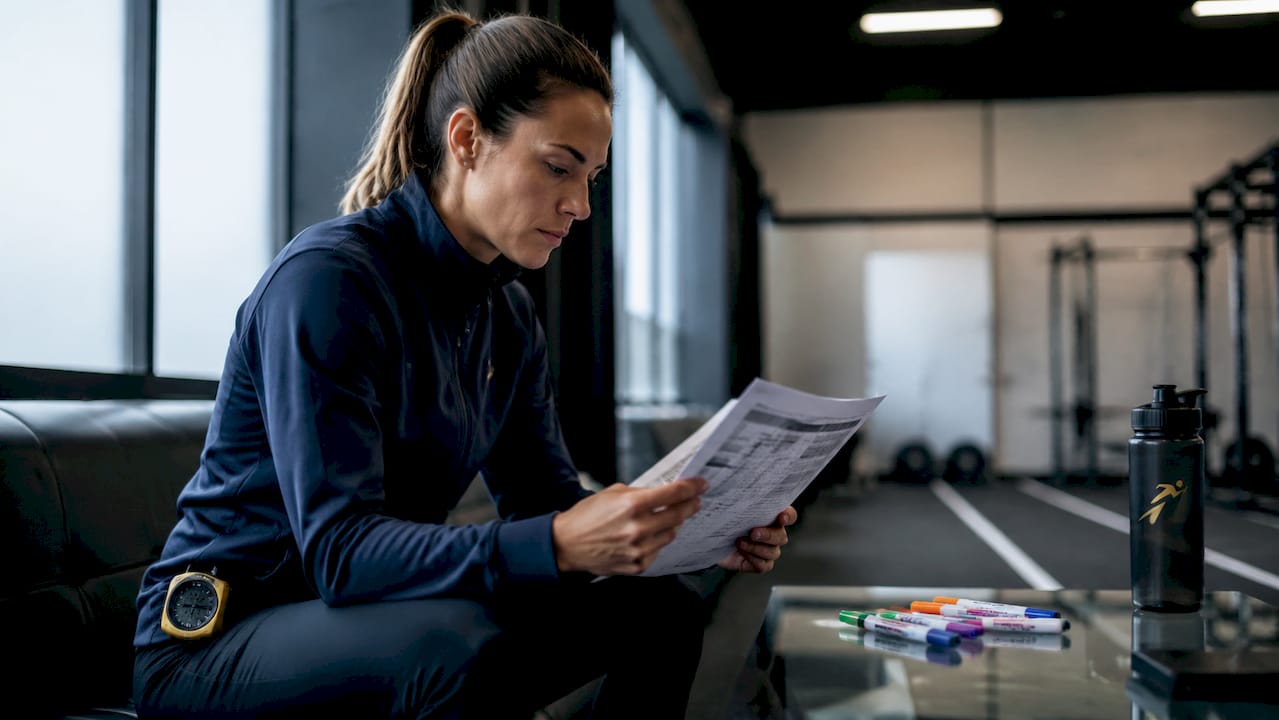
Player development tracking is the systematic measurement of athlete progress using objective and subjective performance data to inform coaching decisions and optimise training outcomes. The most effective player development tracking examples used by professional clubs and academies today include session rating of perceived exertion (session-RPE), readiness monitoring, and the acute-chronic workload ratio (ACWR). These methods give coaches and sports organisations a structured way to monitor athlete progress tracking, reduce injury risk, and make evidence-based decisions about training loads. Whether you coach football, cricket, netball, or rugby, the principles behind these performance monitoring examples apply across every sport and every level.
1. Session-RPE: the most widely used tracking method
Session-RPE is the most practical internal load measure available to coaches at any level, requiring no specialist equipment and delivering consistent, comparable data across an entire squad. The method works by asking each athlete to rate the overall difficulty of a session on the CR10 scale (0 to 10) exactly 30 minutes after it ends. That 30-minute delay is deliberate. Rating immediately after a hard sprint or a tough drill skews the score upward; waiting allows the athlete to reflect on the full session rather than the final effort.
The calculation is straightforward: RPE rating multiplied by session duration in minutes equals training load in arbitrary units (AU). A 70-minute session rated 6 produces 420 AU of training load. Coaches then track weekly totals and compare them to chronic averages to spot dangerous spikes before they cause problems.

The credibility of session-RPE rests on its physiological validity. Correlation coefficients of 0.86 to 0.89 have been recorded between session-RPE scores and physiological measures like heart rate and blood lactate in elite youth football players. That means the numbers athletes report genuinely reflect what is happening inside their bodies, not just how they feel on a given morning.
Elite clubs take this further. Professional academies collect session-RPE electronically after every session using smartphone apps that integrate GPS and wellness data, aggregating over 100 data points per player each week to flag early signs of illness or overtraining. Smaller clubs can replicate the core principle with a simple spreadsheet.
Pro Tip: Combine session-RPE with GPS distance or high-speed running data at least twice per week. When an athlete’s RPE rises but their GPS output drops, that mismatch is one of the earliest signals of accumulated fatigue or the onset of illness.
2. Readiness monitoring: combining wellness and objective tests
Readiness monitoring answers a question coaches face every single day: is this athlete ready to train hard today, or will pushing them create more harm than benefit? The answer comes from combining subjective wellness scores with objective physical tests to build a daily picture of each player’s state.
The subjective side typically covers four pillars rated on a five or seven-point Likert scale:
- Sleep quality: how restorative was last night’s sleep?
- Muscle soreness: where is the body holding tension or pain?
- Mood: general emotional state and motivation to train
- Stress: external life pressures that affect recovery
Frameworks like the Hooper-Mackinnon index and the Acute Recovery and Stress Scale are standard in professional sport, with daily consistency proving more important than the complexity of the questionnaire used.
The objective side adds physical tests that remove the subjectivity of self-report. The countermovement jump (CMJ) is the most common. Athletes jump from a standing position and the height or flight time is measured. A CMJ drop of 5% or more versus an individual’s baseline signals neuromuscular fatigue and is a reliable trigger for load reduction. Heart-rate variability (HRV) measured first thing in the morning adds a second layer, reflecting autonomic nervous system recovery.
Readiness scores function as decision-support tools, not injury predictors. A low score does not mean an athlete will get injured. It means the coach has a reason to ask questions and consider adjusting the session plan. That distinction matters enormously for how coaches communicate findings to athletes.
Pro Tip: Avoid testing athletes every single day with both CMJ and HRV if compliance is low. A consistent three-day-per-week schedule with high compliance produces better data than a daily schedule half the squad ignores.
3. Acute-chronic workload ratio as a player growth metric
The acute-chronic workload ratio (ACWR) compares what an athlete has done recently against what their body is adapted to handling over a longer period. Acute load covers the most recent seven days of training. Chronic load covers the preceding 28 days. Dividing acute by chronic produces the ratio.
| ACWR range | Interpretation | Recommended action |
|---|---|---|
| Below 0.8 | Undertraining or deload phase | Consider progressive load increase |
| 0.8 to 1.3 | Safe training zone | Maintain current programme |
| 1.3 to 1.5 | Caution zone | Monitor closely, reduce spikes |
| Above 1.5 | High risk of overload | Reduce load immediately |
The traditional safe range of 0.8 to 1.3 is the most cited benchmark in sports science, and it remains a useful starting point. Above 1.5, the risk of overload injury increases substantially. Below 0.8 suggests an athlete is not receiving enough stimulus to maintain their fitness base.
Modern research complicates the picture. ACWR correlations with injury are no stronger than acute or chronic load considered separately, which means the ratio alone should never be the sole decision-making tool. Individual baselines matter far more than population averages. A player who has trained at high chronic loads for three years tolerates a ratio of 1.4 very differently from a returning injury player whose chronic load has dropped during rehabilitation. Fitness level can moderate the risk associated with load spikes, which is why context is always the final arbiter.
4. Comparing monitoring tools and data integration methods
Choosing the right combination of tracking methods depends on your resources, squad size, and the technical confidence of your coaching staff. No single metric tells the full story.
| Method | Data type | Cost | Complexity | Primary insight |
|---|---|---|---|---|
| Session-RPE | Subjective | Low | Low | Internal training load |
| Wellness questionnaire | Subjective | Low | Low | Recovery and readiness state |
| CMJ testing | Objective | Medium | Medium | Neuromuscular fatigue |
| HRV monitoring | Objective | Medium | Medium | Autonomic recovery |
| ACWR (GPS-based) | Objective | High | High | Workload spike risk |
The most powerful monitoring systems combine at least one subjective and one objective measure. Session-RPE paired with a daily wellness questionnaire costs almost nothing and covers internal load alongside recovery state. Adding CMJ twice per week introduces objective neuromuscular data without overwhelming athletes or coaches.
When selecting tools for youth sports tracking, simplicity wins. Young athletes are less consistent in self-reporting, so short questionnaires with clear visual scales outperform detailed instruments. For senior professional environments, GPS units, wearable HRV monitors, and integrated platforms that aggregate all data into a single dashboard represent the standard.
The key consideration for any club is data aggregation. Collecting session-RPE in one spreadsheet, wellness scores in another app, and CMJ results on paper creates silos that make trend analysis nearly impossible. Platforms that centralise all athlete data into one interface give coaches the clearest picture of each player’s development trajectory.
5. How to apply tracking data to improve training outcomes
Collecting data is only half the job. The other half is using it to make better decisions about training loads, recovery, and individual development plans.
-
Establish individual baselines first. Spend the first two to four weeks of a season collecting data without making major load decisions based on it. Every athlete’s normal range for CMJ, HRV, and wellness scores is different. Decisions made against population norms rather than personal baselines are far less reliable.
-
Assess trends over 7 to 14 days, not single sessions. Physiological and psychological variance within athletes means a single low readiness score or a single high ACWR is rarely meaningful on its own. A pattern across two weeks is the signal worth acting on.
-
Create clear decision triggers. Define in advance what action follows each threshold. If a player’s CMJ drops 5% and their wellness score falls below a set threshold on the same day, the session plan changes. Removing ambiguity from the process means coaches act consistently rather than relying on gut feel.
-
Build athlete buy-in through transparency. Share tracking data with athletes regularly. When players understand why they are being asked to rate their sessions or jump on a force plate, compliance improves dramatically. Sports performance training research consistently shows that athletes who understand the purpose of monitoring engage more honestly with the process.
-
Use the data in coaching feedback conversations. Tracking data gives coaches specific, objective talking points. Instead of telling a player they look tired, a coach can show them that their session-RPE has risen 15% over the past ten days while their CMJ has dropped. That conversation lands very differently.
-
Review and refine your system quarterly. No monitoring system is perfect from day one. Review what data you are actually using to make decisions and cut anything that is not informing action. Simpler systems with high compliance always outperform complex systems with poor data quality.
Key takeaways
Effective player development tracking combines subjective and objective data collected consistently over time, with decisions made from trends rather than single-day readings.
| Point | Details |
|---|---|
| Session-RPE is the starting point | Multiply RPE by session minutes to get training load in AU; costs nothing and works across all sports. |
| Readiness monitoring needs trends | Assess wellness and CMJ data over 7 to 14 days to avoid misleading single-day noise. |
| ACWR guides load management | Keep the ratio between 0.8 and 1.3 as a guide, but always apply individual baselines and context. |
| Combine subjective and objective data | Pairing session-RPE with CMJ or HRV produces better decisions than either measure alone. |
| Athlete buy-in drives data quality | Transparent communication about why data is collected improves compliance and accuracy. |
Why I think most clubs are tracking the wrong things
I have spent years working with coaches who collect mountains of data and act on almost none of it. The problem is rarely a lack of tools. It is a lack of clarity about what question the data is supposed to answer.
Session-RPE, readiness monitoring, and ACWR are not interesting because they are sophisticated. They are interesting because they are usable. A coach who checks session-RPE totals every Monday morning and adjusts Tuesday’s session accordingly is doing more for athlete welfare than a club spending thousands on GPS units that produce reports nobody reads.
The hardest part of implementing any performance evaluation method is not the technology. It is convincing athletes to report honestly and convincing coaches to act on what the data says rather than what they already believe. I have seen readiness scores ignored because a coach thought the player was being soft. I have seen ACWR warnings dismissed because a match was coming up. The data only works if the culture around it does too.
My honest advice: start with session-RPE and a four-question wellness form. Do that consistently for one full season. You will learn more about your squad from that simple system than from any wearable device you have not yet built the habits to use properly.
— Chris
Track, develop, and perform with Levelup360hq

Levelup360hq brings all of your player development tracking into one place, giving coaches, athletes, and clubs a single platform to monitor progress, manage sessions, and act on performance data. The platform supports video assessments, session management, and performance analytics across football, cricket, netball, and rugby. Athletes stay engaged through FIFA-style player cards, XP challenges, and leaderboards that make tracking feel rewarding rather than administrative. If you are ready to move beyond spreadsheets and disconnected apps, explore the platform or try the demo to see how Levelup360hq supports your entire athlete ecosystem from day one.
FAQ
What is session-RPE and how is it calculated?
Session-RPE is an internal training load measure where an athlete rates session difficulty on a 1 to 10 scale 30 minutes after finishing, then multiplies that score by session duration in minutes. A 70-minute session rated 6 produces 420 arbitrary units of training load.
How often should coaches assess player readiness?
Daily wellness questionnaires work best when kept short and consistent, but decisions should be based on 7 to 14 day trends rather than single-day scores, which are naturally variable due to physiological and psychological fluctuations.
What is a safe acute-chronic workload ratio?
The traditionally accepted safe range is 0.8 to 1.3. Ratios above 1.5 are associated with increased overload risk, though individual fitness levels and training history always modify how any given ratio should be interpreted.
Which tracking method is best for youth athletes?
Short wellness questionnaires with visual rating scales and session-RPE are the most appropriate youth sports tracking tools because they are low-cost, easy to understand, and require no specialist equipment or testing protocols.
Can small clubs implement these tracking methods without specialist software?
Yes. Session-RPE and wellness monitoring can be run with a shared spreadsheet or a free form tool. The priority is consistency of collection and a clear process for reviewing the data weekly, not the sophistication of the platform used.
Recommended
Turn potential into a player card.
LevelUp360 tracks every match, builds your child's player card, and shows their development over time.
Get started free