How to increase sports market value in 2026
Published 28 June 2026

Sports market value is defined as the combined worth of a franchise’s revenue streams, brand equity, and commercial assets, measured against current and projected income. The global sports economy generated $2.3 trillion in 2026, with a projected 10% compound annual growth rate through 2030. That figure signals one clear reality: the organisations that increase sports market value systematically, through diversified revenue, data-driven fan engagement, and professionalised commercial partnerships, will capture a disproportionate share of that growth. Executives who treat valuation as a by-product of on-field success will fall behind those who treat it as a managed commercial outcome.
Which key revenue streams most effectively increase sports market value?
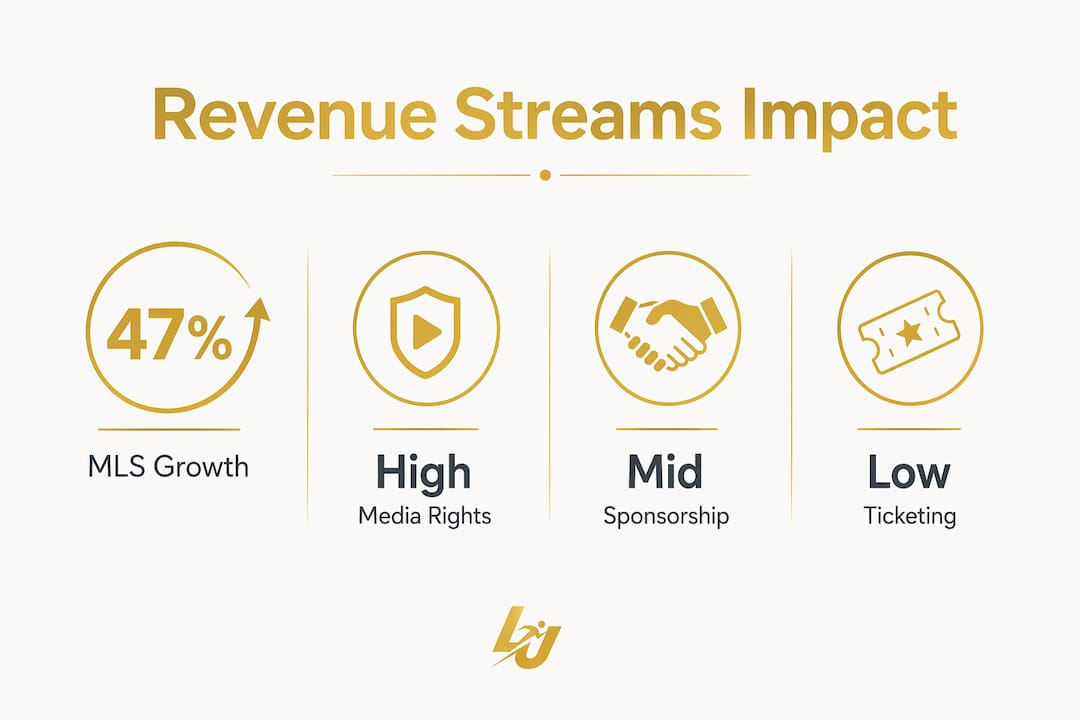
Media rights, sponsorship, ticketing, merchandise, and hospitality each contribute differently to franchise valuation. No single stream dominates without the others providing stability. The most resilient sports organisations treat revenue diversification as a structural priority, not a contingency plan.
Direct-to-consumer streaming has become a primary growth lever. MLS franchise values increased 47% since 2023 following direct-to-consumer streaming partnerships, with league valuation exceeding $18.2 billion as of may 2026. That growth shows what happens when digital distribution is treated as a core commercial asset rather than a supplementary broadcast channel.

Holding inventory strategically also drives revenue yield. Selling only 60–70% of marquee event inventory early, and reserving 30–40% for late-stage premium pricing, maximises total revenue. Late-stage demand spikes drive higher CPMs for both national and local sponsors, particularly when teams advance in competition.
| Revenue stream | Valuation impact | Stability |
|---|---|---|
| Media and broadcast rights | Very high | Medium |
| Sponsorship and naming rights | High | Medium to high |
| Ticketing and premium seating | High | Low to medium |
| Merchandise and licensing | Medium | Medium |
| Hospitality and events | Medium to high | Low |
| Direct-to-consumer streaming | Very high | Growing |
Merchandise and licensing are frequently undervalued by mid-tier organisations. A well-managed licensing programme creates passive income that compounds alongside brand growth, independent of season performance. Hospitality, by contrast, is highly volatile but commands premium margins when packaged correctly with exclusive access and experiences.
How can sports organisations use data and fan engagement to maximise revenue?
Technology-enabled fan engagement is the differentiator that separates organisations building scalable commercial outcomes from those relying on seasonal attendance. The shift from passive viewership to active, personalised engagement creates measurable commercial value at every touchpoint.
Machine learning now enables dynamic ticket pricing that balances revenue, attendance, and fan preference simultaneously. Choice-based conjoint analysis quantifies fan price sensitivity by analysing match attributes, allowing pricing teams to set optimal prices for each fixture rather than applying flat-rate models. The practical result is higher yield per seat without alienating price-sensitive supporters.
First-party data is the currency of modern sponsorship. Organisations that collect, own, and activate fan data can build bespoke partnership packages with measurable ROI, rather than selling generic logo placements. Fragmented fan attention across platforms demands that sports properties migrate from selling “eyeballs” to demonstrating integrated engagement metrics that sponsors can verify.
Key data capabilities that drive commercial growth:
- Fan segmentation: Group supporters by spend behaviour, attendance frequency, and digital engagement to create tiered commercial offers.
- Predictive modelling: Forecast attendance and merchandise demand by fixture, enabling smarter inventory and staffing decisions.
- Sponsorship attribution: Track sponsor-linked fan actions, from app clicks to in-venue purchases, to prove partnership ROI.
- Content performance analytics: Identify which digital content formats drive the highest engagement and replicate them across channels.
Pro Tip: Integrate your digital media operations with your CRM from the outset. Organisations that silo social media, email, and app data miss the cross-channel patterns that reveal their most commercially valuable fans.
What commercial partnerships and sponsorship approaches raise franchise value?
The global sports sponsorship market is projected to reach $123.25 billion in 2026. Traditional sponsorship assets are worth less than before because fragmented fan attention has diluted the value of passive logo exposure. The organisations raising franchise value through sponsorship are those that sell integrated, narrative-driven partnerships rather than transactional placements.
Naming rights remain one of the highest-value single assets a sports property can monetise. Minor league naming rights deals typically add $500,000 to $3 million annually, and the valuation multiple effect compounds that figure across the franchise’s EBITDA. Executives who have not yet monetised naming rights are leaving a structurally significant asset dormant.
Local and category-specific partnerships are consistently undersold. Developing integrated local partnerships rather than focusing exclusively on major sponsors can unlock 30–50% more sponsorship revenue. Local partners often accept longer contract terms and deeper integrations, which stabilises income and improves valuation multiples.
Sponsorship sales best practices for sports executives:
- Adopt a strategic advisor mindset. Approach partners with audience data and activation ideas, not rate cards.
- Create category exclusivity. Limit the number of sponsors per category to protect asset prestige and partner ROI.
- Build multi-year structures. Long-term deals reduce revenue volatility and signal commercial credibility to investors.
- Audit undersold inventory. Digital assets, training kit, and community programmes are frequently priced below market rate.
- Use data to protect renewals. Sponsors who can see verified engagement metrics renew at higher rates and values.
Pro Tip: Assign a dedicated partnership team member to each major sponsor account. Sponsors who receive proactive, data-backed reporting are significantly less likely to reduce spend at renewal.
How can sports venues be optimised to boost enterprise value beyond match day?
Sports stadiums are heavily under-utilised assets. A venue that generates revenue only on match days carries a structural valuation discount because its income is tied to seasonal performance and fixture scheduling. The organisations that raise enterprise value most effectively treat their venues as year-round commercial assets.
Developing sports districts with hospitality, retail, and residential components creates diversified revenue that reduces reliance on volatile game-day income. Transforming stadiums into multi-use districts with residential, hospitality, and retail components creates stable revenue bases that increase franchise enterprise value independently of on-field results. This model is now standard practice among the highest-valued franchises in North America and is gaining traction across European football and rugby.
Premium seating products, including hospitality suites, club-level memberships, and exclusive lounges, command margins that general admission cannot match. These products also attract corporate buyers who sign multi-year agreements, converting volatile single-event revenue into predictable contracted income.
| Venue revenue model | Revenue stability | Enterprise value impact |
|---|---|---|
| Match-day only | Low | Low |
| Multi-event programming | Medium | Medium |
| Naming rights and sponsorship integration | Medium to high | High |
| Sports district development | High | Very high |
| Premium seating and hospitality suites | High | High |
Staging non-sport events, including concerts, conferences, and community programmes, fills the calendar gaps between fixtures. Each additional event day reduces the per-day cost of venue operations and adds revenue that investors treat as structurally stable. The valuation impact of a venue that operates 200 days per year versus 30 is substantial.
Key takeaways
Increasing sports market value requires a managed commercial strategy across revenue diversification, data-driven fan engagement, professionalised sponsorship, and year-round venue utilisation.
| Point | Details |
|---|---|
| Diversify revenue streams | Combine media rights, sponsorship, streaming, and hospitality to reduce valuation volatility. |
| Use data to prove sponsorship ROI | First-party fan data enables bespoke partnership packages that renew at higher values. |
| Hold marquee inventory strategically | Reserve 30–40% of premium event inventory for late-stage pricing to maximise yield. |
| Develop local sponsorship partnerships | Integrated local deals can unlock 30–50% more sponsorship revenue than major-sponsor-only strategies. |
| Treat venues as year-round assets | Multi-use sports districts and non-sport events create stable, diversified enterprise value. |
What I have learned about sustainable sports market growth
The most common mistake I see sports executives make is treating a strong season as a valuation strategy. Postseason success creates short-term commercial momentum, but long-term brand health drives sustained valuation growth far more reliably than any single run of results. The organisations that hold their commercial value through poor seasons are the ones that built it on data, relationships, and diversified income, not on trophies.
Sponsorship oversaturation is a real and underappreciated risk. I have seen properties accept every available deal to hit short-term revenue targets, only to find that partner ROI collapses, renewals dry up, and the asset loses prestige. Protecting the quality and coherence of your sponsorship portfolio is as commercially important as growing it.
The technology piece is not optional in 2026. Executives who are still managing fan engagement through broadcast reach alone are selling an asset that sponsors increasingly do not want to buy. The properties that are growing fastest are those that can show a sponsor exactly which fan actions their investment drove, from a social post to a purchase at the club shop. That level of attribution is now a baseline expectation, not a premium offering.
My honest advice: treat your commercial operation with the same professionalism you apply to your playing squad. Hire specialists, invest in data infrastructure, and measure everything. The valuation gap between organisations that do this and those that do not will only widen through the rest of this decade.
— Chris
How Levelup360hq supports sports market value growth
Levelup360hq is built for the entire athlete and club ecosystem, giving sports organisations the data infrastructure and engagement tools that commercial growth requires.
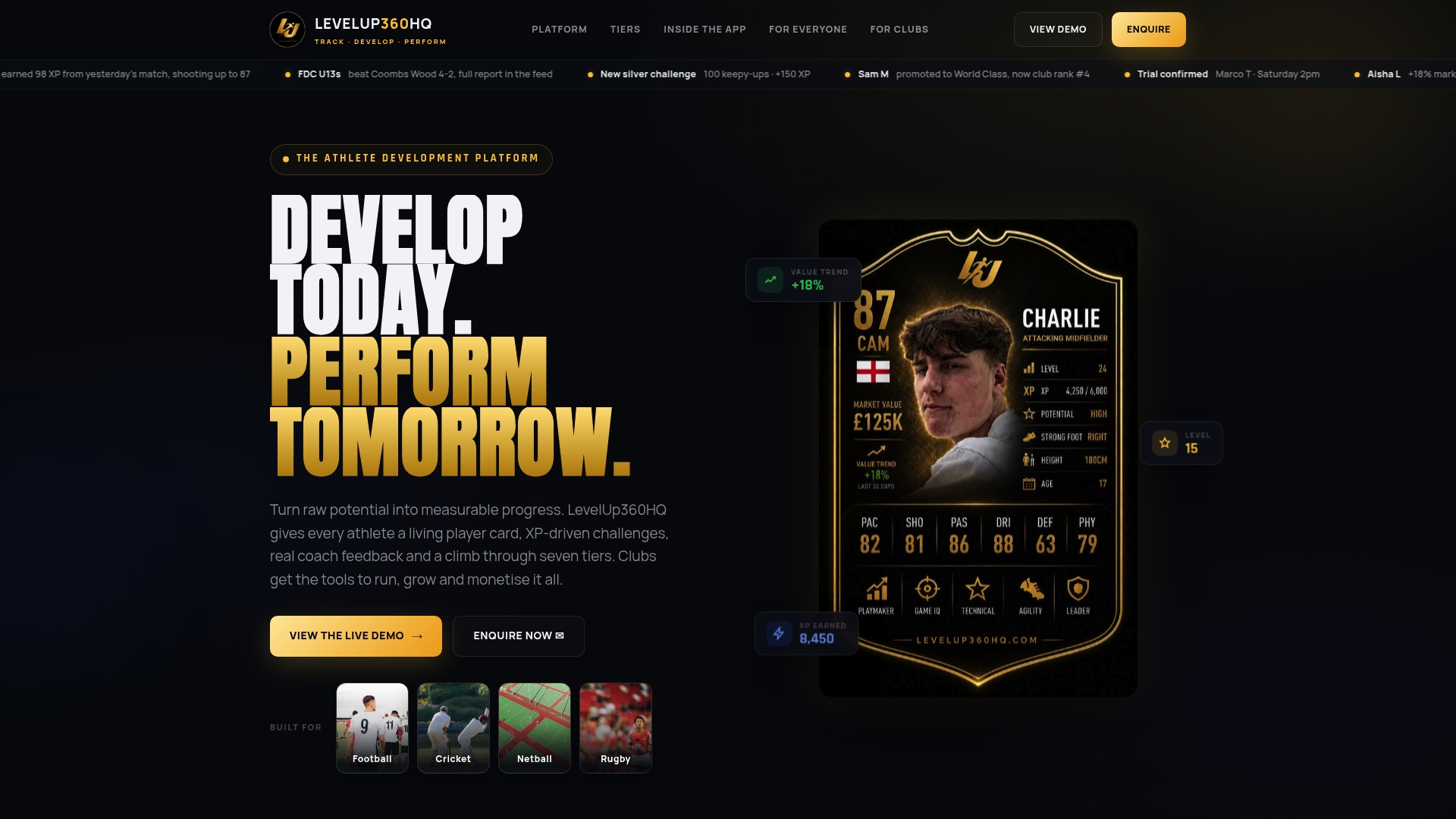
The platform’s real-time performance analytics and FIFA-style player cards with live market values give clubs a measurable, data-rich asset they can present to sponsors and partners. CRM functionality, subscription management, and white-label branding mean clubs can professionalise their commercial operations without building technology from scratch. For executives who want to see the platform in practice, the Levelup360hq demo shows how fan engagement, athlete development, and club monetisation tools work together in a single environment.
FAQ
What is sports market value and how is it measured?
Sports market value is the total commercial worth of a franchise, including revenue streams, brand equity, and asset base. It is typically measured using EBITDA multiples, with minor league franchises in 2026 ranging from 4x to 12x adjusted EBITDA.
Which revenue stream has the greatest impact on franchise valuation?
Media and broadcast rights carry the highest valuation impact, but direct-to-consumer streaming partnerships have become equally significant. MLS franchise values increased 47% following streaming deals, demonstrating the scale of digital distribution’s effect on overall valuation.
How does fan engagement data increase sponsorship income?
First-party fan data allows sports organisations to build bespoke sponsorship packages with verified ROI metrics. Sponsors who receive attribution data showing real fan actions renew contracts at higher values and for longer terms.
What is the fastest way to raise sports venue enterprise value?
Developing a sports district with hospitality, retail, and residential components creates year-round, diversified revenue that reduces reliance on match-day income. This model produces the highest enterprise value impact of any venue strategy.
How much can local sponsorship partnerships add to sports revenue?
Developing integrated local partnerships rather than focusing only on major sponsors can unlock 30–50% more sponsorship revenue. Local partners typically accept longer contract terms and deeper integrations, which stabilises income and improves valuation multiples.
Recommended
Turn potential into a player card.
LevelUp360 tracks every match, builds your child's player card, and shows their development over time.
Get started free