FIFA-style player card explained: your 2026 guide
Published 20 July 2026
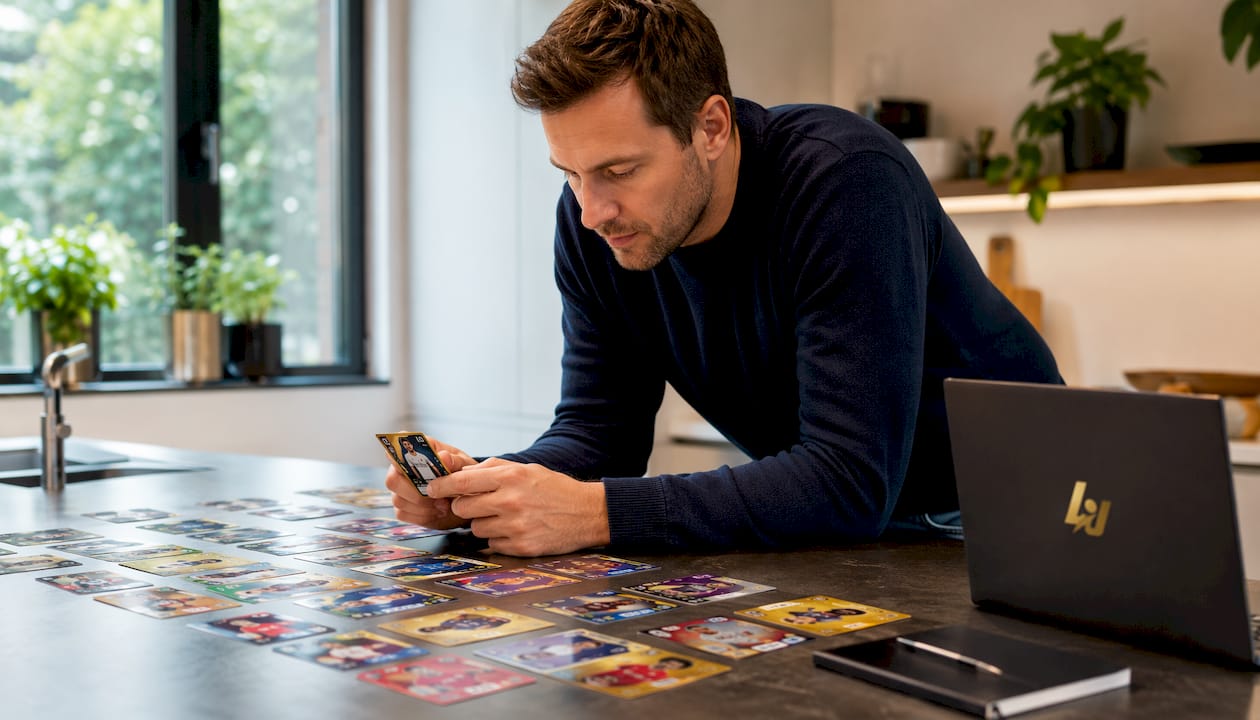
A FIFA-style player card is a structured digital or physical representation of a football player’s key attributes, overall rating, and club affiliations, used primarily in EA Sports FC games and football memorabilia. These cards are the core currency of Ultimate Team mode, where building a squad means understanding every number on the card face. The FIFA-style player card explained properly covers six core attributes, a 1–99 overall rating (OVR), and a visual layout that includes the player’s photo, name, position, and team crests. Platforms like Levelup360hq have taken this format further, applying live player cards with real-time ratings to actual athlete development outside the game.
What are the key attributes on a FIFA player card?
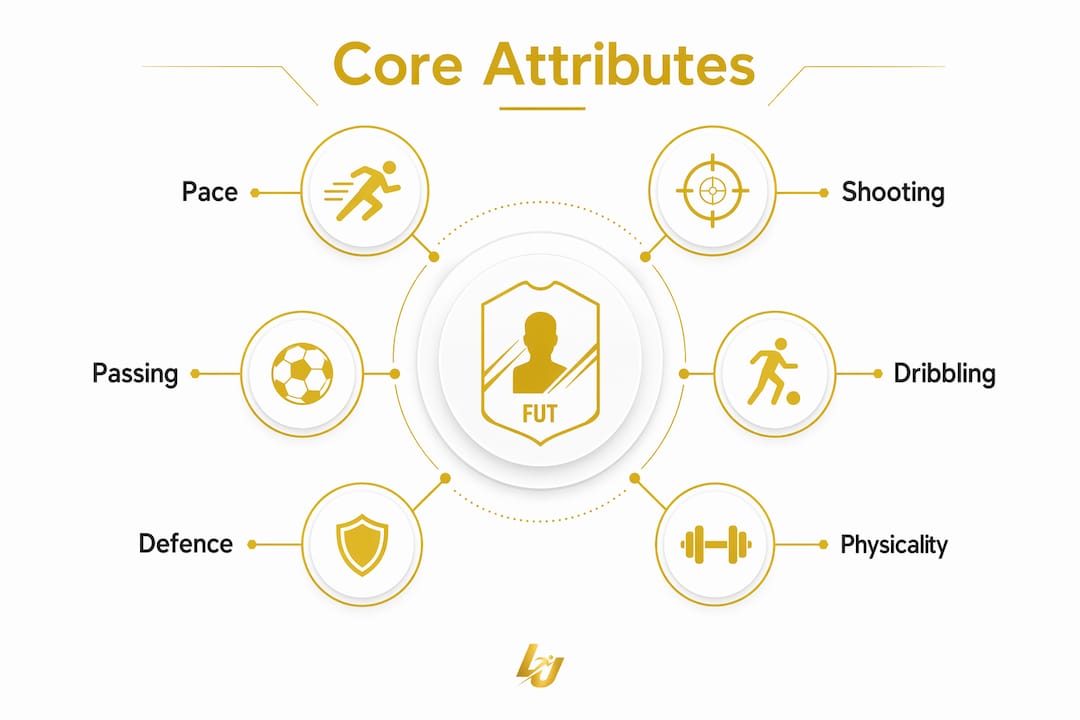
A FIFA-style player card contains six standardised attributes that define how a player performs on the pitch. Each attribute maps directly to an in-game behaviour, so reading them correctly changes how you build squads and approach matches.
The six core attributes are:
- Pace — Sprint speed and acceleration. High Pace makes a player dangerous in behind-the-defence runs.
- Shooting — Finishing, long shots, volleys, and penalties. A striker with 90+ Shooting converts chances that lower-rated players miss.
- Passing — Short passing, long passing, vision, and crossing. Midfielders live and die by this number.
- Dribbling — Ball control, agility, balance, and reactions. High Dribbling lets players beat opponents in tight spaces.
- Defence — Defensive awareness, standing tackle, and sliding tackle. Central defenders need this above all else.
- Physicality — Strength, stamina, aggression, and jumping reach. It determines who wins aerial duels and who fades in the 80th minute.
Each attribute is scored on a 0–99 scale. The OVR is a weighted average of these six scores, with the weighting adjusted by position. A centre-back’s OVR leans heavily on Defence and Physicality. A winger’s OVR prioritises Pace and Dribbling. That weighting is why a player with 85 Shooting can have a lower OVR than expected if their other attributes drag the average down.
Beyond the six main attributes, cards also display star ratings for skill moves (1–5 stars) and weak foot ability (1–5 stars). A player with 5-star skill moves can perform the full catalogue of tricks. A 4-star weak foot means the non-dominant foot is nearly as reliable as the strong one. These sub-ratings sit outside the OVR calculation but carry enormous practical value in gameplay.
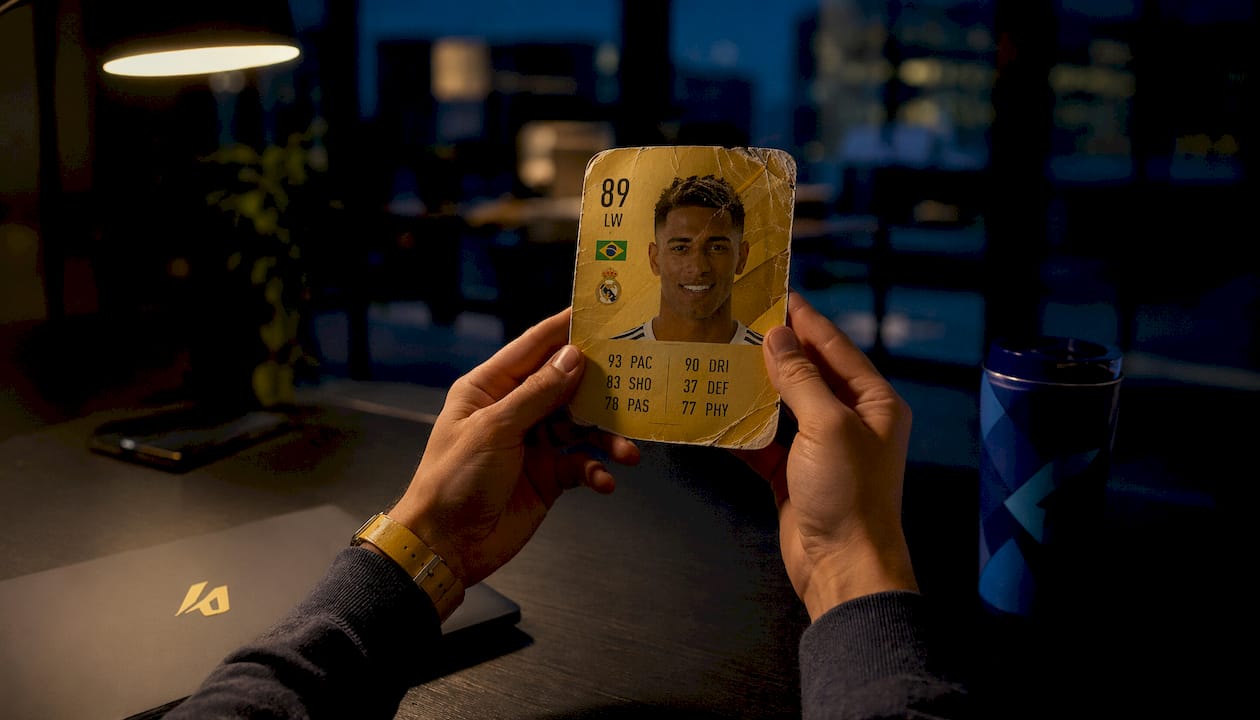
Pro Tip: When comparing two cards with identical OVR scores, always check the sub-attributes. A 87-rated card with 5-star skill moves and a 4-star weak foot will outperform an 87-rated card with 2-star skill moves in most attacking situations.
How do live FIFA cards upgrade during tournaments?
Live FIFA cards are volatile digital assets that update weekly after tournaments, rewarding players who track upgrade timing for coin market advantage. In EA Sports FC 26, the Path to Glory series is the flagship live card mechanic tied to the FIFA World Cup 2026.
Path to Glory cards upgrade in stages as a player’s national team progresses through the tournament. The upgrade sequence works as follows:
- Group stage wins trigger the first stat boost, typically adding points across Pace and Physicality to reflect match fitness and form.
- Knockout round progression adds a second upgrade wave, with Shooting and Dribbling improvements reflecting attacking contributions.
- Quarter-final qualification unlocks a 5-star skill move boost and a weak foot upgrade, making the card significantly more versatile.
- Semi-final and final appearances push the card toward a 99 OVR ceiling, with all six attributes receiving boosts.
- Extra-time wins can trigger additional special sub-attribute bonuses not available through standard progression.
Card upgrades go live on Wednesdays after match results are processed. That Wednesday window is when card market values shift most sharply. A player whose team wins a quarter-final on Saturday will see their card price spike by the following Wednesday morning. Buying before that window closes is the core strategy for savvy traders.
Pro Tip: Monitor the Path to Glory upgrade schedule and buy cards of players in strong national teams before their knockout matches. The price jump after a quarter-final upgrade can be significant, and selling before the semi-final removes the risk of a team exit collapsing the card’s value.
The live card format fundamentally changes how you read a FIFA player card. The printed stats are not fixed. They are a snapshot of a player’s current tournament standing, and they will change.
How do physical FIFA-style cards work?
Physical FIFA-style cards differ from digital cards in one critical way: the stats are fixed at print. There are no upgrades, no market fluctuations, and no Wednesday surprises. What you hold is what you get.
Custom physical cards are available from specialist print services. Custom card pricing typically starts at around £10–£14 per card, with production and delivery taking 2–6 business days. Buyers can personalise the player’s name, position, stats, and photo to create a card for any real or fictional player.
Design quality separates a professional-looking card from a poor one. The key principles are:
- High-resolution images — Providers require a minimum 1MB photo to avoid pixelation. A blurry player photo ruins the card regardless of how well the stats are laid out.
- Balanced layout — The OVR, position badge, and attribute bars must sit in clear visual hierarchy. Crowding the card face with too much text makes it unreadable.
- Consistent typography — Font weight and size should match the style of official EA Sports FC cards. Mixing typefaces breaks the visual authenticity.
- Premium card stock — Top providers use premium materials and encasements that protect the card and give it a collectible feel.
For those new to physical football card collecting, sticker albums are the best entry point. They are structured, affordable, and teach the fundamentals of set completion before you invest in higher-value individual cards.
| Feature | Custom printed card | Standard sticker album |
|---|---|---|
| Personalisation | Full (name, stats, photo) | None |
| Price per card | £10–£14 approx. | Pence per sticker |
| Production time | 2–6 business days | Immediate purchase |
| Collectible value | Personal/gift use | Set completion value |
| Best for | Gifts, personal display | Beginners, set collectors |
What are the main FIFA card types, parallels, and rarities?
Card rarity is the single biggest driver of value in both digital and physical FIFA collecting. Understanding the tiers tells you immediately whether a card is common or genuinely scarce.
In EA Sports FC 26, digital cards follow a colour-coded rarity system. Gold cards represent the top tier of standard players. Silver cards cover mid-range players. Bronze cards cover lower-league players. Special cards sit above Gold entirely, with unique designs for Icons, Heroes, and live upgrade series like Path to Glory.
Physical sets follow a parallel structure. The 2026 Panini Prizm FIFA World Cup set includes Silver, Gold, and Black 1/1 parallels, with numbered variants that cap print runs at specific quantities. A Black 1/1 parallel is the only copy in existence, which drives its value to a level no standard card can match.
The FIFA World Cup 2026 also introduced host nation parallel inserts. The Old Glory (USA), Maple Leaf (Canada), and Aguila (Mexico) parallels are numbered to rare print runs and reflect regional collector interest from the three host nations. These inserts expand the base set across 48 teams, giving collectors from all three countries a specific target to chase.
The distinction between digital and physical rarity matters. Digital live cards derive value from in-game utility and upgrade potential. Physical parallels derive value from print scarcity and condition. A Black 1/1 Panini Prizm card of a major player has no in-game function, but its physical rarity makes it a serious collectible asset.
Key takeaways
A FIFA-style player card’s value, whether digital or physical, is determined by its attribute ratings, rarity tier, and upgrade potential tied to real-world performance.
| Point | Details |
|---|---|
| Six core attributes | Pace, Shooting, Passing, Dribbling, Defence, and Physicality define every card’s in-game performance. |
| OVR is position-weighted | The overall rating favours different attributes depending on the player’s position, not a simple average. |
| Live cards update on Wednesdays | Path to Glory cards in EA Sports FC 26 upgrade weekly after tournament results, shifting market values. |
| Physical cards are fixed at print | Custom physical cards offer personalisation but no upgrades; quality depends on image resolution and card stock. |
| Rarity drives physical value | Numbered parallels like Black 1/1 in Panini Prizm sets are scarce by design and command the highest collector prices. |
Why the gap between digital and physical cards is closing
I have spent years watching gamers and collectors treat digital FIFA cards and physical collectibles as entirely separate hobbies. That separation is dissolving, and I think it is one of the most interesting shifts in football culture right now.
The live card mechanic changed everything. When a Path to Glory card upgrades after a quarter-final win, it stops being a static game asset and starts behaving like a physical collectible with fluctuating value. Gamers who never cared about Panini stickers are now tracking print runs and parallel numbering because the logic is identical. Scarcity plus performance equals value.
What I find underappreciated is how much the physical side has borrowed back from digital design. Custom card creators are now replicating the exact visual language of EA Sports FC cards, including the attribute bars, the OVR badge, and the position colour coding. The result is physical cards that feel like screenshots you can hold. That crossover is not accidental. It reflects a generation of collectors who grew up reading FIFA cards on a screen before they ever held a physical one.
My honest advice: if you play EA Sports FC 26 and you are not tracking upgrade windows, you are leaving value on the table. And if you collect physical cards, understanding the digital rarity logic will sharpen your eye for which parallels are genuinely scarce versus which ones just look rare.
— Chris
How Levelup360hq brings live player cards to real athletes
Levelup360hq applies the FIFA-style player card format to real athlete development, giving players a live card that updates with actual performance data rather than fictional stats.
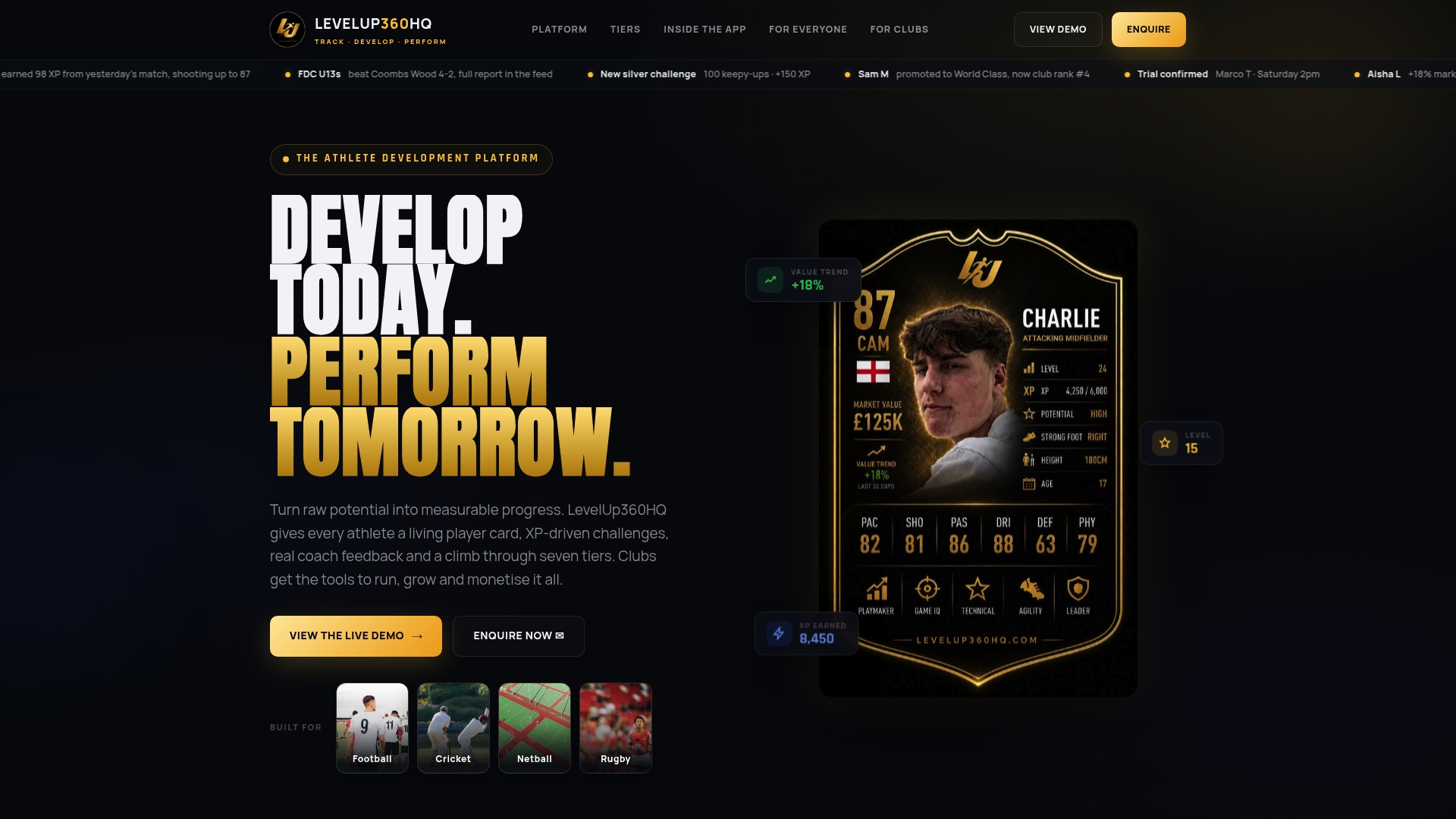
The platform generates live player cards with real-time ratings and market values, XP-driven challenges, and tier progression tied to training and match performance. Athletes can track skill move improvements and stat changes through the Levelup360hq demo, which shows exactly how the card system responds to performance milestones. Coaches use video assessments and approval workflows to validate upgrades, so every stat change reflects genuine development. For clubs and academies, the platform’s tools cover everything from leaderboards to white-label branding, making it a complete performance ecosystem built on the card format gamers already understand.
FAQ
What is a FIFA-style player card?
A FIFA-style player card is a digital or physical card displaying a football player’s overall rating, six core attributes, position, and club affiliations, used in EA Sports FC games and football collectibles.
How is the overall rating (OVR) calculated?
The OVR is a position-weighted average of the six core attributes: Pace, Shooting, Passing, Dribbling, Defence, and Physicality, with different positions prioritising different attributes in the calculation.
When do Path to Glory cards upgrade in EA Sports FC 26?
Path to Glory cards update on Wednesdays after real-world match results are processed, with upgrades triggered by group stage wins, knockout progression, and quarter-final qualification.
What makes a physical FIFA-style card valuable?
Physical card value is driven by print rarity, with numbered parallels like Black 1/1 in Panini Prizm sets commanding the highest prices due to their limited supply and condition.
How do I create a custom physical FIFA-style card?
Custom cards can be ordered from specialist print services, typically requiring a high-resolution photo of at least 1MB, with personalised stats and design delivered within 2–6 business days.
Recommended
Turn potential into a player card.
LevelUp360 tracks every match, builds your child's player card, and shows their development over time.
Get started free