Benefits of gamified club programs for sports coaches
Published 18 June 2026

Gamified club programmes are defined as sports training environments that apply game design mechanics, such as leaderboards, XP points, badges, and progress tracking, to drive athlete motivation and measurable development. The benefits of gamified club programs are well documented: productivity rises by up to 50%, knowledge retention exceeds 90% compared to passive learning, and member retention climbs by 22% in gamified membership settings. Platforms like Levelup360hq and technologies such as exergaming are already delivering these results across football, cricket, netball, and rugby programmes. For sports administrators and coaches, the question is no longer whether gamification works. The question is how to implement it well.
1. What are the top benefits of gamified club programs?
Gamification in clubs produces gains across motivation, retention, skill development, and club culture simultaneously. That breadth is what separates it from single-focus interventions like prize draws or attendance rewards.
The core advantages of club gamification include:
- Athlete motivation: Training motivation reaches 83% in gamified environments, compared to significantly lower rates in traditional settings. Athletes train harder when progress is visible and rewarded.
- Knowledge and skill retention: Gamified learning produces retention rates above 90%. Athletes who complete challenge-based drills remember and apply skills far more reliably than those who receive passive instruction.
- Member retention: Membership retention increases by 22% when gamified loyalty elements are present. Clubs that lose fewer members spend less on recruitment and build stronger squad depth.
- Reduced absenteeism: Absenteeism drops by 25% in gamified environments. Consistent attendance is the single biggest predictor of athlete development at club level.
- Community engagement: Gamified content is shared 12 times more than non-gamified content. That sharing behaviour builds club visibility and social cohesion between sessions.
- Staff motivation: Coaches and administrators who use structured gamified systems report higher job satisfaction. Clear progress metrics reduce the guesswork in programme delivery.
- AI-personalised feedback: Platforms that combine gamification with AI, such as Levelup360hq, generate personalised training feedback at scale. Every athlete receives relevant, timely guidance without placing extra demand on coaching time.
Pro Tip: Start with one or two gamified elements, such as a leaderboard and a weekly challenge, before rolling out a full system. Coaches who introduce too many mechanics at once often see initial resistance from athletes and parents alike.
2. How do leaderboards and shared challenges transform club culture?
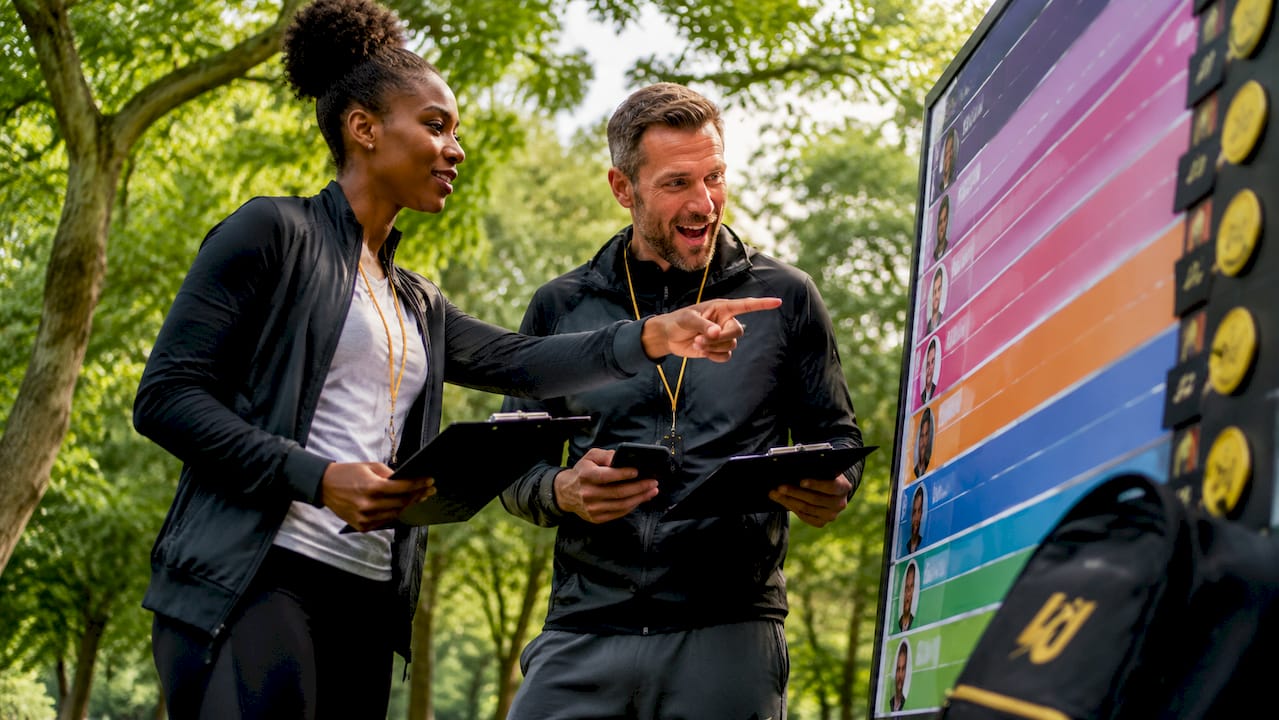
Leaderboards create visible benchmarks that make achievement public and personal at the same time. An athlete who sees their name move up a ranking feels recognised in a way that a verbal compliment alone cannot replicate.
Shared challenges, storytelling, and leaderboards convert passive participants into an active community. They generate conversation between sessions, not just during training. That sustained engagement is what builds genuine club culture rather than a collection of individuals who happen to train together.
Narrative quests add another layer. When an athlete is working through a defined progression story, such as moving from “Academy Prospect” to “First Team Contender” in Levelup360hq’s tier system, the journey feels personal. Emotional investment in a narrative is far stronger than interest in an abstract fitness target.
“The ultimate value of gamification is its ability to generate community conversation and connection between sessions, fostering sustained engagement.” — Beyond the Match: Building a Unique Gaming Community
Social sharing of achievements amplifies this effect. When athletes post badge unlocks or leaderboard positions, they carry the club’s identity into their personal networks. That visibility attracts new members and reinforces pride in existing ones.
3. What evidence supports gamified programs in sports?
The research base for gamification in sports and education is now substantial. AI-supported gamified learning interventions produce a standardised mean difference of 1.01 in academic achievement overall, rising to 1.86 in specific domains. That is a large effect size by any research standard.
The productivity and retention numbers reinforce the picture. A 50% productivity increase and a 22% retention uplift are not marginal gains. They represent the difference between a club that grows and one that stagnates.
Absenteeism data matters particularly for sports administrators. A 25% reduction in absenteeism means more athletes on the pitch, more consistent squad development, and fewer disrupted session plans. Coaches who have struggled with irregular attendance will recognise the operational value immediately.
Interactive sports apps and AI-powered gamification show strong engagement results across martial arts, tennis, and team sports communities. The evidence is not confined to one sport or one age group. It applies broadly across club settings.
The one consistent caveat in the research is design quality. Poorly designed gamification fails when behavioural objectives and meaningful feedback loops are absent. A points system with no connection to real skill development produces short-term novelty and long-term disengagement.
| Metric | Gamified environment | Traditional environment |
|---|---|---|
| Knowledge retention | Above 90% | Significantly lower |
| Training motivation | 83% | Lower baseline |
| Member retention uplift | +22% | Baseline |
| Absenteeism reduction | 25% lower | Baseline |
| Content sharing rate | 12x higher | Baseline |
4. Which gamified program types suit different sports settings?
The right gamified programme design depends on club size, athlete age, sport type, and available technology. There is no single format that works universally.
Exergaming suits youth clubs and indoor fitness settings particularly well. The Boys and Girls Club exergaming programme engages young people who would otherwise avoid traditional sports, offering an inclusive, non-intimidating environment that builds confidence and regular participation regardless of weather conditions. For administrators running junior programmes, exergaming removes the “sport is not for me” barrier that prevents many young people from joining.
Digital apps with AI integration suit clubs that want personalised athlete tracking at scale. Levelup360hq’s FIFA-style player cards, XP challenges, and performance analytics give each athlete a live record of their development. Coaches access video assessments and session management tools without generating extra administrative work.
Simple reward systems such as paper-based sticker charts or basic point tallies work for very small clubs with limited budgets. They produce some motivational benefit but cannot deliver the data, personalisation, or community features that digital platforms provide.
| Programme type | Best suited to | Key limitation |
|---|---|---|
| Exergaming | Youth clubs, indoor settings | Requires physical equipment |
| AI-powered digital platform | Clubs of all sizes, multiple sports | Requires onboarding investment |
| Simple reward systems | Small clubs, limited budgets | No data or personalisation |
| Leaderboard-only apps | Competitive squads | Can demotivate lower-ranked athletes |
Gamification improves completion rates and inclusivity most effectively when combined with traditional coaching. The technology supports the coach; it does not replace the relationship.
Pro Tip: For clubs with mixed ability groups, configure leaderboards to show personal bests rather than absolute rankings. Athletes at every level stay motivated when they compete against their own previous performance rather than against elite squad members.
5. How can administrators measure ROI from gamified programs?
Return on investment from gamification is measurable when you track the right indicators from the start. Vague impressions of “better engagement” are not sufficient for programme decisions.
Key performance indicators to track:
- Retention rate: Compare monthly and annual membership renewal rates before and after implementation. A 22% uplift is the benchmark the research supports.
- Session attendance frequency: Track how often each athlete attends per month. Consistent attendance is the clearest signal that a programme is working.
- Skill progression scores: Use platform analytics to monitor individual athlete development over defined periods. Levelup360hq’s performance analytics generate these reports automatically.
- Community engagement: Measure social feed activity, badge shares, and challenge completions. High activity between sessions indicates genuine community formation.
- Revenue indicators: Track subscription renewals, merchandise sales through club stores, and new member sign-ups. Clubs using Levelup360hq’s white-label and CRM tools can connect engagement data directly to revenue outcomes.
The financial return from gamification comes through two channels. The first is cost reduction: lower absenteeism and higher retention mean less money spent on recruitment and session rescheduling. The second is revenue growth: engaged members buy more, refer more, and stay longer.
One ethical consideration deserves attention. Gamification must be designed around real behavioural outcomes, not superficial fun. Programmes that use manipulative mechanics, such as artificial scarcity or pressure-based countdowns, damage trust and produce short-term spikes followed by sharp drop-offs. Design for genuine development, and the metrics will follow.
Key takeaways
Gamified club programmes deliver the strongest results when game mechanics are tied directly to real behavioural objectives, meaningful feedback, and measurable athlete development.
| Point | Details |
|---|---|
| Motivation and attendance | Gamified environments raise training motivation to 83% and cut absenteeism by 25%. |
| Retention uplift | Membership retention increases by 22% when gamified loyalty elements are present. |
| Design quality is decisive | Programmes without clear behavioural objectives and feedback loops fail regardless of technology. |
| Inclusivity through design | Personal-best leaderboards and exergaming engage athletes of all ability levels, not just elite performers. |
| Measure from day one | Track retention, attendance, skill progression, and community activity to demonstrate and improve ROI. |
What I have learned from watching clubs get this wrong
Most clubs that struggle with gamification make the same mistake. They treat it as decoration rather than structure. They add a leaderboard to an existing programme and expect transformation. When nothing changes, they conclude that gamification does not work.
The clubs that get real results start with a question: what specific behaviour do we want to change? If the answer is “we want athletes to attend two sessions per week instead of one,” then every gamified element should reinforce that behaviour. Points, badges, and challenges all point at the same target.
Fast feedback matters more than most administrators realise. An athlete who completes a drill and receives a badge three weeks later has already lost the motivational connection. The feedback loop needs to close within hours, ideally within the same session. Platforms like Levelup360hq are built around this principle, with live player card updates and real-time XP tracking.
Inclusivity is the other area where clubs consistently underinvest. A gamified programme that only rewards the fastest or most skilled athletes will disengage the majority. The best implementations I have seen use tiered challenges, personal-best tracking, and narrative progression so that every athlete, regardless of ability, has a meaningful goal to chase.
Blending gamification with traditional coaching is not optional. It is the condition for success. The technology creates structure and visibility. The coach creates trust and context. Neither works as well without the other.
— Chris
See Levelup360hq in action for your club
Levelup360hq is built specifically for sports clubs and academies that want to turn athlete development into a structured, measurable, and engaging experience. The platform combines FIFA-style player cards, XP challenges, badge systems, and AI-powered performance analytics into one environment that works for football, cricket, netball, rugby, and more.
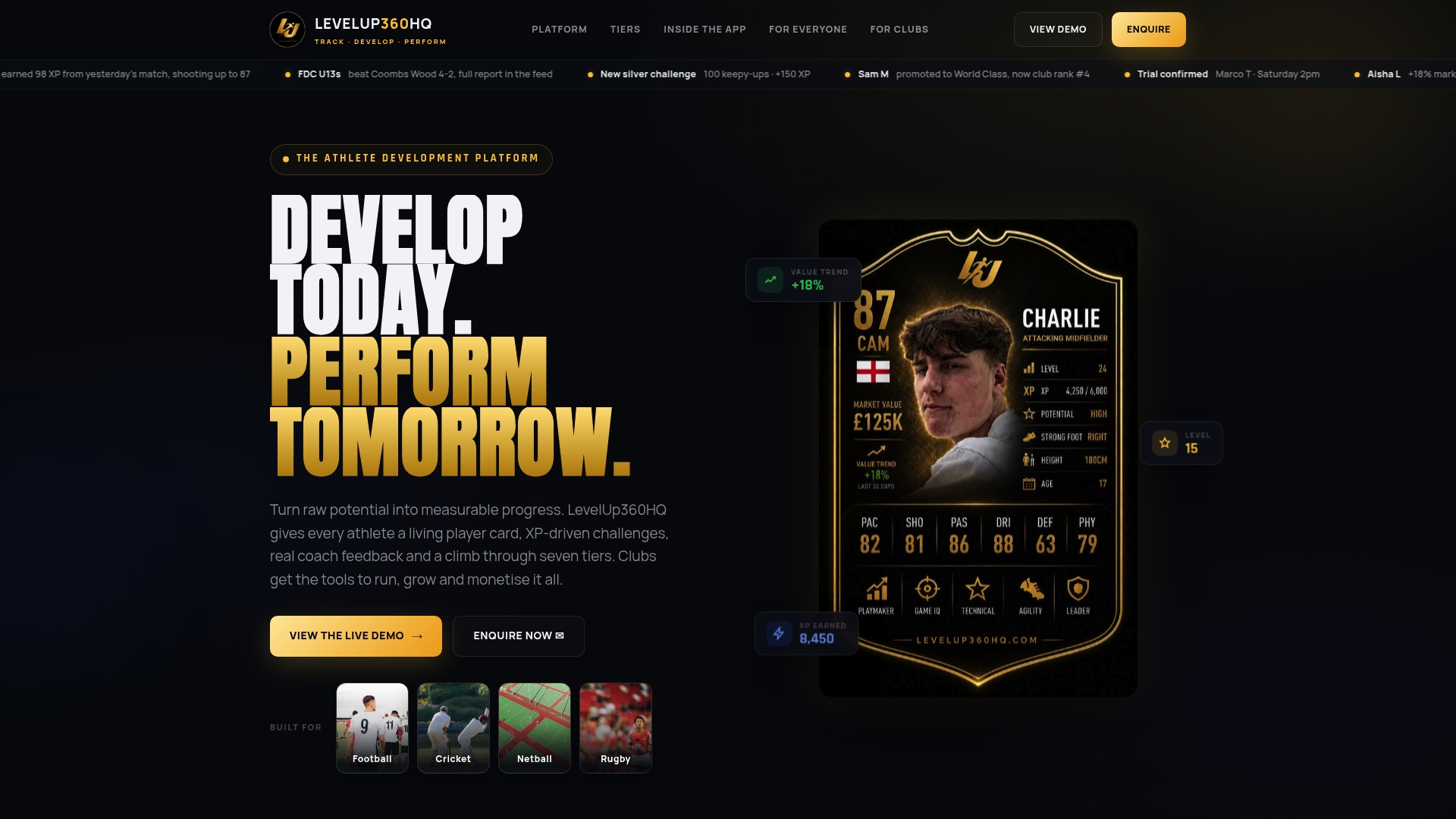
Coaches get video assessment tools, session management, and approval workflows. Administrators get CRM functionality, subscription management, and white-label branding. Athletes get a live record of their progress that they actually want to check. Explore the full platform to see how it fits your club’s structure, or try the interactive demo to walk through the gamification features before committing.
FAQ
What are the main benefits of gamified club programs?
Gamified club programmes raise training motivation to 83%, cut absenteeism by 25%, and increase member retention by 22%. They also improve knowledge retention to above 90% compared to passive learning methods.
How does gamification improve club membership retention?
Gamified loyalty elements, such as leaderboards, badge systems, and tier progression, give members ongoing reasons to stay engaged between sessions. Research shows a 22% retention uplift in membership programmes that use these mechanics.
Do gamified programs work for all sports and ability levels?
Gamification works across multiple sports when designed with inclusivity in mind. Personal-best leaderboards and tiered challenges keep athletes of all ability levels motivated, as demonstrated by exergaming programmes in youth club settings.
How do I measure whether a gamified programme is working?
Track session attendance frequency, membership renewal rates, skill progression scores, and community engagement activity. Platforms like Levelup360hq generate these analytics automatically, making it straightforward to assess impact over time.
What makes gamification fail in sports clubs?
Gamification fails when it lacks clear behavioural objectives and meaningful feedback loops. Adding points or badges without connecting them to real skill development produces short-term novelty and long-term disengagement.
Recommended
Turn potential into a player card.
LevelUp360 tracks every match, builds your child's player card, and shows their development over time.
Get started free