Badges and recognising athlete milestones: a coach's guide
Published 11 June 2026
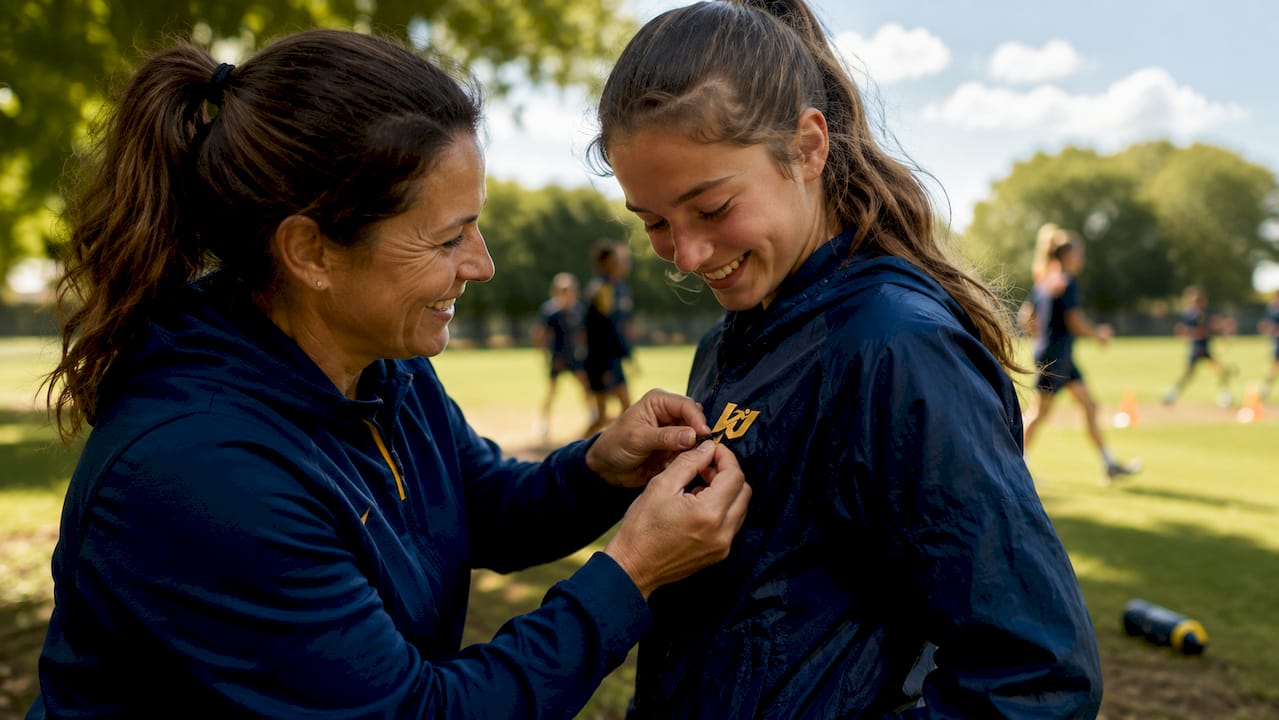
Badges are defined as symbolic achievement markers that transform intangible athletic progress into visible, lasting recognition. The role of badges in recognising athlete milestones extends well beyond ceremony. In sports development, they function as motivational anchors, identity builders, and progress-tracking tools that keep athletes engaged across every stage of their career. Whether physical medals, milestone rings, or digital achievement badges on a gamified platform, these symbols do measurable psychological work. Understanding how they operate gives coaches and athletes a genuine edge in designing recognition systems that sustain performance and reduce dropout.
How do badges function psychologically to motivate athletes?
Symbolic recognition outperforms verbal praise because physical symbols trigger stronger memory associations and emotional responses, embedding achievements directly into an athlete’s sense of identity. A medal hung on a wall or a digital badge displayed on a player profile does something a coach’s compliment cannot. It creates a permanent, revisitable record of what the athlete achieved and who they became in that moment.
Recognition triggers dopamine release, builds confidence, and reinforces goal-setting behaviour. This reward cycle is not passive. Each time an athlete earns a badge, the brain registers a concrete signal that effort produced a result. That signal strengthens the habit of sustained training. Over time, the accumulation of badges builds a visible narrative of progress that motivates athletes to pursue the next milestone rather than plateau.

Physical symbols also carry social weight. When a badge or ring is visible to teammates, it creates peer validation that amplifies the individual reward. Milestone rings, for example, have risen as wearable symbols that honour personal progress and foster group culture across all levels of sport. This sense of belonging is a powerful retention tool, particularly for youth athletes.
The risks are real, though. Overusing badges or awarding them without genuine criteria leads to novelty decay, where the recognition loses its meaning. The primary risk in badge systems is reward chasing over skill mastery. When athletes collect badges for repetition rather than competence, intrinsic motivation erodes and the system becomes a hollow points game.
Key psychological functions of well-designed badge systems:
- Reinforce identity by making achievements visible and permanent
- Trigger dopamine reward cycles that sustain training habits
- Provide social validation through peer and team recognition
- Create progress narratives that motivate continued effort
- Signal competence milestones rather than mere participation
Pro Tip: Award badges for specific, observable skills rather than attendance or effort alone. “Completed 50 sessions” is far less motivating than “Mastered defensive positioning under pressure.”
What types of recognition systems exist in sport, and how do they compare?
Sports recognition systems span a wide spectrum, from traditional physical awards to fully digital gamified frameworks. Each carries distinct advantages depending on the athlete’s age, sport, and development stage.
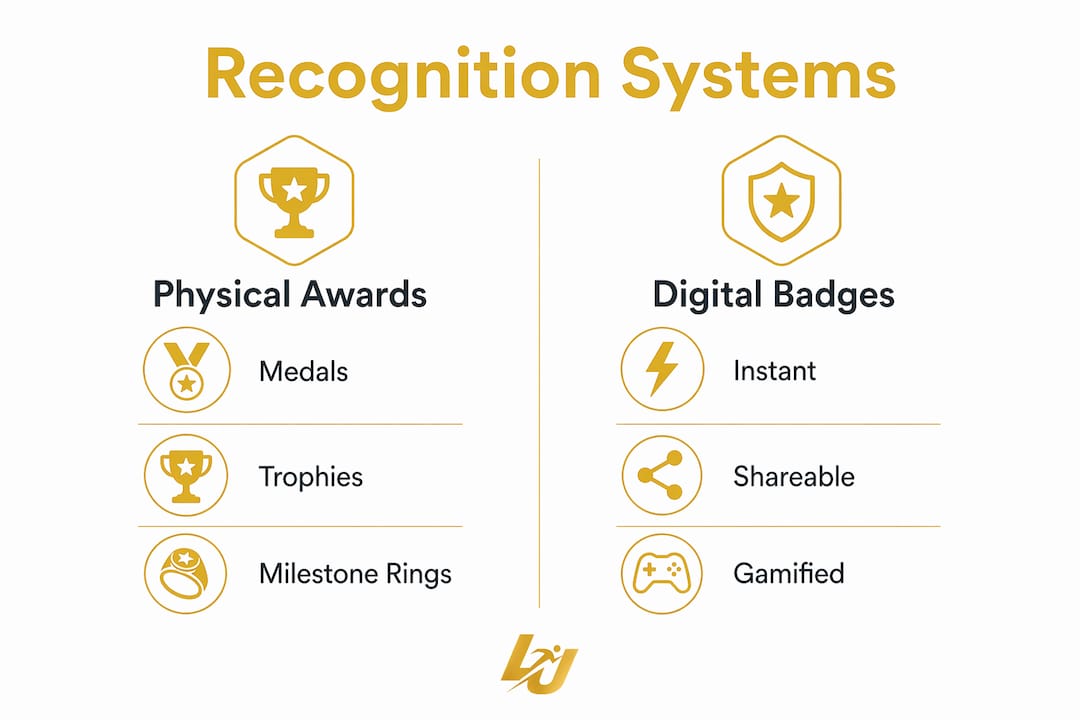
Physical awards, including medals, trophies, and milestone rings, remain the most emotionally resonant. They are tangible, permanent, and socially visible. The global sports awards market was valued at $4.1 billion in 2025, which reflects the enduring demand for physical recognition across amateur and professional sport. A medal earned at a regional championship carries weight precisely because it occupies physical space in an athlete’s life.
Digital badges and gamified recognition systems offer something physical awards cannot: immediacy and shareability. Platforms like Levelup360hq deliver instant feedback through badge systems, leaderboards, and XP-driven challenges that athletes can access and share in real time. Digital recognition also enables rich achievement histories, allowing coaches to track which milestones each athlete has reached and identify gaps in development.
| Recognition type | Strengths | Limitations |
|---|---|---|
| Physical medals and trophies | High emotional resonance, permanent, socially visible | Delayed, costly, limited to major events |
| Milestone rings | Wearable, identity-building, fosters team culture | Typically reserved for significant milestones |
| Digital badges | Instant, shareable, trackable, scalable | Lower emotional weight without physical presence |
| Gamified tier systems | Continuous motivation, progress visibility, data-rich | Risk of novelty decay if criteria are poorly defined |
The most effective recognition programmes combine both approaches. Physical awards mark the major milestones that define an athlete’s career. Digital badges fill the space between those peaks, recognising the incremental progress that physical awards miss entirely. In martial arts, for instance, badge-based progress tracking systems demonstrate how structured milestone recognition keeps students engaged across years of development, not just at grading events.
How do badges help track athlete development and influence retention?
Youth dropout rates reach 70% by age 13, which is one of the most alarming figures in youth sport. Badges and tangible recognition systems directly address this by creating visible markers of progress that give young athletes a reason to stay. When athletes can see what they have achieved and what comes next, the development pathway feels purposeful rather than arbitrary.
Multidimensional assessment models that integrate physical, technical, and psychological indicators achieve 78.3% accuracy in talent identification, compared to 62.5% for physical-only models. This matters for badge design because it confirms that recognition systems built around a single dimension, such as speed or strength, miss the full picture of athlete development. Badges that reward technical skill, tactical awareness, and psychological resilience give coaches a more accurate and equitable view of each athlete’s progress.
| Development dimension | Badge application | Retention benefit |
|---|---|---|
| Physical performance | Speed, strength, and endurance milestones | Motivates training consistency |
| Technical skill | Skill mastery badges for specific techniques | Builds competence and confidence |
| Tactical awareness | Decision-making and game-reading recognition | Develops intelligent players |
| Psychological resilience | Badges for persistence, leadership, and composure | Strengthens identity and belonging |
One critical equity issue is early-maturer bias. Over-reliance on physical achievement in badge criteria risks underestimating late-developing athletes who may possess superior technical and psychological qualities. Coaches must design recognition systems that reward progress relative to an athlete’s own baseline, not just against peers who may be physically ahead due to maturity rather than talent.
Pro Tip: Use relative improvement badges alongside absolute achievement badges. Recognising an athlete who improved their sprint time by 8% rewards genuine development regardless of where they started.
What best practices should coaches follow when implementing badge recognition?
Designing a badge system that sustains motivation over months and years requires deliberate choices about criteria, fairness, and cultural fit. The following practices reflect what research and practical coaching experience show to be most effective.
-
Define mastery-based criteria. Every badge should represent a specific, observable competency. Avoid vague criteria like “showed great effort.” Instead, define exactly what the athlete must demonstrate, such as completing a technical drill with 90% accuracy across three consecutive sessions.
-
Build in progression tiers. A single badge for a skill creates a ceiling. A tiered system, such as bronze, silver, and gold levels for the same competency, gives athletes a continuous ladder to climb. Standardised recognition tiers correlate strongly with elite outcomes. Research shows 5-star recruits have a 65% NFL draft rate compared to 22 to 25% for 4-star recruits, illustrating how tiered recognition signals genuine differentiation in athlete quality.
-
Prioritise inclusivity in criteria design. Recognition systems that only reward the most physically advanced athletes will disengage the majority. Include badges that recognise leadership, improvement, consistency, and teamwork alongside performance metrics.
-
Balance extrinsic and intrinsic motivation. Badges are extrinsic rewards, but they should point athletes toward intrinsic satisfaction. Frame each badge as evidence of a capability the athlete now owns permanently, not just a prize they collected.
-
Review and refresh the system regularly. Novelty decay is real. Coaches should audit their badge systems at least once per season, retiring badges that have lost meaning and introducing new milestones that reflect the current development focus of the squad.
-
Use badges to build team culture. When athletes see peers earning recognition for specific competencies, it sets visible standards for the group. This peer influence effect is one of the most underused aspects of badge systems in team sports.
Key takeaways
Badges work because they convert invisible effort into permanent, visible proof of competence that sustains athlete motivation and reduces dropout across all levels of sport.
| Point | Details |
|---|---|
| Psychological impact | Physical symbols trigger stronger memory and emotional responses than verbal praise alone. |
| Retention tool | Visible progress markers directly counter youth dropout, which reaches 70% by age 13. |
| Multidimensional design | Badges covering technical, tactical, and psychological skills outperform physical-only recognition. |
| Equity in recognition | Relative improvement badges prevent early-maturer bias from distorting fair athlete development. |
| Mastery over repetition | Badge criteria must reward specific competencies, not attendance, to preserve intrinsic motivation. |
Why I think most badge systems in sport are missing the point
Most coaches I speak with treat badges as a finishing touch. Something you bolt onto a programme after the real coaching work is done. That framing gets it backwards.
The most powerful recognition systems I have seen treat badges as structural elements of athlete development, not decorations. When a badge is tied to a specific, observable competency, it does three things at once: it tells the athlete what to aim for, it confirms when they have arrived, and it gives them something permanent to carry forward. That is not a reward. That is a development tool.
What concerns me is the growing tendency to digitise recognition without thinking about what the badges actually mean. Platforms can generate badges for almost anything now, and some programmes are awarding them so freely that athletes stop caring within a few weeks. Novelty decay is not a technology problem. It is a design problem. If the criteria are not meaningful, the badge is not meaningful.
The research on early-maturer bias also keeps me honest. I have watched physically dominant young athletes collect every badge in a system while technically gifted late developers go unrecognised. Those late developers often leave sport entirely before they reach their potential. A well-designed badge system should make them feel seen, not invisible.
My advice is to spend more time on the criteria than the aesthetics. A beautifully designed badge awarded for the wrong reason does more damage than no badge at all.
— Chris
Track every milestone with Levelup360hq

Levelup360hq is built for coaches and athletes who want recognition to mean something. The platform combines badge systems with performance analytics, FIFA-style player cards, and XP-driven challenges to create a development environment where every milestone is tracked, visible, and tied to real competency criteria. Coaches can design custom badge tiers, monitor athlete progress across physical, technical, and psychological dimensions, and deliver recognition that sustains motivation across an entire season. Whether you coach football, cricket, netball, or rugby, the system adapts to your programme. Explore the demo to see how badge recognition integrates with athlete development tracking in practice.
FAQ
What is the role of badges in recognising athlete milestones?
Badges serve as symbolic, tangible markers that convert athletic achievements into permanent, visible recognition. They reinforce identity, trigger dopamine reward cycles, and give athletes a structured record of their development progress.
How do badges motivate athletes psychologically?
Physical and digital badges trigger stronger memory associations and emotional responses than verbal praise, embedding achievements into athlete identity. Recognition also activates dopamine pathways that reinforce training habits and goal-setting behaviour.
What types of badges work best for sports recognition?
The most effective systems combine physical awards for major milestones with digital badges for incremental progress. Tiered systems that reward mastery across physical, technical, and psychological dimensions provide the broadest and most equitable recognition.
How can coaches avoid badge systems losing their impact?
Coaches should define mastery-based criteria for every badge, audit the system each season, and avoid awarding recognition for repetition or attendance alone. Novelty decay occurs when badges are too easy to earn or too loosely defined.
Do badges help reduce athlete dropout?
Yes. Tangible progress markers directly address the motivation gap that drives youth dropout rates, which reach 70% by age 13. When athletes can see what they have achieved and what comes next, the development pathway feels purposeful and worth continuing.
Recommended
Turn potential into a player card.
LevelUp360 tracks every match, builds your child's player card, and shows their development over time.
Get started free